How gray-market sales hurt brands, and effective ways to respond
Real cases of how gray-market sales hurt brands, and strategies from IP experts to win back price competitiveness and protect official channels.
 Irene Lee4 min read
On this page5
Following our webinar with Shopee and Lush, MarqVision has been taking a deeper look at the many IP problems companies face. This webinar, “The invisible threat: Innovations in Unauthorized Sales,” covered how serious gray-market (unauthorized) sales have become online and how to respond.
The speakers, Charlie Abrahams, MarqVision IP advisor and global brand protection expert, and Jake Morgan, then MarqVision’s head of brand protection, analyzed the problems real brands face and effective strategies to respond.
With more and more marketplaces making official distribution ever harder to manage, how can companies take control of their distribution channels and strengthen their price competitiveness? Read on for how to protect your brand amid a fast-changing online environment and increasingly cunning IP threats, how gray-market sales affect companies, and strong strategies to respond.
The invisible threat of gray-market sales
Gray-market products sold outside official distribution present brands with new challenges. Even genuine products, when distributed through unauthorized channels, break down price order in the market and weaken a company’s price competitiveness.
What are gray-market sales?
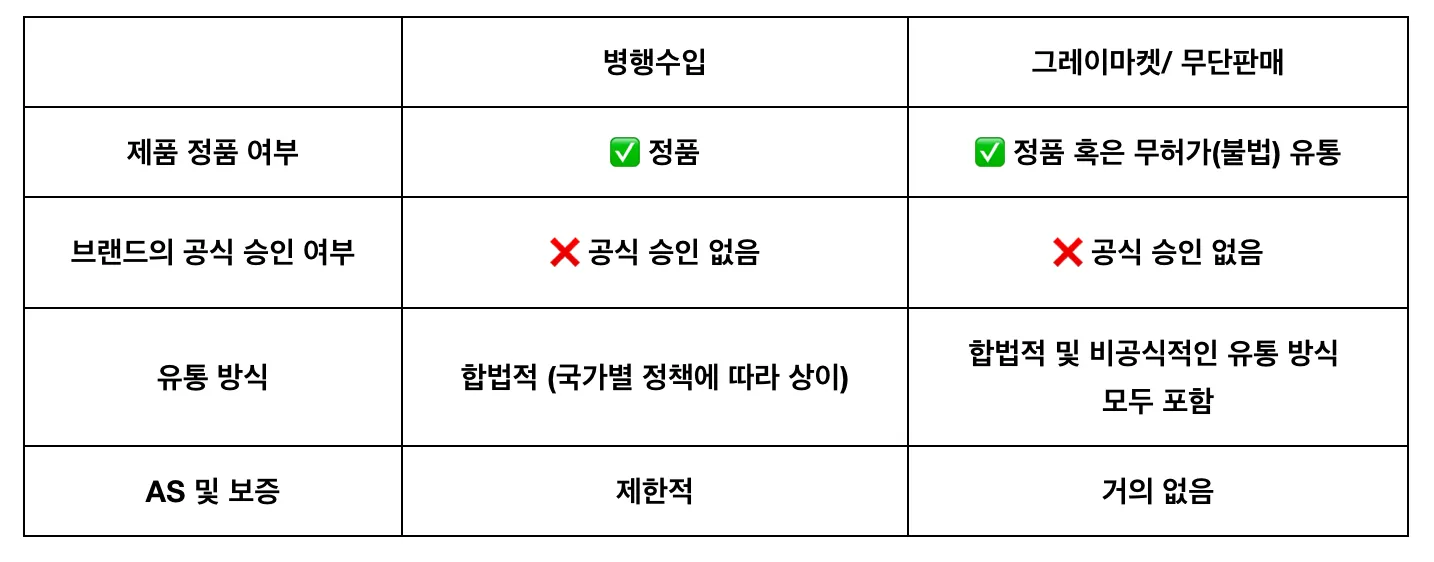
Gray-market sales are products sold, exported or imported without going through distribution channels officially authorized by the manufacturer. So how are they different from parallel imports? See the quick comparison in the table below.
Key differences between parallel imports and gray-market sales
In particular, gray-market sellers use extreme discounting to rank at the top of marketplace and open-market search results, so shoppers naturally buy the cheaper products. But with unclear sourcing and storage conditions, these products can pose serious risks to consumers too. And even sellers with official contracts through authorized distribution lose price competitiveness to gray-market sales and inevitably struggle to run their businesses.
This goes beyond price competition to directly affect brand trust. As more products are sold without official after-sales service or customer support, consumer complaints land directly on the brand, ultimately damaging its reputation.
In industries where brand image and pricing policy matter most, such as luxury fashion, electronics and pharmaceuticals, the impact of gray-market sales is even more serious. Gray-market sales are no longer just about lost revenue. They’ve become a core challenge in protecting brand value in global markets. See the risks brands face and effective responses through real cases.
How gray-market sales affect brands and online markets

Are gray-market sales causing brands real financial losses? According to a 2024 Bloomberg report, China’s gray market is overwhelming luxury brands’ official sales channels.
For example, some products from premium outdoor brands such as Moncler and Canada Goose recorded 2.5 to as much as 15 times higher sales on Dewu, China’s largest gray-market platform, than on Tmall, the brands’ official e-commerce platform. In other words, many consumers bypass brands’ official distribution to buy products at steep discounts from abroad, directly hitting luxury brands’ share prices and profitability.
The problem extends beyond fashion to jewelry and accessories. Cartier and Van Cleef & Arpels recorded 6.8 times higher sales on Dewu than on their official Tmall stores in the first half of 2024. Cartier’s popular products in particular sold at discounts of up to 54%, likely causing even bigger revenue losses. (Source: Fashion Insight)
This trend goes beyond price competition to threaten brand trust and market order. With recession and high prices making consumers more price-sensitive, the gray market is becoming an even more attractive option, posing a major challenge to brands’ long-term profitability and market expansion strategies.
In response, some brands are stepping up measures to stop the spread of gray-market sales, such as tightly managing distribution networks and tracking product routes in specific markets. But the problem isn’t limited to luxury brands. As gray-market sales grow not only in China but across global markets, the threat brands face is growing both abroad and at home.
So what are effective strategies for strengthening official distribution and blocking gray-market sales?
Tackling online gray-market sales with AI
Traditional manual monitoring can’t identify and act on every gray-market seller that appears so quickly. Now, AI can automate everything from detection to response, making brand protection faster and more effective.
AI monitors online marketplaces, standalone websites, social media and more in real time to quickly identify unauthorized sellers. It analyzes many factors, including sales patterns, price changes and product page copy, to detect gray-market activity quickly and help brands respond effectively. This frees legal, operations and brand protection teams from repetitive manual work so they can focus on strategic work such as dealing with bad actors, strengthening partnerships with marketplaces and raising brand value.
Beyond detection, AI can also use advanced computer vision to analyze and identify gray-market products accurately. By analyzing product images and packaging, it finds gray-market products that bypassed official distribution, which is especially effective in industries where repackaging is common, such as fashion and electronics.
What is computer vision (CV)?
An AI technology that mimics human vision to analyze and interpret images. It can detect and recognize product images, patterns and objects.
AI also plays an important role in maintaining MAP (Minimum Advertised Price) policies. It can track price changes across marketplaces and quickly identify sellers violating pricing agreements. By automating the drafting and sending of reports, it enables an efficient strategy. By continuously tracking price changes to pinpoint listings selling below official sellers, it lets brands get ahead of market price disruption.
Finally, one of AI’s most powerful capabilities is seller network analysis. Bad actors selling without authorization don’t stay on one channel: they keep operating across multiple marketplaces. AI analyzes gray-market sellers’ information and maps their activity patterns and similarities. Based on that analysis, you can quickly identify and block repeat, high-risk bad actors. This lets brands focus on the riskiest sellers without checking every listing one by one, for an efficient, strategic response.
Four strategies for tackling gray-market sales decisively

Acting effectively on bad actors matters as much as finding gray-market sales. To solve the gray-market problem at its root, brands need a strategic enforcement plan.
AI-based detection alone isn’t enough. Blocking gray-market sales effectively takes a multifaceted approach and an all-around response strategy.
1. Strengthen management of official sales channels
Clearly include clauses prohibiting resale and gray-market sales, along with penalties for violations, in contracts with official sales channels and authorized sellers. This protects your official sales channels, strengthens relationships and trust with official sellers and helps stop gray-market sales before they start.
2. Ensure supply chain transparency
Use the latest technology, such as serial number tracking and authentication, to manage product movement transparently. Tracking the flow from origin to final sales platform helps prevent products from leaking into the gray market.
3. Legal action and collaboration with platforms
Most marketplaces need legal grounds to act against sellers. Go beyond deleting listings to build the groundwork for tracking bad actors and taking legal action. A brand protection solution such as MarqVision enables a faster, stronger response.
4. Consumer education
It’s also important to tell consumers about the risks of gray-market products. Emphasize the higher likelihood of quality problems and safety concerns to encourage them to buy through official channels. Also let consumers know that products sold without authorization may not be covered by warranties, and share information about official purchase channels.
Blocking gray-market sales takes active management and response, not just detection. When brands establish control over online markets, they can break free of the threat from gray-market sales and bad actors.
Gray-market sales: a new IP problem threatening brands
As gray-market sales spread fast, official sales channels are being undermined and brands’ price competitiveness is seriously affected. Bad actors are expanding their influence on marketplaces with excessive discounting and threatening brand value.
Now is the time for brands to respond actively. With AI-based monitoring and consulting from IP experts, you can block gray-market sales, strengthen price competitiveness and protect the profitability of official sales channels and partners. The faster a brand responds, the better it can maintain revenue and brand trust, and secure long-term competitiveness too.
Act on gray-market sales before it’s too late. Request a free consultation now to find the unauthorized sellers threatening your brand.