Fashion brand impersonation through Instagram and YouTube ads: how can you respond?
106 fashion brand impersonation cases in four months, and how to block phishing sites with search de-indexing, takedown reports and UDRP disputes.
 Irene Lee4 min read
On this page3
Fake sites selling fashion brands’ products through ads that lure shoppers with lines like “up to 90% off” and “end-of-season sale” are surging. According to the Korea Consumer Agency, its cross-border consumer portal received 106 complaints about fashion brand impersonation between early December last year and February this year, with damage tied to well-known outdoor fashion brands standing out.
The main cases included 1) shoppers who bought products thinking they were on the brand’s official website but couldn’t find their order history or order number, and 2) shoppers who requested refunds and never heard back from the seller.
Shoppers are being harmed after buying on sites they believed were official, and that hurts trust in fashion brands too. As cases pile up, they get mentioned negatively in the press and on social media, which can lead to a long-term decline in trust.
So how should brands respond to minimize the damage from phishing sites? In this post, we look in detail at the impersonation tactics bad actors use against fashion brands and how to block them effectively.
KRW 3.365 billion: record losses from impersonator websites

According to a report by the Seoul Metropolitan Government, there were 77 cases of damage from impersonator websites in 2024, with losses of KRW 3.365 billion. Analyzing 738 fraudulent shopping sites caught by the Seoul E-commerce Center over 20 years, the city also showed how impersonation tactics have changed. In particular, tactics became more sophisticated after online shopping surged during COVID.
Since 2019, the categories hit hardest by brand impersonation were 1) electronics, 46.2% (341 cases); 2) clothing, shoes and accessories, 27.9% (206 cases); 3) shopping-mall side-job scams, 6.4%; and 4) gift card scams and sports, leisure and hobby goods, 4.7% (35 cases). These five categories accounted for about 90% of all cases.
How impersonators reach shoppers has changed too. They used to rely mostly on portal sites, price comparison sites and spam email. Now impersonation is spreading through open marketplaces, peer-to-peer trading platforms, text messages, social media and phone calls. So why, and how, do shoppers end up on phishing sites?
What today’s phishing sites look like: fashion brand impersonation, social ads, overseas servers
1. Impersonating well-known fashion brands
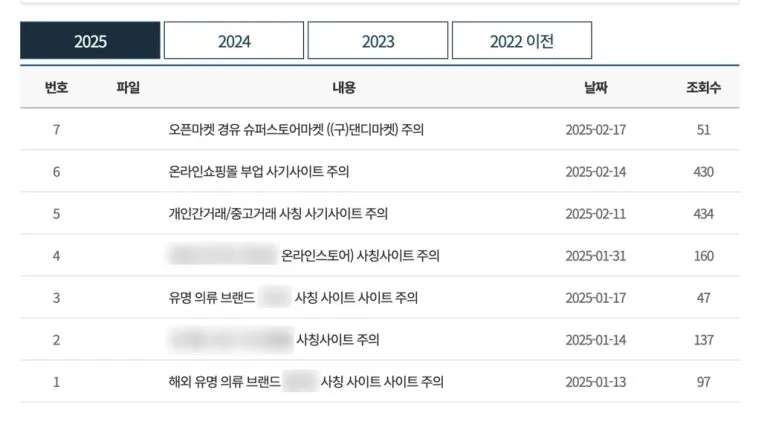
99% of the phishing sites reported over the past two years used open marketplaces to draw in shoppers. They impersonate well-known fashion brands to exploit the trust those brands have built. As major overseas fashion brands expand into Korea, fake stores targeting them are multiplying fast.
Impersonator sites reach shoppers through social media ads and are carefully designed to look like the official store. They use URLs similar to the official website and copy the brand’s logo and even its product pages, so shoppers trust them and buy without a second thought. The damage comes when the order never arrives or the seller goes silent after payment.
Shoppers harmed on impersonator sites are likely to come away distrusting the fashion brand itself. If the brand doesn’t respond actively, cases get reported in the news or spread on social media, and negative perceptions harden over time.
2. A surge in phishing sites using social media ads
On Instagram and other social platforms, ads touting “stock clearance” or “end-of-season sale” are now common, luring shoppers with extraordinary offers of up to 90% off. They look like trustworthy stores, even stating return and exchange policies, but many offer no consumer protection at all: no order tracking, no cancellations.
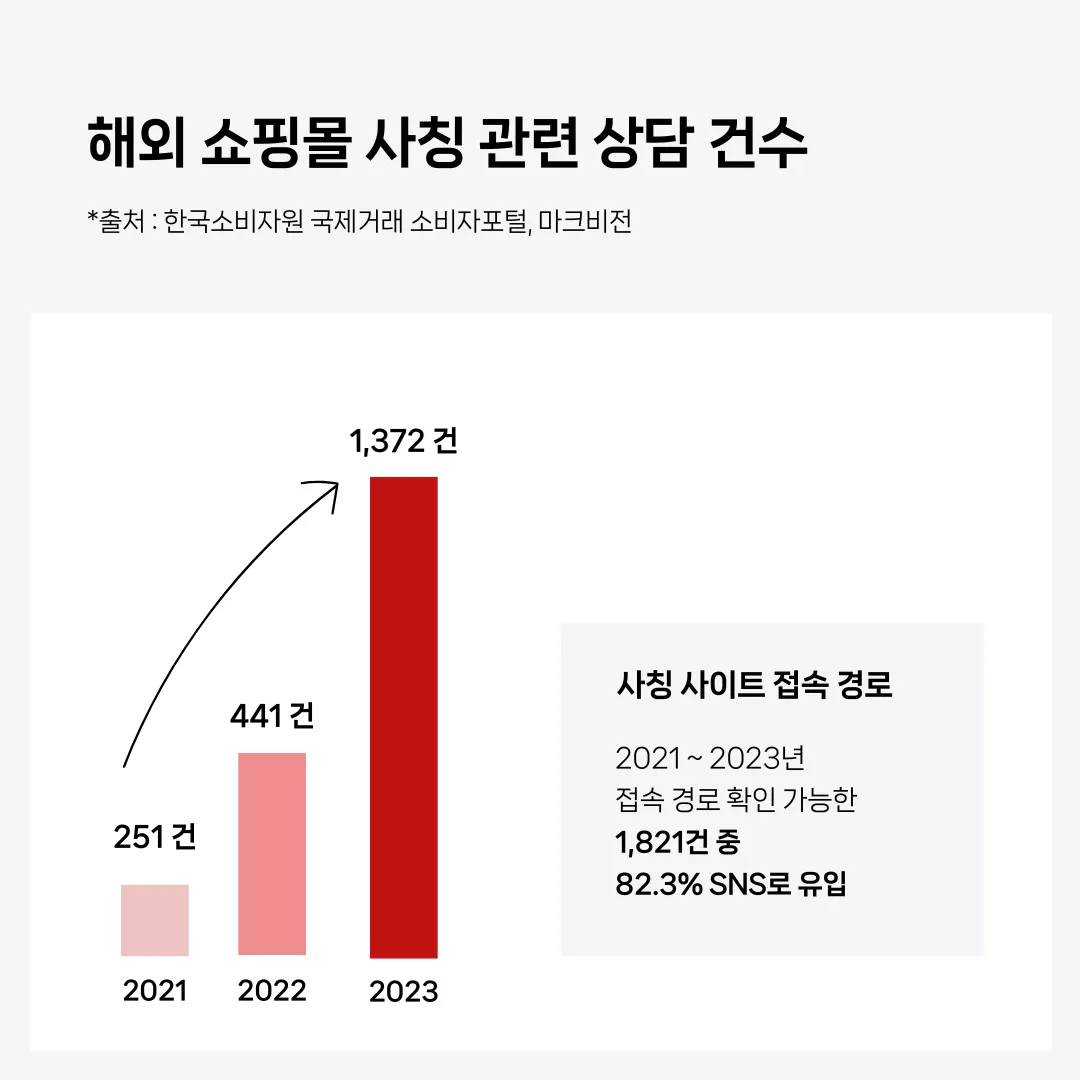
Complaints about fraudulent overseas shopping sites filed with the Korea Consumer Agency’s cross-border consumer portal have risen every year, from 251 in 2021 to 441 in 2022 and 1,372 in 2023. Of the 1,821 cases from 2021 to 2023 where the route was known, 82.3% came through social media, with Instagram (41.8%) and YouTube (25.3%) accounting for the largest shares.
Clicking an ad on social media often leads to a fake store impersonating a well-known fashion brand. The most common type of harm was brand impersonation (47.1%, 972 cases), mostly fake stores fronted by well-known fashion brands that took payment, never shipped and cut off contact. Low-quality products (46.5%, 959 cases) were also common, with sellers sending low-quality products unlike those advertised, refusing refunds and returning only part of the money.
Fashion brand impersonation isn’t limited to Korea. According to MarqVision’s 2025 US consumer report, one in four US consumers said they had come across counterfeits through social media ads. The figure includes only those who actually received a product, so counting victims who never got anything, the number is likely far higher.
Bad actors make heavy use of social media ads to reach shoppers in a familiar format, exploiting fashion brands’ trust to damage their reputation and threaten shoppers’ experience of the product. Counterfeit harm through social media ads can no longer be left unchecked.
3. Impersonator sites spreading on overseas servers
In 2024, 93% of impersonator sites used overseas servers, making it very hard for Korean companies to respond quickly.
These fake sites lure shoppers with popular fashion products offered as cross-border direct purchases or at discounts of 90% or more. At checkout, they ask for sensitive information such as card numbers, expiry dates and security codes, which is highly likely to be misused. Payment data processed overseas is exactly why fast response matters for fashion brands.
To reduce the damage, the Korea Consumer Agency emailed impersonator site operators asking them to confirm the facts and resolve complaints, but most never replied. With accurate seller information hard to obtain, impersonators operating abroad provide false information and make phishing sites hard to block quickly.
That’s why a stronger, more systematic response system is essential to protect brand trust and consumers.
How to respond effectively to fashion brand impersonator websites
As websites and social accounts impersonating fashion brands spread, they pose a major threat to brand image and consumer trust. There are three main ways to minimize the damage and block impersonator sites.
1. De-index them from search engines
You can take steps to keep impersonator sites from appearing in search engines such as Google and Naver. This prevents shoppers from reaching fake sites in the first place, by requesting that the site be removed from search results.
2. Request website takedowns
You can report the impersonator website to its hosting provider or the relevant government agency and request removal. Most providers respond actively to impersonator sites, checking for policy violations and taking steps to block phishing sites. Cloudflare, for example, responds quickly to phishing sites through its abuse reporting program.
Want to know how to take down a fake website yourself? See our earlier post for details.
3. Pursue a domain dispute (UDRP)
This means securing the impersonator site’s domain and redirecting it to the official site so shoppers are not exposed to risk. It completely shields shoppers from brand impersonation risks such as buying counterfeits. However, it may require legal action, which takes time and money.
Reporting impersonator sites isn’t enough on its own. Many already stay out of search engines, and hosting and domain providers often respond passively. What’s more, with AI, impersonator sites are created ever faster and easily lure shoppers through social media and other online channels. Detecting and responding to brand impersonation like this consumes enormous resources.
Of these, the domain dispute (UDRP) process is the strongest response to impersonator sites. Recovering look-alike and key domains offers a more effective way to protect your brand. Our next post will cover the UDRP process in more detail, so stay tuned.
Want the latest insights on the IP threats facing fashion brands?
Subscribe to our newsletter and get the latest IP issues and insights every other Wednesday.