The new Seller Intelligence: Enforce against sellers, not just listings
Seller Intelligence in Marq AI shows which storefronts operate together, ranks infringing sellers by risk and recommends the next step for each one.
 Ryan KimPrincipal Product Marketing Manager5 min read
On this page5
Listings are where infringement shows up. Sellers are where it comes from.
For the enterprise brands we work with, listing takedowns alone are no longer enough. They want to find the high-risk sellers behind those listings, enforce against them first, and ultimately get them terminated.
Today, we’re introducing the new Seller Intelligence in Marq AI: a seller-level view that tells you who to act on first, and how. Behind it: sharper logic for grouping sellers, and a risk score refined to reflect how brand protection teams judge who is truly high-risk.
See which storefronts operate together
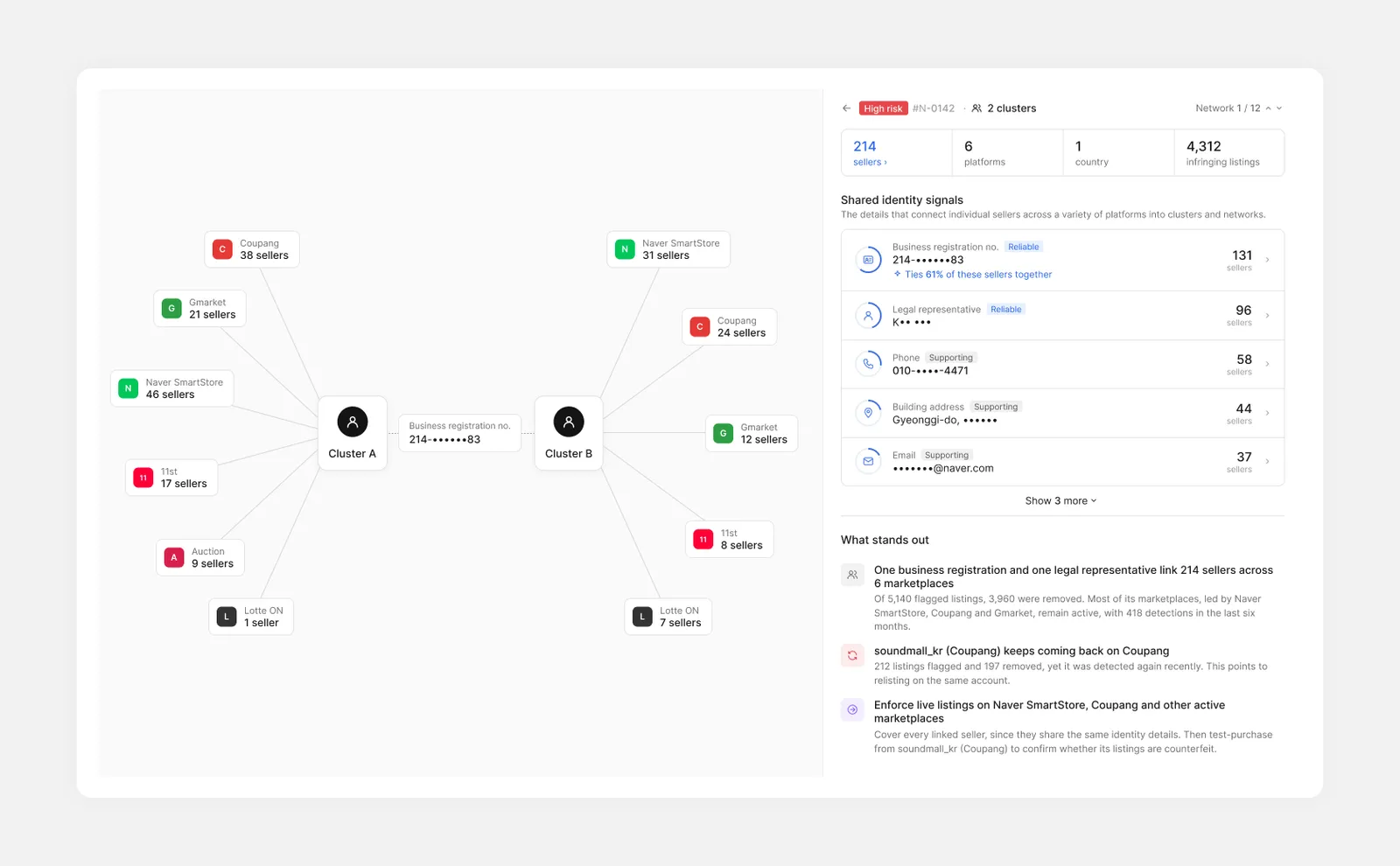
Seller Network, formerly Seller Intel, groups storefronts in two layers. A cluster is one legal entity behind several storefronts. A network links clusters and sellers that may be legally separate but show evidence of operating together.
Each link shows the shared identity signals behind it, such as a business registration or VAT number, so you see why sellers are connected before you act. Five storefronts sharing a registration number and a phone number appear as one cluster: one target, not five.
An AI summary calls out who each cluster is and what stands out.
Know which sellers to act on first
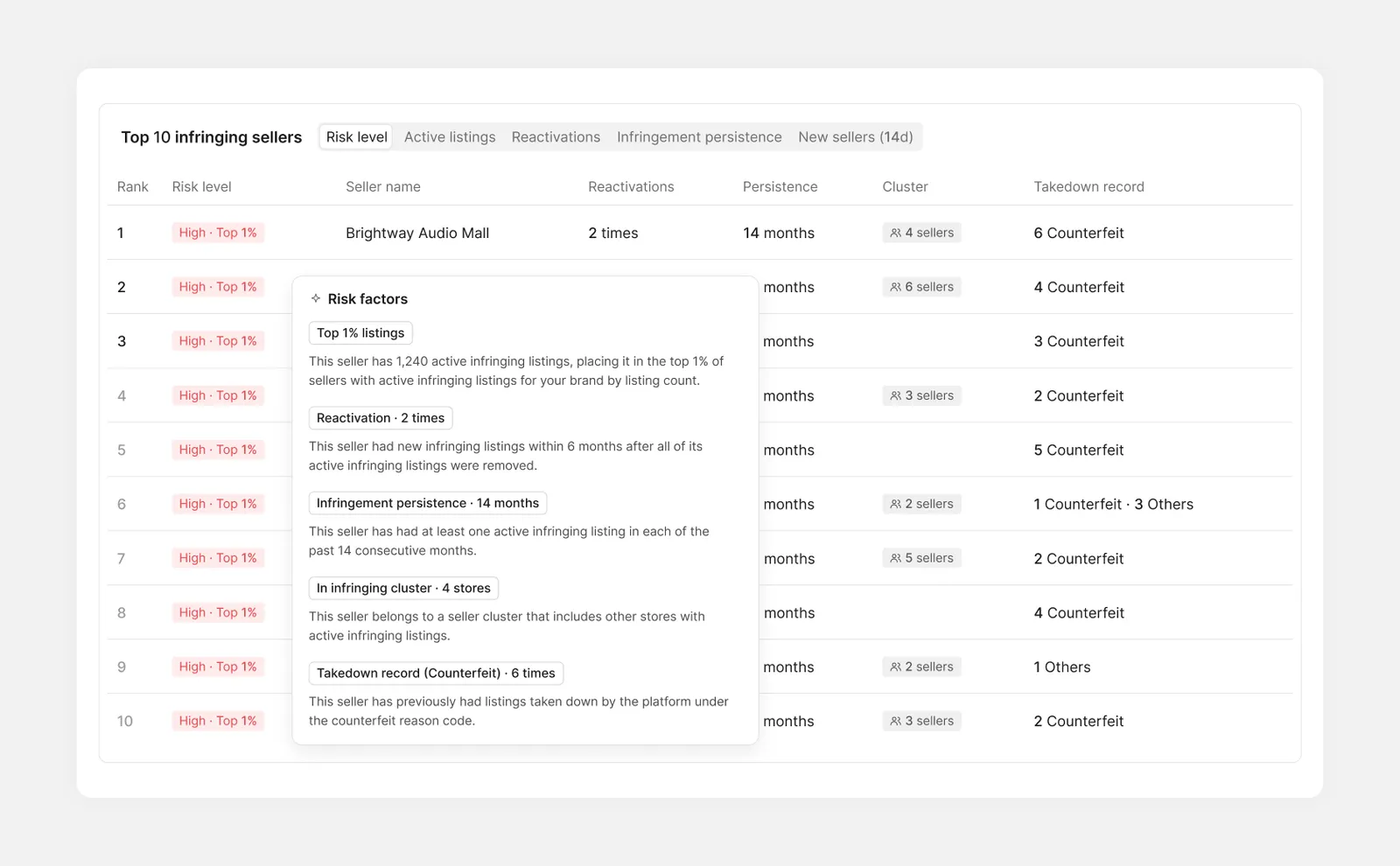
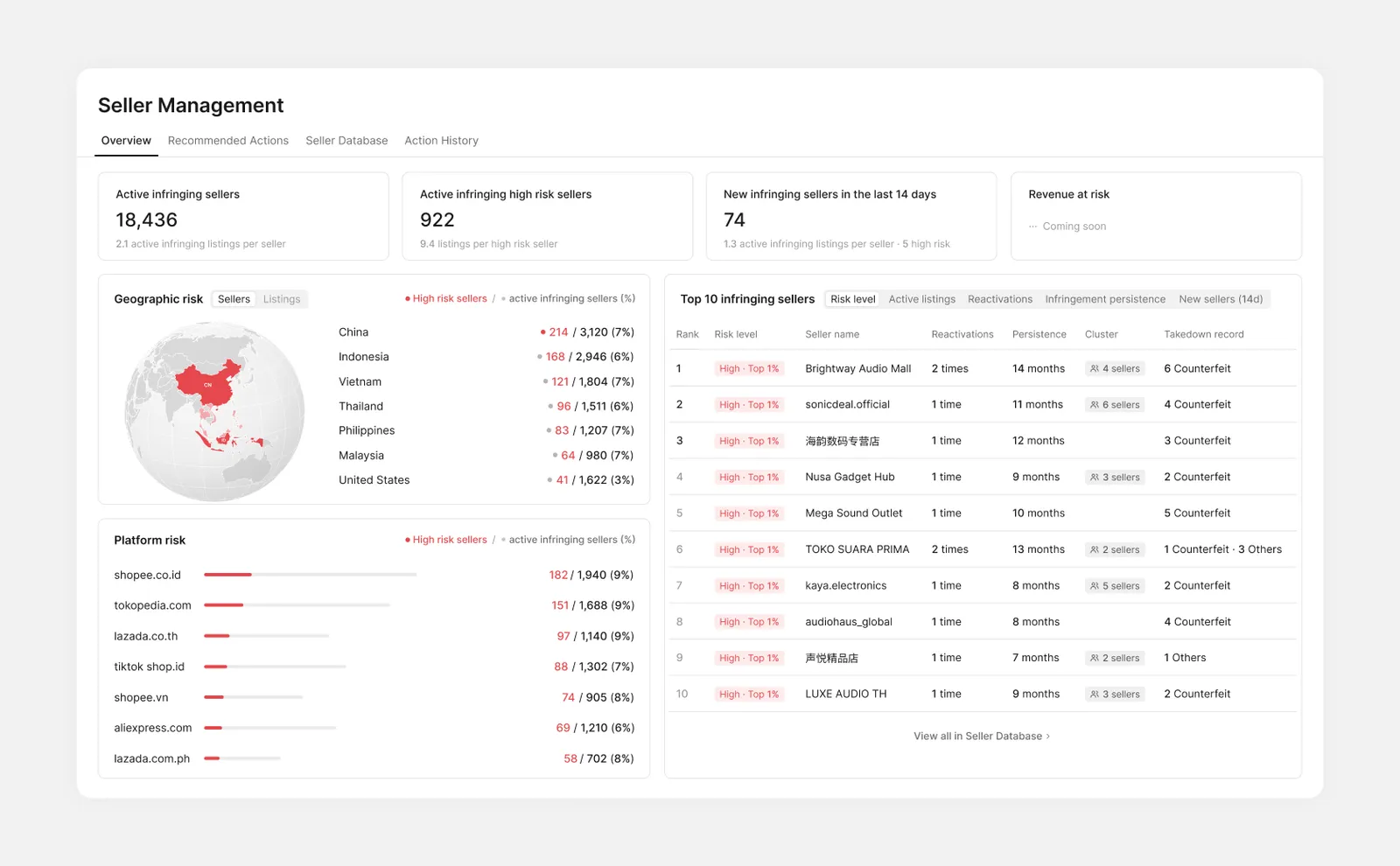
Every infringing seller now gets a risk level and rank from five factors: how many infringing listings they have, whether their listings reactivate after being cleared, how long they’ve been infringing, whether they belong to an infringing cluster, and their platform takedown records, including takedowns by other brands.
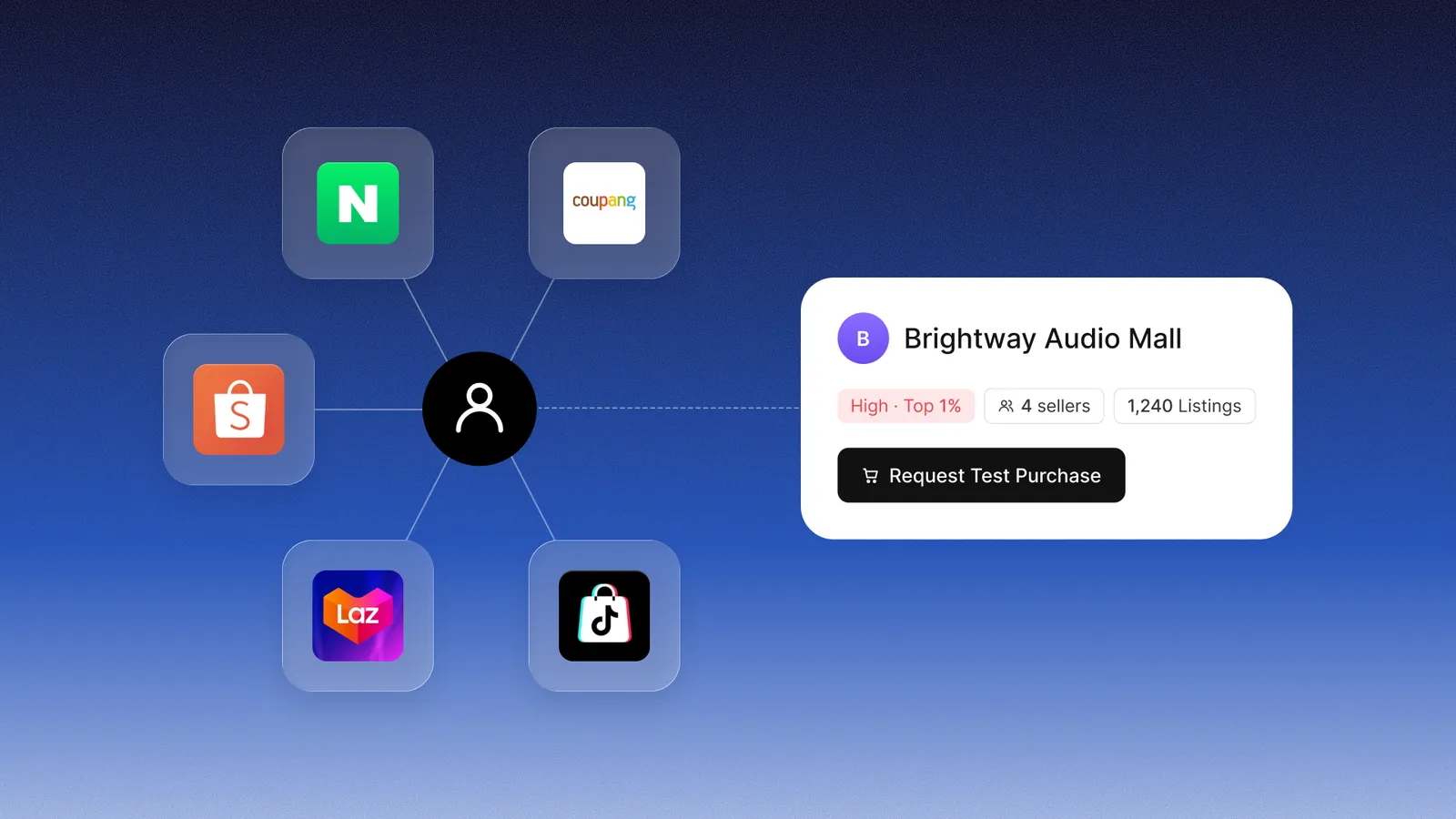
The top 5% are marked High and the rest of the top 20% Medium. A chip such as “High · Top 1%” shows where each seller stands. The Overview tab shows active and high-risk sellers, new infringing sellers from the last 14 days, and where they are by country and platform.
Take the most effective next step on each one
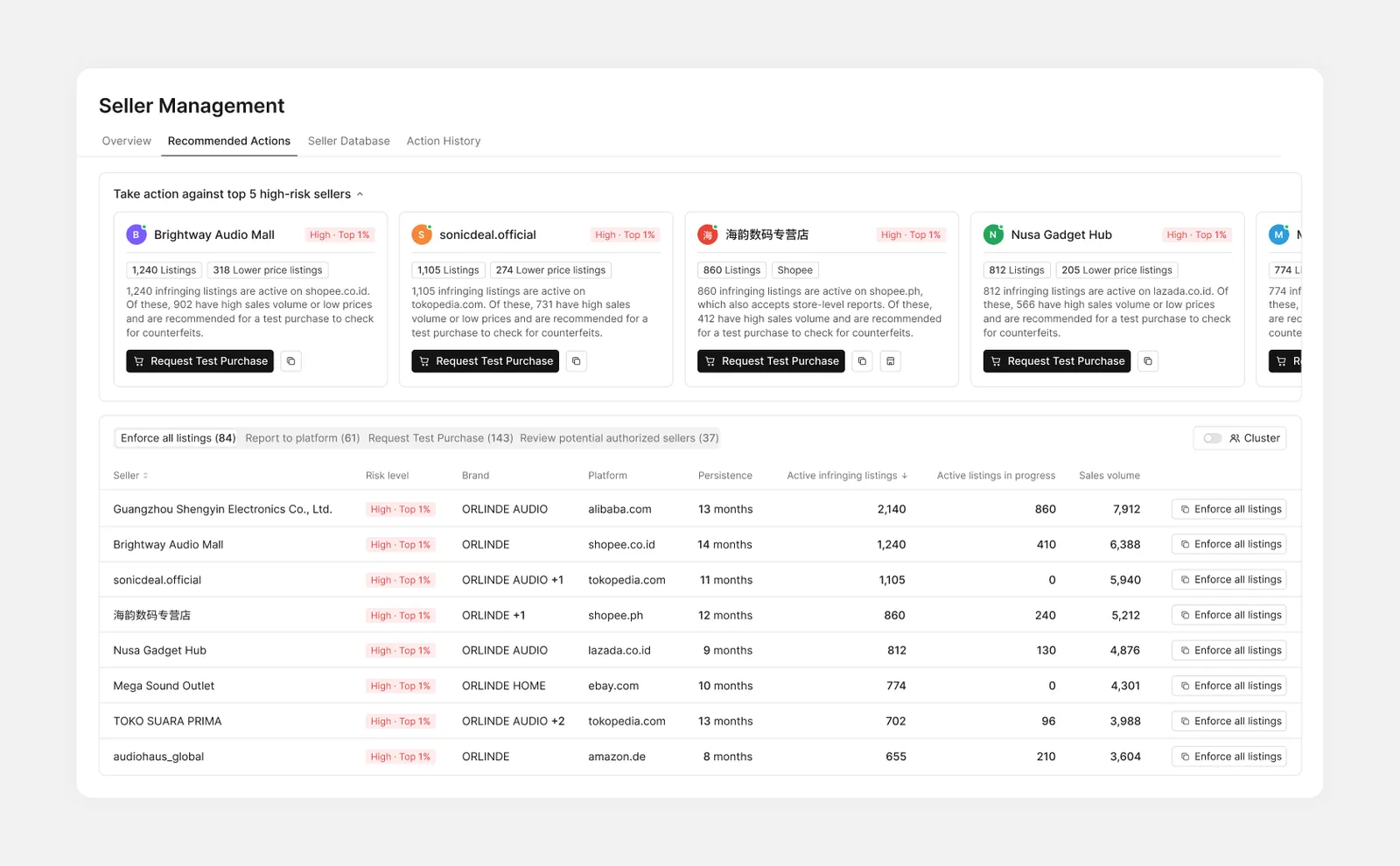
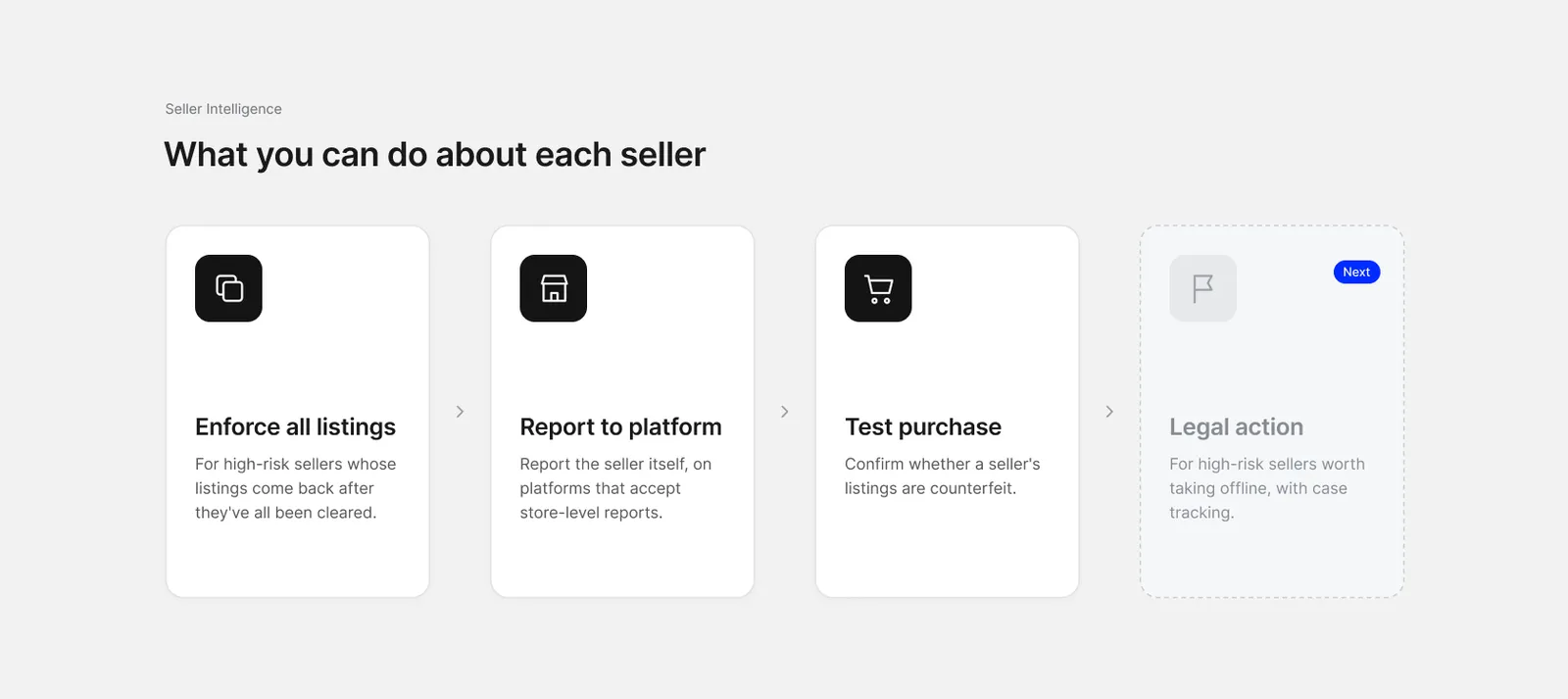
Recommended Actions flags the sellers worth acting on and the most effective action for each, starting with your top five high-risk sellers.
- Enforce all listings when a high-risk seller reactivates infringing listings after we’ve cleared them all.
- Report to platform when a seller is high-risk and the platform accepts store-level reports, such as Shopee and Lazada.
- Request a test purchase to confirm counterfeits when listings are priced below 40% of retail or sell in high volume on a high-risk platform.
- Review potential authorized sellers when a seller may be one of your authorized resellers, before they’re misclassified as infringing.
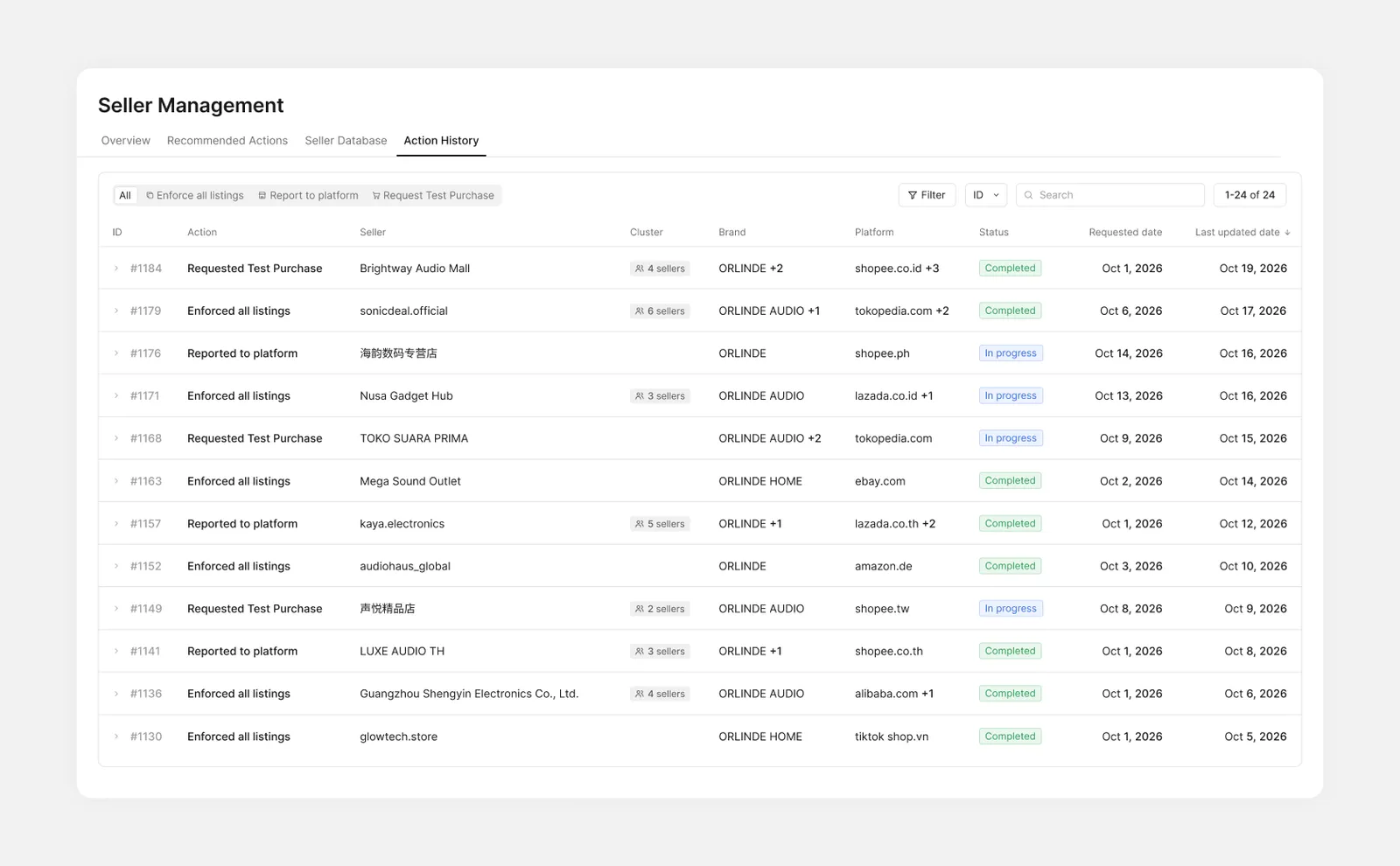
Request any eligible action from the seller’s card, recommended or not, and follow it in Action History to the outcome. Notifications, a watchlist and custom folders keep the sellers you track in view.
Coming next: act on the whole operation
This is the first step. Next:
- Legal action recommendations. The right offline move for each high-risk seller, such as Schedule A litigation or a raid, with case tracking.
- Revenue at risk. What a seller’s brand-related listings are worth, so you know who to enforce against first.
- Cross-channel clustering. The same seller, identified across marketplaces, social media, websites and domains.
- One seller database. Every seller we’ve detected, authorized to infringing, plus seller data you add yourself, managed together and used for clustering.
Seller Intelligence is live in Marq AI under Intelligence › Seller Intelligence. Existing customers can start in Seller Management › Recommended Actions. New to MarqVision? Request a demo.
Frequently asked questions
How is the risk level calculated?
From five factors: how many infringing listings a seller has, whether their listings reactivate after being cleared, how long they’ve been infringing, whether they belong to an infringing cluster, and their platform takedown records, including takedowns by other brands. Sellers are ranked against each other. The top 5% are High and the rest of the top 20% Medium.
What’s the difference between a cluster and a network?
A cluster is one legal entity behind several storefronts: sellers that share at least two details, one of them a reliable identifier such as a business registration or VAT number. A network links clusters and sellers that may be legally separate but show evidence of operating together, such as two or more shared details or a single shared registration number.
Why does a seller appear under “Review potential authorized sellers”?
Because it may be one of your authorized resellers. A seller appears there when its name contains one of your authorized keywords, or matches or resembles an authorized seller’s name. It also appears when it shares details such as a business registration, email, phone number or company name with an authorized seller, or when our investigation finds signs that it is authorized.
Can I request an action that isn’t recommended?
Yes. Recommendations go only to the sellers worth acting on, with the action most likely to work. You can still request any eligible action from a seller’s card.
How is the new Seller Intelligence different from before?
The three seller menus now sit together under Intelligence › Seller Intelligence, and two of them were rebuilt. Seller Management ranks every infringing seller by risk, recommends the most effective next step for the sellers worth acting on, and tracks each request in Action History. Seller Network has been rebuilt around shared identity signals, with more accurate seller clustering and AI insights on who each cluster is. Seller Match works as before.
What happens when a seller needs offline action?
When an operator is worth pursuing offline, MarqLaw takes over with test purchases, investigations and raids. Legal action recommendations are coming to Seller Intelligence soon.