AliExpress and Temu enter Korea: is your brand safe?
TikTok Shop, AliExpress, Temu and Shein are moving into Korea. What sets each apart, the brand IP infringement on each, and how to protect your brand.
 Irene Lee4 min read

On this page6
- E-commerce platforms to watch in 2024: TikTok Shop, AliExpress, Temu and Shein
- TikTok Shop: an e-commerce revolution through video
- AliExpress: going all in on the Korean market
- Temu: a new shopping trend, buying direct at rock-bottom prices
- Shein: value for money, and fakes
- An evolving e-commerce market, and brand protection that never stops
E-commerce platforms to watch in 2024: TikTok Shop, AliExpress, Temu and Shein
TikTok Shop, AliExpress, Temu and Shein are drawing attention as the fastest-growing online marketplaces of 2024. They’re hot platforms not only in Korea but globally, and they’re having a big impact on whether brands’ IP is respected.
In Korea and around the world, TikTok Shop, AliExpress, Temu and Shein are e-commerce platforms whose monthly active users (MAU) keep growing. In Korea, AliExpress is growing 8% and Temu 42%, each attracting consumers in its own way. Consumers have grown used to the convenience e-commerce brings to daily life, and given the variety of products, low prices and aggressive marketing on marketplaces like AliExpress and Temu, the online platform industry is heading in new directions.
But these platforms have already been embroiled in controversies over IP and counterfeit sales. With countless online channels already available for gray-market (unauthorized) distribution, this is a critical time for companies trying to protect their brand’s value and identity, and the moment to plan their next moves.
In this post, we look at e-commerce platforms in a period of upheaval, especially TikTok Shop, AliExpress, Temu and Shein, and why they’re the online marketplaces brands should watch most closely in 2024.
TikTok Shop: an e-commerce revolution through video
TikTok Shop grew out of TikTok, the hugely popular video-sharing platform. Launched in the US in September 2023, the online marketplace started drawing attention as counterfeit sellers made many attempts to reach consumers directly.
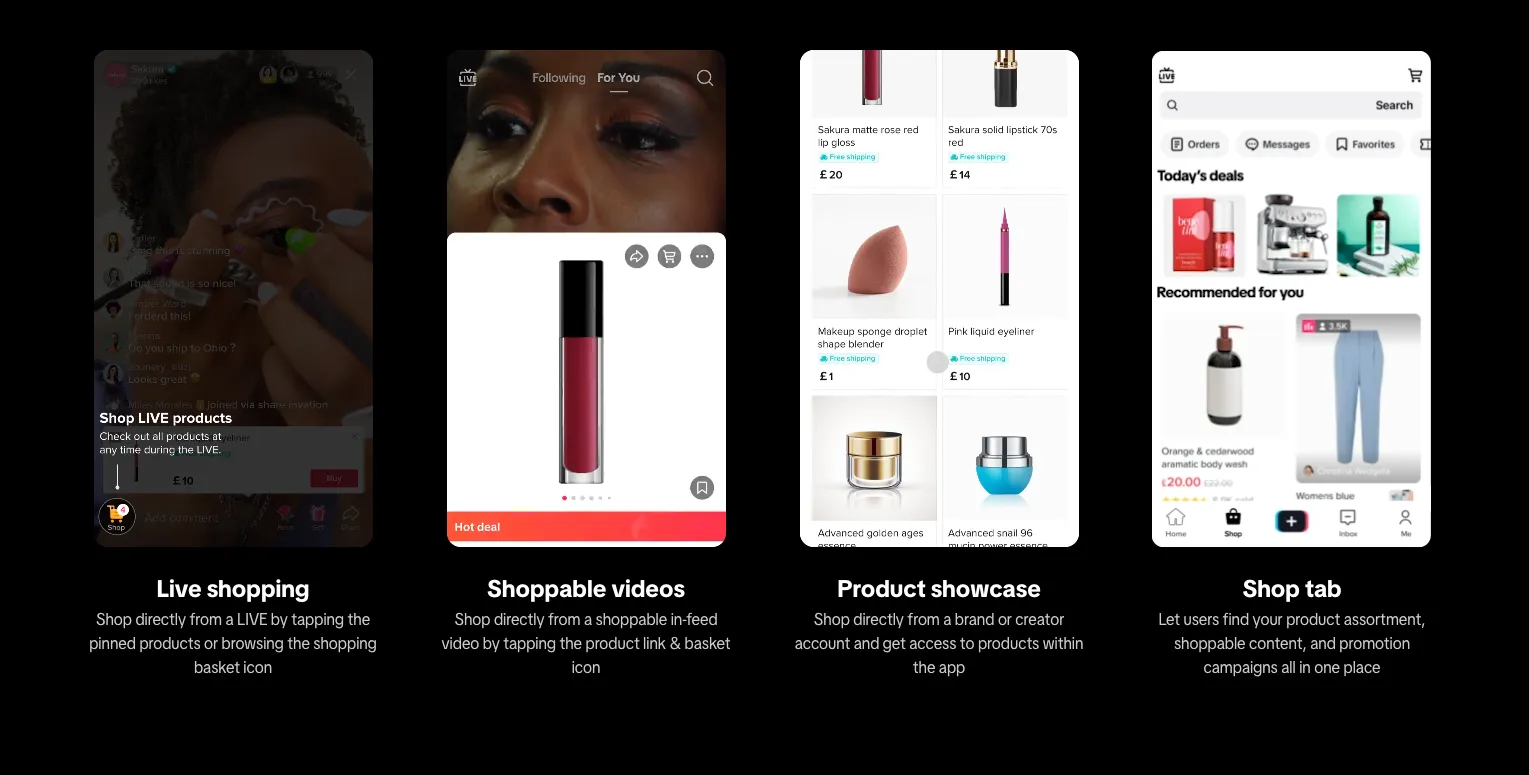 TikTok Shop
Not yet launched in Korea, TikTok Shop appeals by letting sellers promote their products with short-form video, creating a distinctive user journey. In other words, when a video creator features a product in their content, the product appears within the TikTok app and can lead straight to a purchase. TikTok has been especially popular since the COVID-19 pandemic with younger generations, Gen Z and Gen Alpha, and sellers of every kind of product have tried to make the most of a platform with more than 1 billion monthly users.
Even before TikTok Shop launched in the US, content creators were promoting products and linking to other shopping platforms, effectively using TikTok as another version of e-commerce. Because the new e-commerce features built on what creators were already doing, the shift went smoothly.
Curious how counterfeiters use TikTok to evade IP enforcement? Read our previous post too.
In short, the replica TikTok (“Reptok”) strategy centers on promoting fakes in the format of “haul” content showing products bought online. Creators then send interested viewers to a WhatsApp channel or a publicly accessible spreadsheet that acts as the purchasing go-between, and links take users to online marketplaces.
Counterfeiters are notorious for exploiting online platforms in every way possible, and they didn’t miss this chance to tap TikTok’s influence either. Repeat counterfeit sellers cleverly evade platforms’ IP protection features by selling directly on online marketplaces or using attention-grabbing tactics.
Compared with other platforms counterfeiters favor, though, TikTok responds actively. It accepts brands’ requests to protect their IP and act on infringement, and works closely with stakeholders to respond quickly to counterfeiters’ activity.
AliExpress: going all in on the Korean market
AliExpress has operated in Korea since 2018, and this year it began seriously building its position there. AliExpress’s monthly active users reached 8.87 million, overtaking 11st (7.4 million). With rock-bottom prices and aggressive marketing, its user base is expected to keep growing.
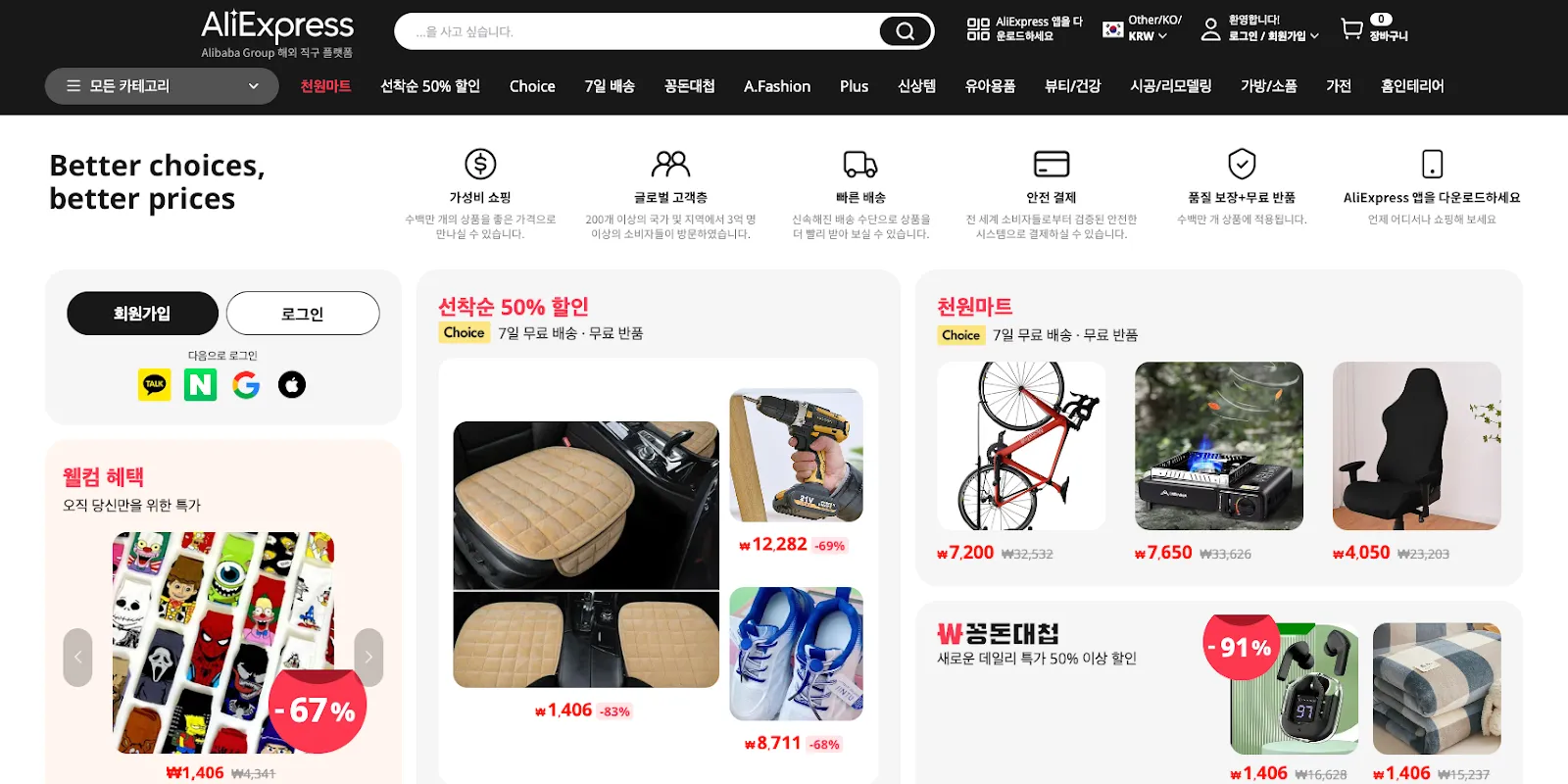 AliExpress
Consumers could buy products cheaply, but the platform wasn’t very popular because of slow, unpredictable shipping. But as it got serious about business in Korea, setting up a Korean logistics center and a local corporate entity, it hit No. 1 in app installs within a month. Several factors, including aggressive marketing, contributed to this success, but the biggest was price competitiveness: products can be found for anywhere from half price to 70% off what Korean e-commerce sites charge.
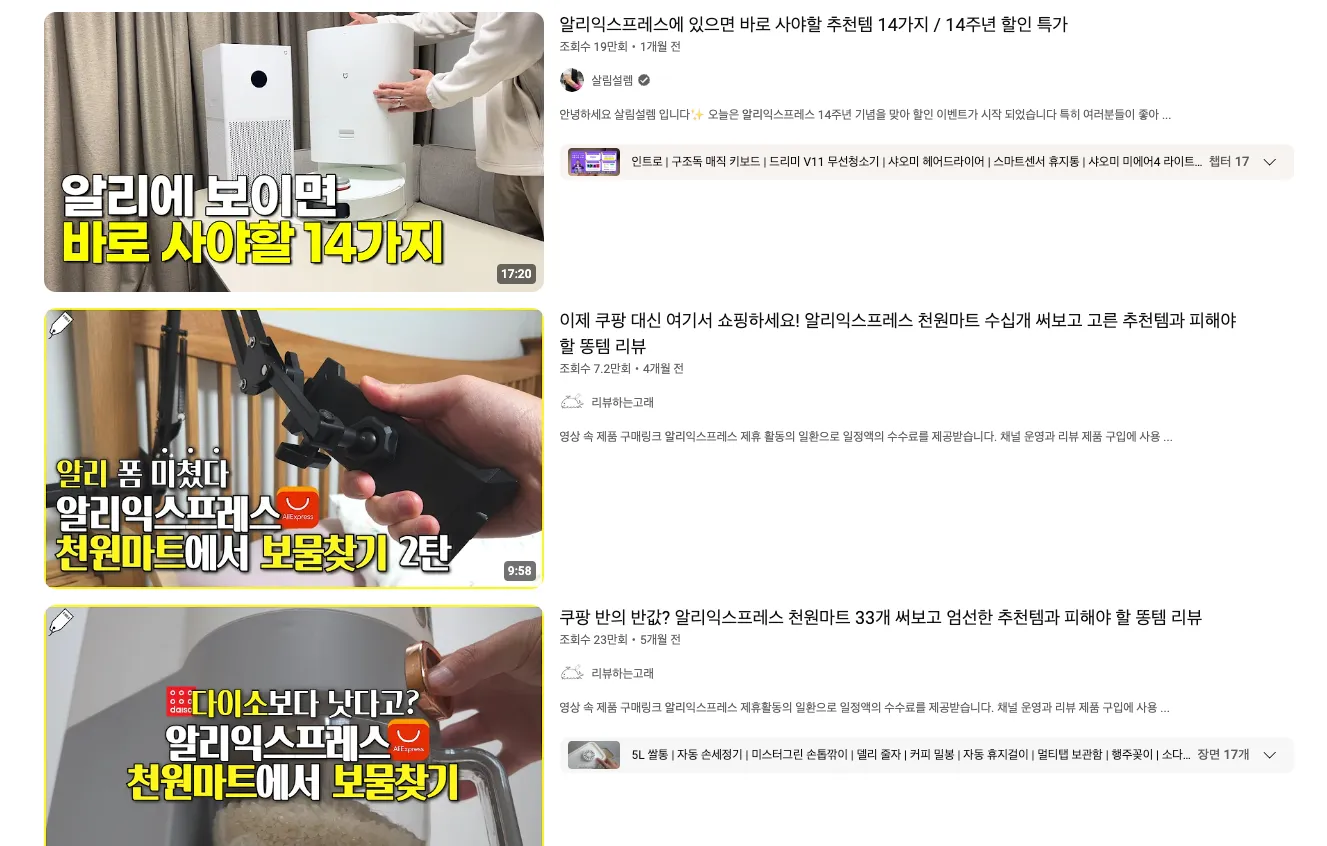 AliExpress YouTube content: product recommendations
As AliExpress cemented its position with consumers and in Korea, well-known Korean companies began opening stores on the platform too. YouTube videos and Reels recommending “must-buy items on AliExpress” introduce products and stoke viewers’ desire to buy by saying they can be had far more cheaply. The video descriptions list the recommended products and purchase links, and consumers find themselves arriving through a new purchase route.
There are other ways to buy on AliExpress too. As on any e-commerce platform, you can search for the product you want in the app or on the website. For example, if you search for a Samsung Galaxy Watch, you’ll see the official company account alongside many other sellers in the results. The problem that comes up alongside official company accounts is counterfeit sales and fraud. When we tried the AliExpress app ourselves, finding fakes of well-known Korean and international companies’ products wasn’t hard. From products from Xiaomi, China’s leading electronics company, with its English name spelled “Xioami” or “Xioaml,” to Samsung’s “Galaxy” watches, products were selling for far less than in Korea. Because cheaper listings appear first in search results, fakes outnumber genuine products in the results and can be sold.
Because of these problems, AliExpress actively accepts counterfeit reports and has introduced policies encouraging them, such as full refunds when fakes are found. This suggests AliExpress is aware of brand IP infringement and is working with consumers to protect against it and minimize harm.
Temu: a new shopping trend, buying direct at rock-bottom prices
AliExpress and Temu are both Chinese e-commerce platforms, but they differ greatly in Korea. Rather than competing with Korean e-commerce companies by running an open marketplace for Korean products, as AliExpress does, Temu focuses on cross-border direct purchases.
 Temu
Temu is growing at a startling pace, becoming the No. 1 shopping app for new user growth just three months after launching in Korea. Temu was founded in Boston in 2022 as a platform built to target overseas markets. It operates in 49 countries, including Korea, offering products to consumers at wholesale prices of $0.50 to $50. In Korea, orders over 13,000 won ship free. It also gives credits that work like cash when you sign up or when friends join, making it especially popular with people in their twenties and thirties in Korea.
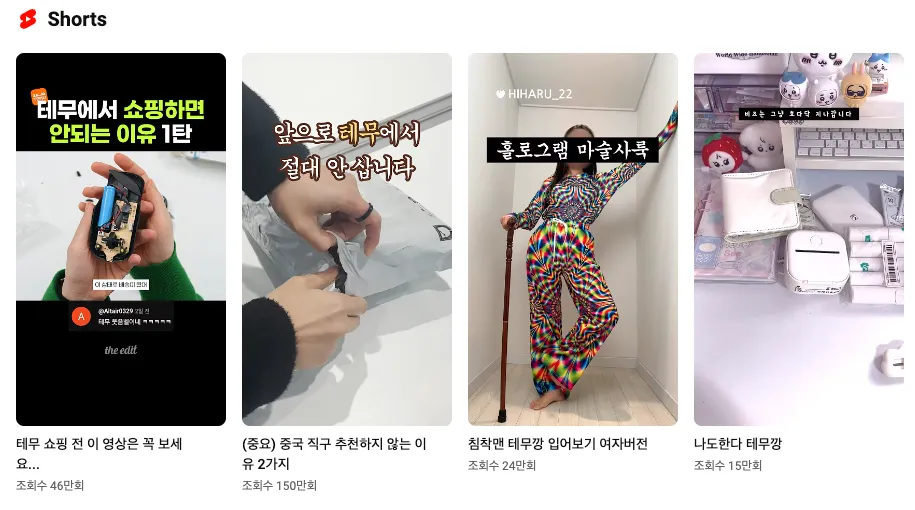 Temu YouTube content: Temu haul videos
Temu grew quickly by prioritizing e-commerce market share and rankings over profit margins. That encouraged sellers to cut corners to save costs and fueled the spread of fakes. Temu’s policies favor counterfeit sellers because they push sellers to offer products at lower prices than on competing platforms, ultimately selling below wholesale. On most other e-commerce platforms, many factors such as customer reviews and seller history determine which listings appear at the top. On Temu, price is the only deciding factor, and the seller with the lowest price always appears first.
Counterfeit sellers generally don’t spend on product development or marketing, so they can operate and sell at far lower prices than official sellers. That’s because they steal the IP and brand value companies developed and use it for free. In our view, Temu’s policy of prioritizing low prices above all creates a new ecosystem where counterfeit production and sales run rampant.
Shein: value for money, and fakes
Finally, Shein, a marketplace that has grown explosively in fashion. Founded in China and now headquartered in Singapore, it’s known for imitating designs and taking a loose attitude toward IP protection.
Shein was originally known as a fast-fashion leader with rapid production and distribution, and it expanded its business further by letting third parties sell on the platform. By offering outside sellers its platform alongside its own products, it’s likely to see even more IP infringement.
Fast fashion: cheap, mass-produced clothing that follows fast-changing trends. New products are released constantly to keep up with trends.
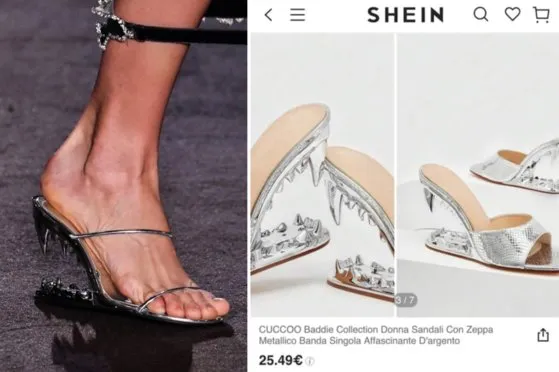 Example of a Shein design copying controversy
What sets Shein apart from other online marketplaces, including AliExpress, TikTok Shop and Temu, is that it has infringed IP deliberately. On other online marketplaces, counterfeits usually get sold when the platform fails to notice malicious sellers quietly selling fakes, whereas Shein itself has been seen infringing IP.
Several well-known fashion brands, including Ralph Lauren, Levi’s and Uniqlo, have even sued Shein. The allegations in these cases range from design theft to selling counterfeits, and Shein has been criticized for copying or slightly altering famous brands’ existing designs and selling them.
Shein has a process for reporting IP infringement, but controversies over brand IP infringement on the platform keep coming.
An evolving e-commerce market, and brand protection that never stops
As Chinese e-commerce platforms enter Korea, e-commerce market share and online platform laws are changing in response to consumers. In January, AliExpress introduced “Project Clean,” promising to stop IP infringement and respond quickly to counterfeit reports, but it only made searches by brand name return no product results. Fakes can still easily be found and bought with other search terms.
Even more striking, only AliExpress and Temu have entered Korea so far, and more global e-commerce platforms may follow. When overseas platforms such as TikTok Shop and Amazon arrive, how will business owners and managers protect their brands and minimize consumer harm?
With MarqVision, the only solution for growing and protecting brand IP, act against counterfeit sellers and IP infringement on e-commerce platforms that damage your brand’s value. Try a solution tailored to your brand that responds effectively and efficiently not only to counterfeits but also to gray-market sales, resale and other illegal activity.