How to handle brand IP infringement on Temu: from reporting to repeat offenders
Found IP infringement on Temu? A step-by-step guide for brand teams: preparing a report, checking the outcome and managing sellers who infringe again.
 Jinie Park4 min read

On this page7
Key points
- Temu screens every product before it goes live against a database of 47 million images and 9.5 million keywords. Proactive removals outnumber removals after a report 331 to 1. (Temu 2026 IP Protection Report)
- More than 99% of well-documented reports are processed within three business days.
- Reporting individual products won’t stop repeat infringement. Track history by seller and request store-level action as well.
- If you find more than 50 cases a month or manage three or more platforms, it’s time to consider automated monitoring.
Found counterfeits on Temu? Where to start
Temu passed 400 million monthly visitors worldwide in 2025. As the platform grows, so do counterfeits and IP infringement.
For brand teams, finding a counterfeit is the easy part. When the same seller relists with a new product name and images, or sells similar products across several stores, reporting turns into an endless loop.
“I reported it, and it’s back up again. How long do I have to keep doing this?”
Many brand teams know this well. Temu runs both a reporting channel for rights holders and a proactive protection program. This post walks through, step by step, how to put them to work.
How Temu’s IP protection is set up
Knowing how Temu’s protections work before you report makes it easier to choose the right channel and prepare the right materials.
Screening every product before listing, and monitoring after
According to the Temu 2026 IP Protection Report, Temu checks every product before it goes live against a database of 47 million images and 9.5 million keywords. The image database grew more than ninefold over the past year. After listing, automated systems, monitoring staff and reports from rights holders keep watch for suspected infringement.
The first step for a brand is simple. If you’ve changed your logo or launched new products, update your trademarks and product images with Temu. Its detection works from the assets rights holders provide.
Brand Guardian Initiative (BGI): working directly with brands
BGI is Temu’s program for proactive protection based on the trademark and product information brands provide. According to Temu, brands can join whether or not they sell on Temu, and a dedicated team handles fast response. Korean companies that own K-brands can also use a dedicated channel set up under the MOU Temu signed with the Korea Intellectual Property Protection Agency (KOIPA) in June 2026.
Check BGI eligibility and the required materials on Temu’s official channels, and first make sure your IP portfolio is registered.
Before you report, prepare these materials
A report succeeds or fails on its materials. More than 99% of reports with complete supporting evidence for the case are processed within three business days. Missing materials mean requests for more information, and delays.
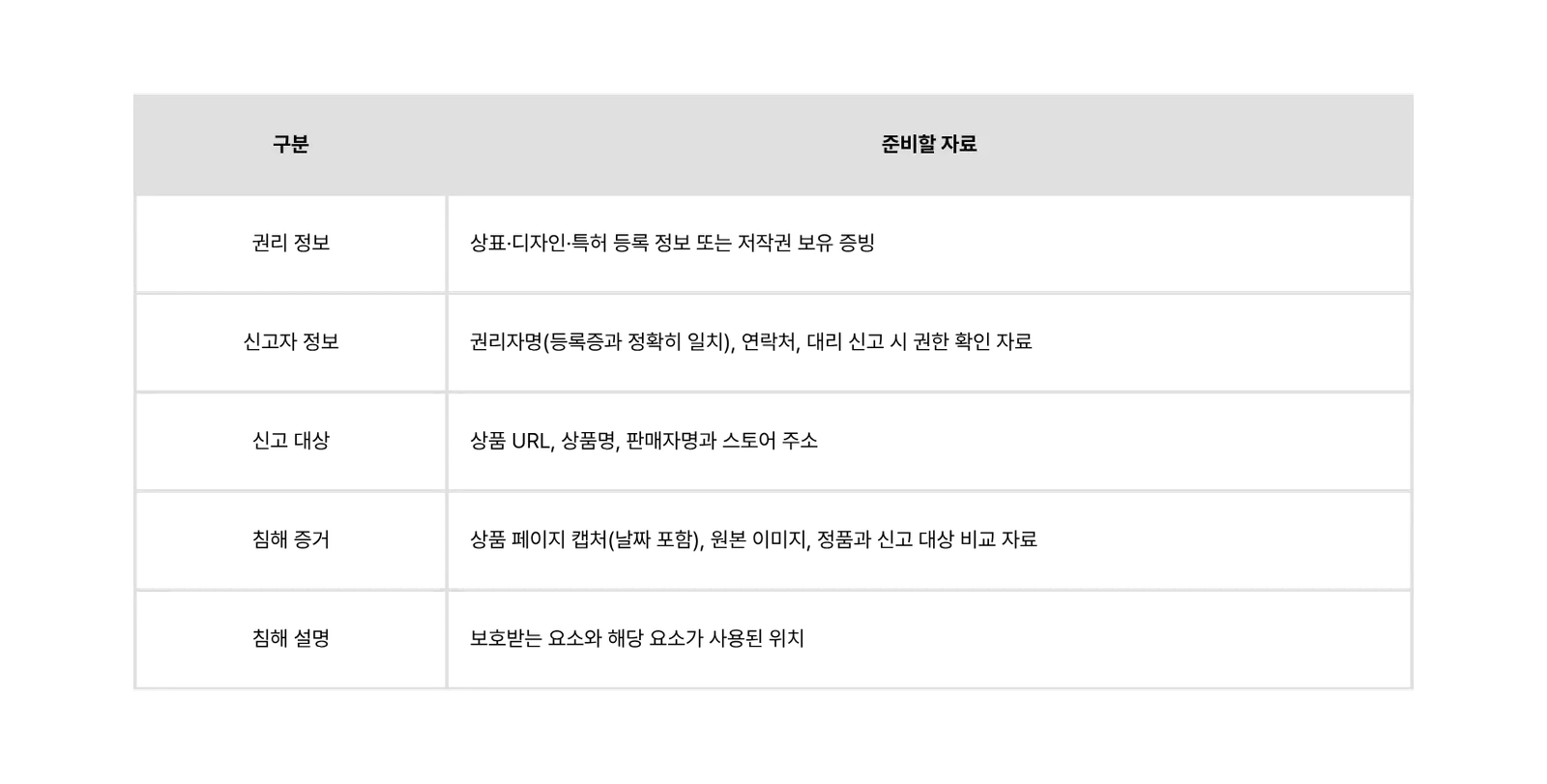
For example, if your official product photos appear on a product page without permission, show the original image and that page side by side and mark what was copied. For a product that uses your logo, list the relevant trademark details and where the logo appears.
Note: product pages can be edited or deleted at any time. Always record the date you captured your evidence.
From report to outcome in three steps
With your materials ready, file the report through the Temu IP portal.
Step 1: Submit the target and your evidence
Enter the basics, such as the report type and product URL, then submit a description of the infringement and your evidence. Make sure the registration number and rights holder name match your documents. A statement like “our brand images were used without permission” lands immediately when it comes with the original image, where it was used and a comparison.
Step 2: Check the review outcome and any requests for more information
After filing, look for the confirmation email and answer any request for more materials right away. Record the report date, target URL and outcome, so you can use that history immediately if the same product or seller is relisted. The actual review outcome, and whether more information was requested, matter more than processing-time figures.
Step 3: Check the live listing and any relistings
Even after you’re told a listing was removed, check again whether the product is still visible and whether similar products have been relisted. Skip this step and you’ll miss repeat offenders.
Manage repeat infringement by seller
Reporting individual products often isn’t enough. If one store keeps listing products with your logo, keep records by seller: not just URLs, but when you found each one and how earlier reports were resolved.
What to track for each seller:
- Suspected infringing products found and the rights involved
- Date first found, report date and the platform’s outcome
- Products relisted after removal, with comparison materials
- Images and product descriptions used again and again
Once this history builds up, you can formally ask Temu for a store-level review and further action. The clearer the evidence of repeat infringement, the stronger the platform’s response. Measures such as account suspension or termination are decided by the platform’s policies and review.
FAQ
Q. If we join Temu’s BGI, will infringing products be removed automatically?
BGI lays the groundwork for stronger detection. When you provide your trademarks and product images, Temu’s proactive monitoring covers more and a dedicated team can support you. But specific infringing products are still removed through the rights holder’s reports and evidence. Use BGI and the IP portal together.
Q. Listings keep coming back after we report them. When should we escalate to a store-level request?
Escalate when the same seller has relisted two or more times, or when you see a pattern of relisting with only the product name or images changed. Submit the date first found, the outcome of each report and comparison images of the relistings together, as a record of repeat infringement.
Q. How should we prioritize when infringement happens on several marketplaces at once?
Start with the platforms that affect revenue most and the channels with the highest saturation (market penetration). If you find more than 50 cases a month or manage three or more channels, handling each channel by hand hits its limits. That’s the point to consider automated detection with integrated management.
Build ongoing brand protection with MarqVision
As the products and sellers you manage grow, the time spent on detection, evidence, reporting and relisting checks grows exponentially. If you face infringement on several channels at once, such as Amazon, Coupang, Shopee and Alibaba as well as Temu, keeping each channel’s history separately leaves gaps.
Automate the routine of detecting, reporting and checking, and your team can focus on strategic decisions.
MarqVision combines AI detection with automated bulk reporting to monitor counterfeits continuously across more than 1,500 platforms, including Temu, and tracks relistings automatically after removal. Together with Temu’s IP protection, that gives you a complete response: detection, removal and blocking relistings.
Request a demo tailored to your brand and see where your monitoring coverage and response can improve.