MarqVision Research: Seller Concentration
The top 1% of retail marketplace sellers posted a third of flagged listings. What MarqVision data shows about who sells counterfeits and how fast platforms act.
On this page4
To the uninitiated, brand protection starts from a faulty assumption: that counterfeiting is spread across a large, roughly even crowd of sellers. Takedown counts, seller counts and listing counts can all treat each seller as an equal part of the problem.
But when we looked at every listing MarqVision flagged between August and October 2026, the distribution turned out to be far more concentrated. On retail marketplaces, the top 1% of sellers posted a third of all flagged listings.
A small group posts most of the listings
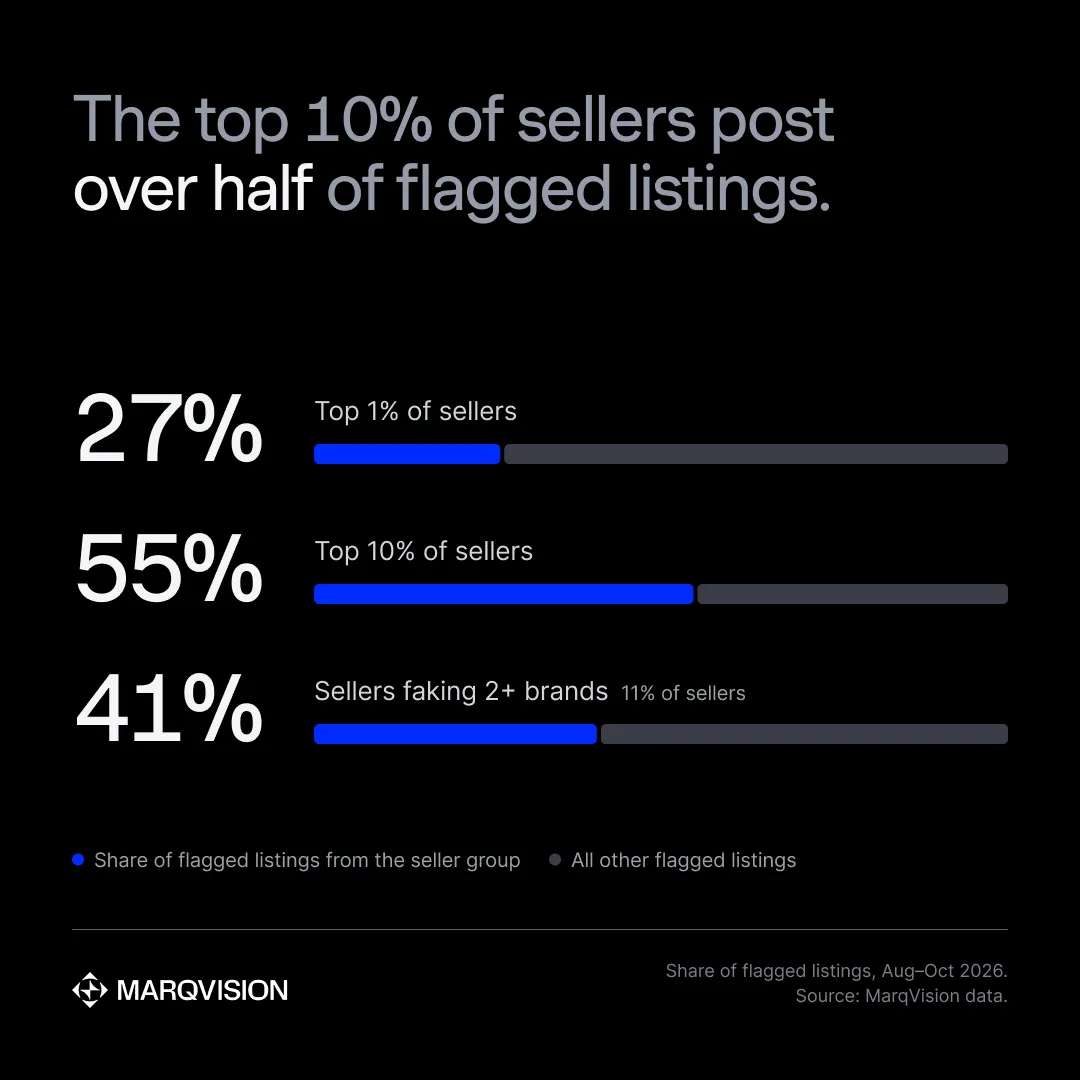
Across all channels, the top 10% of sellers accounted for more than half of flagged listings. The more revealing group cuts across that ranking: sellers flagged for two or more brands made up about one in ten sellers, but posted 41% of listings. Because each brand only sees the listings that infringe on it, a seller working across five brands can look minor to every one of them, even when it’s one of the largest sources of counterfeits in the market.
Resale apps and retail marketplaces attract different sellers
The concentration depends heavily on the channel. On resale apps, 76% of flagged sellers appeared only once, which points to individuals listing an item or two. Retail marketplaces showed the opposite pattern, with 33% of flagged listings coming from the top 1% of sellers. Programs that cover both channels the same way are likely to over-invest in one: resale apps reward broad coverage, while retail marketplaces reward identifying the few sellers behind most of the listings.
Some platforms are especially responsive to takedown requests
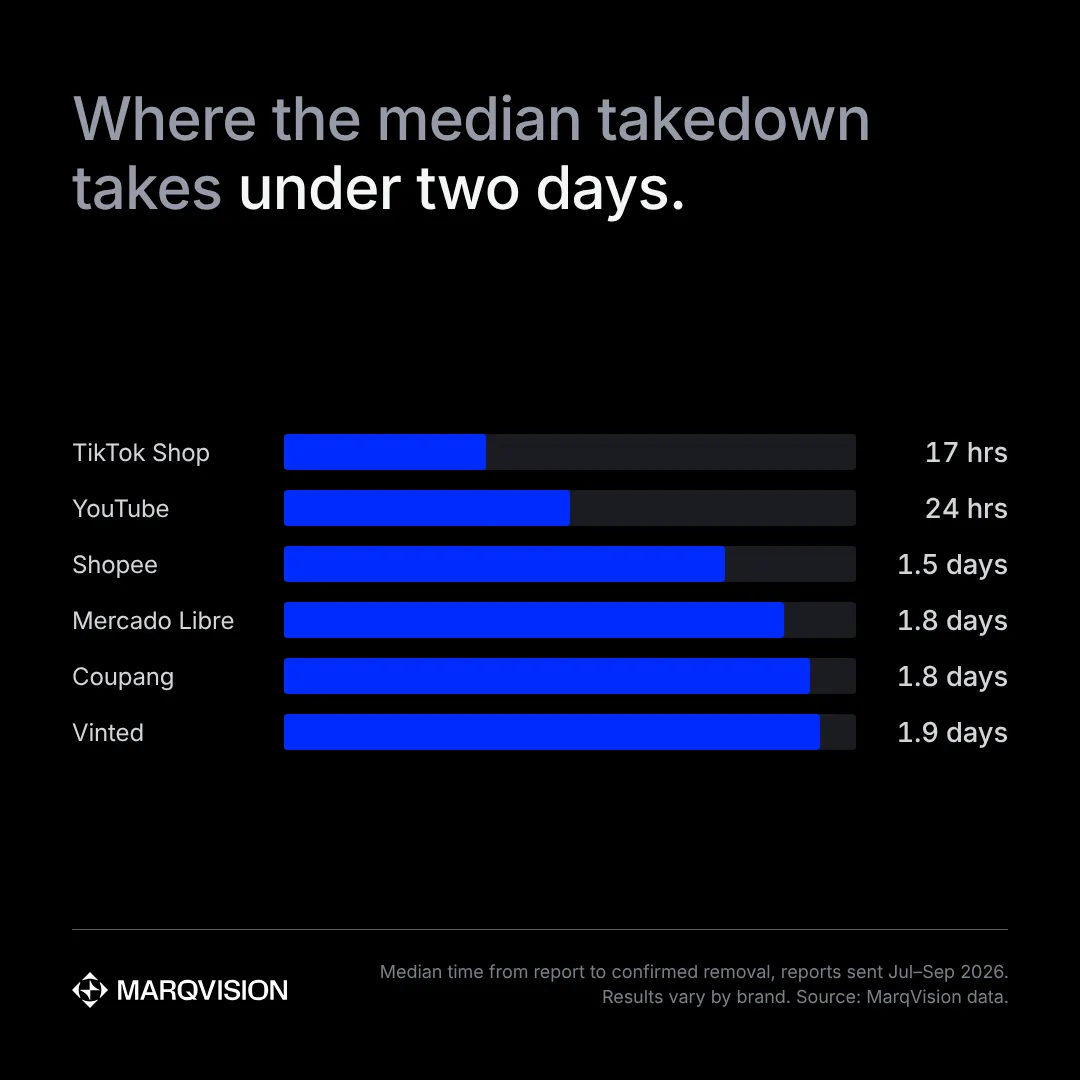
On six platforms, the median takedown took under two days. TikTok Shop was the fastest of the six, with a median of 17 hours, followed by YouTube at about a day. Shopee, Mercado Libre, Coupang and Vinted each took between a day and a half and two days. A counterfeit’s visibility after it is reported likely depends as much on where it’s listed as on how quickly it’s found.
Some sellers come back
One in eight sellers whose listing was removed between May and July posted a new infringing listing for the same brand within 90 days, typically after about a month. That figure is a floor, since it only captures sellers returning under the same account, not those who open new ones. It’s also a reminder that a takedown count records what was removed, not whether the seller behind it has stopped.
About this data: figures come from listings flagged and reports sent by MarqVision across the brands we monitor.
Want to see where your sellers are concentrated? Start with a free 90-second brand scan.