E-commerce trends in 2026: AI shopping and the rise of zero-click commerce
Shopping without search has begun. See how zero-click commerce, where AI recommends and chooses, is changing platforms, and what brands should prepare.
On this page7
- Less searching, faster choosing
- “Search, compare, click, buy” is no longer the default
- Being chosen, not traffic, is the new edge
- Korean e-commerce has already entered the zero-click stage
- Platforms are becoming “AI choice engines”
- In the end, shopping becomes agentic
- [Preview] Seminar: how AI is changing e-commerce in 2026
Less searching, faster choosing
In our last post, we used the idea of the “AI tax” to look at how, as brands grow, counterfeits, impersonation and the gray market structurally drain their revenue.
This time we look at a change further upstream.
How are shoppers changing?
This isn’t just a passing trend. It ties directly to the structural shift in e-commerce in the age of AI shopping, which will decide how brands are discovered and chosen from now on.
“Search, compare, click, buy” is no longer the default

The online shopping we grew used to was clear: search, compare, click, buy. That pattern is changing fast. AI is moving beyond showing information to summarizing products, recommending them and taking shoppers all the way to checkout.
Retail analysts now note that “search- and comparison-driven e-commerce is changing quickly as AI is adopted.” As a result, the shopper’s role is changing too. Instead of doing the searching and comparing, shoppers are moving toward simply making the final decision.
We call this zero-click commerce: a new buying pattern in which purchases happen on the strength of AI recommendations, without clicks.
Being chosen, not traffic, is the new edge

The biggest change in AI shopping is simple. What matters now isn’t traffic. It’s being chosen.
In e-commerce, ranking high in search results used to be the key advantage. Now it matters more to make it onto the AI’s recommendation list.
The basis of competition is changing:
- Competing for visits → competing to be chosen
- Competing for clicks → competing for recommendations
Forecasts agree that as AI-agent shopping spreads, search-led competition will weaken and recommendation-led structures will strengthen. E-commerce is reorganizing from a traffic-led model to one led by AI choice.
Korean e-commerce has already entered the zero-click stage
This isn’t just a global trend. Korean e-commerce is moving quickly in the same direction. Major retailers such as Lotte, Shinsegae and Hyundai Department Store have made AI a core strategy and are building experiences where recommendation leads naturally to purchase.
Shinsegae Group is using customer data to build “zero-click shopping,” where recommendations lead to checkout without a search, and Gmarket is using behavioral data to strengthen an AI-curated shopping experience. Hyundai Department Store is also connecting recommendation to purchase through an AI shopping assistant. (Source: Fortune Korea)
The direction is clear. Korean e-commerce is already shifting to a model built on AI recommendations.
Platforms are becoming “AI choice engines”

The direction of each Korean platform makes this clear.
Coupang is building on fast delivery and price competitiveness to make its products easy for AI to choose. Naver is building up reviews and content as data assets to refine its AI recommendation algorithms. Kakao shows how its messenger-based experience could expand into conversational AI shopping.
Each platform takes a different route, but the direction is the same: from users making the choice to AI helping make it.
In the end, shopping becomes agentic

COVID made online shopping part of everyday life. Now AI is redefining how we shop.
From searching and comparing to being recommended and being chosen
This isn’t just about convenience. It’s a structural change in how e-commerce works. Shopping is moving to an “agentic shopping” model, in which AI takes part in the decision.
That raises a new question for brands:
Not how to get more exposure, but how to get chosen
And answering it requires changes in brand strategy and in how brands use data.
[Preview] Seminar: how AI is changing e-commerce in 2026
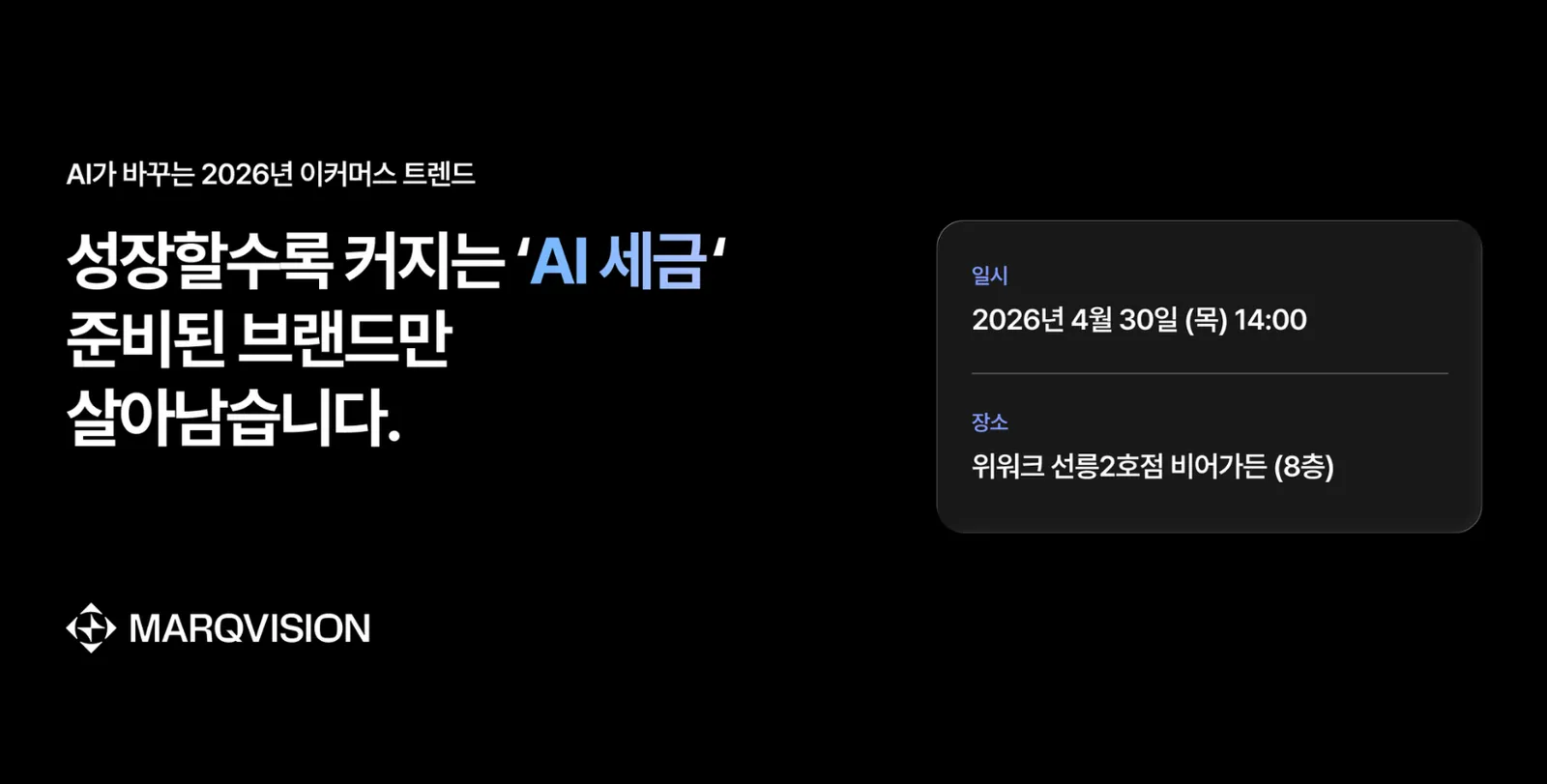
At MarqVision’s seminar on April 30, we’ll look in detail at how these changes affect day-to-day e-commerce work, and what brands should prepare.
It’s a chance to see the whole picture in one place: the shift to AI-driven shopping, the gray market and pricing, and the Brand Intelligence Agent.
Register now and be among the first to see these changes.