Korean e-commerce market share and FMCG trends in 2026: what brands need to know
Korean e-commerce hit KRW 271 trillion and keeps growing as offline retail stalls. What the Coupang-Naver duopoly and FMCG growth mean for gray-market risk.
 Jinie Park4 min read
On this page6
“Our products are being sold on Coupang by sellers we don’t recognize. How do we manage that?”
“We keep losing the Item Winner spot on Naver Smart Store to cheaper listings. Is this just price competition?”
If these questions sound familiar, it’s time to take a fresh look at how e-commerce works in 2026. The market is growing, and so are the risks to brands inside it.
E-commerce in 2026: the only part of retail still growing

According to Statistics Korea, online shopping transactions in Korea reached KRW 259 trillion in 2024 and grew to KRW 271 trillion in 2025. For 2026, the Korea Chamber of Commerce and Industry forecasts 3.2% growth.
Offline retail grew just 0.6% over the same period, which makes e-commerce effectively the only growth channel.
FMCG (fast-moving consumer goods) categories centered on household essentials, food and beauty are leading that growth. Short repurchase cycles and easy price comparison make them the categories where shoppers move online fastest.
Coupang vs. Naver: a two-horse race

As of 2026, Coupang holds 23% of the Korean e-commerce market and Naver Shopping 20.7%, so the two platforms account for more than 43% between them.
Coupang is consolidating its lead on the back of 32.4 million monthly active users, KRW 49 trillion in annual revenue and its Rocket Delivery infrastructure. Naver is closing in with Smart Store and AI recommendations.
Brands can’t ignore either platform. Let channel management slip on either one, and unauthorized sellers and parallel imports fill the gap.
FMCG, the engine of e-commerce growth
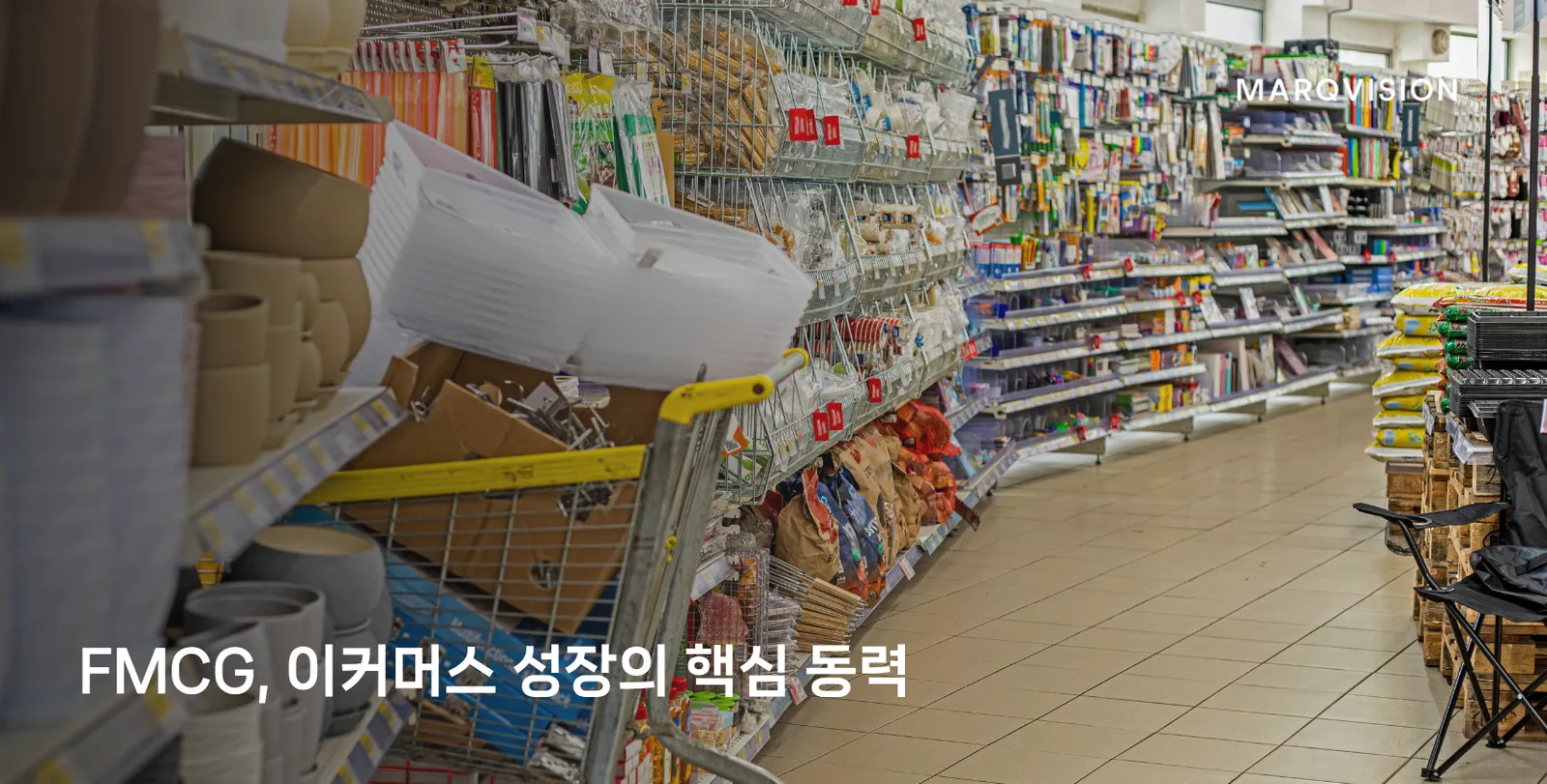
FMCG is the category driving e-commerce growth hardest. Coupang’s Rocket Fresh (fresh food) and Naver’s grocery service are the best-known examples, and the online share of beauty, household goods and health supplements is also rising quickly.
What is Item Winner? When several sellers sell the same product on Coupang, the seller with the lowest price and best terms takes the featured spot.
So when an unauthorized seller cuts the price and takes the Item Winner spot, the brand’s official store loses visibility and control over pricing. To fully benefit from e-commerce growth in FMCG, brands first need control over their channels on each platform.
The faster the growth, the bigger the gray-market risk

As e-commerce grows, so does the damage from gray-market distribution and parallel imports. According to OECD and FBI statistics, IP-related losses are growing by more than 15% a year. For FMCG brands, that means a triple hit: lost Item Winner spots, collapsing prices across distribution, and a surge in consumer complaints.
On open-market platforms like Coupang and Naver, anyone can register as a seller and sell a brand’s products. Without its own monitoring, a brand may not even notice the damage.
How FMCG brands can manage their e-commerce channels
There are four core strategies for protecting a brand in e-commerce.
-
Monitor gray-market sellers continuously: Keep tracking unlicensed sellers listing under your brand or product names on major platforms such as Coupang and Naver.
-
Manage the Item Winner spot: Spot sellers who distort prices early, and report them to the platform or take legal action.
-
Automate IP enforcement: Automate DMCA notices and platform reports based on trademarks and copyrights to respond faster.
-
Strengthen official channels: Keep your official store’s prices competitive and its content high quality, so shoppers end up in the right place.
[Preview] Seminar: how AI is changing e-commerce in 2026

At MarqVision’s seminar on April 30, we’ll look in detail at how these changes affect day-to-day e-commerce work, and what brands should prepare.
It’s a chance to see the whole picture in one place: the shift to AI-driven shopping, the gray market and pricing, and the Brand Intelligence Agent.
Register now and be among the first to see these changes.
(Sources: Statistics Korea, Online Shopping Survey, 2026 Korean e-commerce market share, 2025 Global Counterfeit Trends Report)