15 million pet owners: pet spending trends and gray-market issues | July 2026
The petconomy and pet humanization have made pet food fiercely competitive. The distribution and pet health problems the gray market causes, and how to respond.
 Irene Lee4 min read
On this page6
- A pet food market driven by the petconomy and pet humanization
- The online pet food market: fiercer competition and why channel strategy matters
- Who spends, and how much: the spending patterns of pet-owning households
- The pet food gray market: cross-border reselling and broken distribution
- Practical ways to protect pets and pet food brands
- Frequently asked questions (FAQ)
More than 15 million people in Korea now live with pets. According to the Ministry of Agriculture, Food and Rural Affairs, the Korean pet market was worth about KRW 8.5 trillion in 2022 and is expected to grow to about KRW 21 trillion by 2032. Online accounts for about 80% of pet food sales (about KRW 698.3 billion), far ahead of offline (KRW 196.9 billion). According to KB Financial Group’s research institute, pet-owning households spend an average of KRW 154,000 a month. As pets are seen not as “pets” but as family, pet spending is growing much faster than the general consumer goods market. According to an analysis of dog food sales (Hankyoreh), dog food sales were more than double those of infant formula and baby food in 2024, and the gap has widened every year since 2021.
But as the market grows, so do the problems. More and more often, products brands made with care are distributed without authorization, or consumers are harmed by products bought outside official channels. What’s driving pet spending, and what problems come with it? Read on.
Key takeaways:
- The Korean pet market is expected to grow from KRW 8.5 trillion in 2022 to KRW 21 trillion in 2032, with online accounting for 80% of pet food sales
- Gray-market (unauthorized) sales of expired food, damaged packaging and products that violate ingredient rules threaten pets’ health and erode brand trust
- Prescription diets sold on online stores without a vet visit break the vet-clinic-only distribution principle and partners’ trust
- Pet-owning households spend an average of KRW 154,000 a month and prioritize quality and ingredients, so managing official distribution ties directly to repeat purchases and brand trust
- MarqVision offers pet food brands real-time distribution monitoring and a solution to stop unauthorized sales
A pet food market driven by the petconomy and pet humanization
Two key ideas are driving the pet market’s growth today: the “petconomy” and “pet humanization.”
The “petconomy” combines “pet” and “economy.” It refers to the growth and expansion of pet products and services and the whole industry around them.
“Pet humanization” describes the shift toward treating pets like family and caring for their health and quality of life. The trend has become especially clear since the pandemic. The pet food market, once centered on kibble, is now splitting into treats, supplements and functional products, evolving much like the market for human health foods.
The change shows most clearly in product categories. First, wellness and premium pet food is booming. Pulmuone’s tofu treats grew sales 234.8% in 2024, showing the demand for products made with human-grade ingredients. Second, pet food tailored to breed, age and health is emerging. With more services where AI recommends food and supplements once you enter your pet’s details, the idea of a “custom prescription for my pet,” like human health foods, is taking hold. Third, the market is expanding beyond basic food into supplements, functional treats, and joint, skin and gut health products. Products that resemble human health supplements, such as immune and probiotic supplements and freeze-dried treats, are growing fast.
The Korean pet food market (DailyVet) is estimated at about KRW 1.18 trillion, with online sales at its center. Sales data from March 2023 to February 2024 show online sales of about KRW 698.3 billion, about 80% of the total, far ahead of offline (KRW 196.9 billion).
The online pet food market: fiercer competition and why channel strategy matters
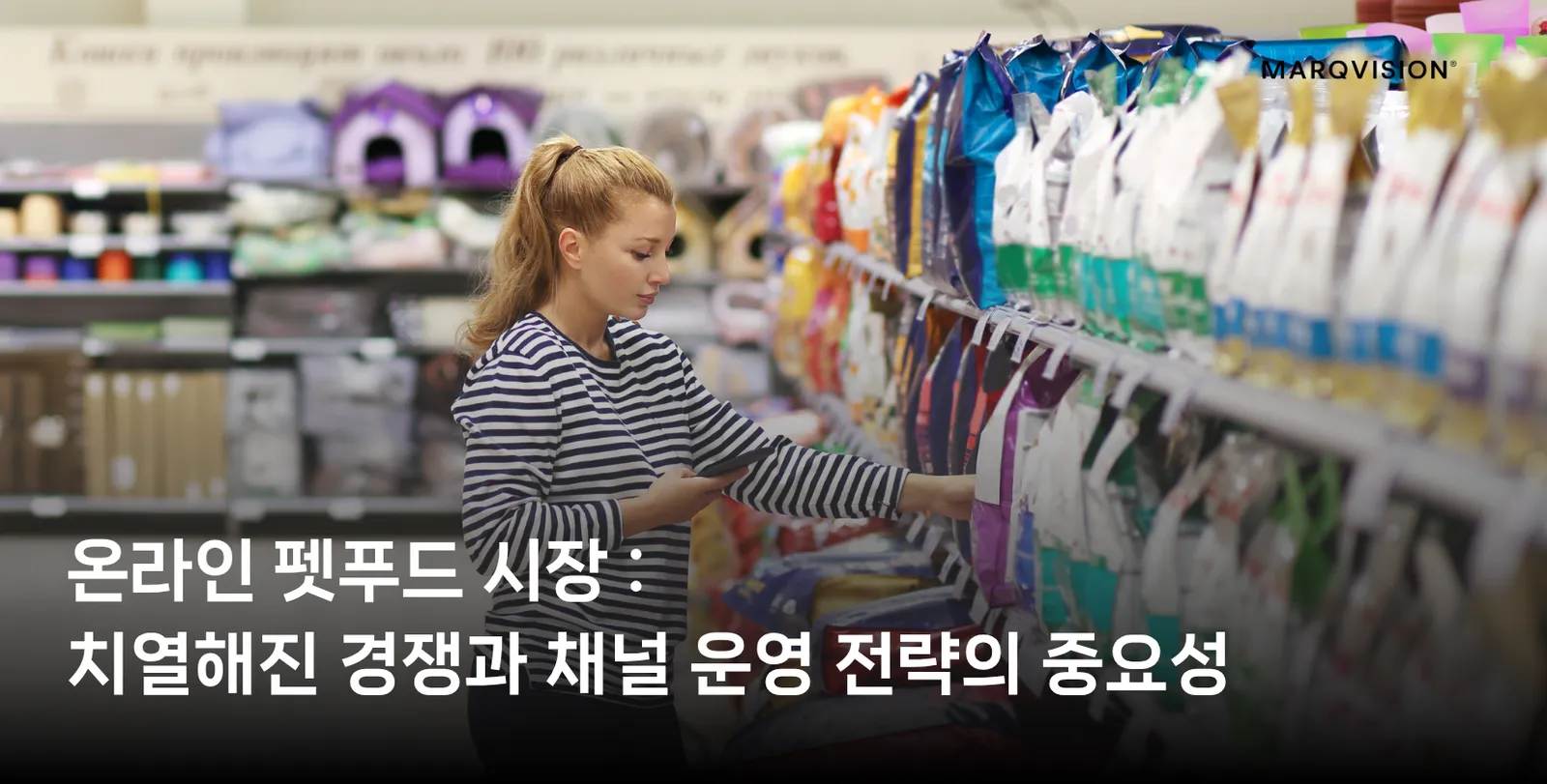
As demand for premium products rises, shoppers weigh not just price but ingredients, nutrition and even brand philosophy. Online in particular has become more than a sales channel: it is the key place where brands and consumers meet directly. According to Nielsen, most pet food is now sold online, and “smart shopping” based on reviews and ingredient comparisons has become the norm.
But where there is opportunity, there is risk. As the market grows and more brands and sellers come in, gray-market (unauthorized) sales, unauthorized sellers and reselling are on the rise.
According to the Korea Consumer Agency, many complaints about pet products arise on social commerce and online platforms, and consumers report a range of harms, from expired products and damaged packaging to products of unconfirmed authenticity.
The number of online pet food brands grows every year, yet the market share of the top brands is shrinking. Competition has intensified, and distribution management and brand differentiation matter more than ever.
Who spends, and how much: the spending patterns of pet-owning households
The growth of pet food comes down to who spends, on what, and how much. More than 15 million people in Korea live with pets, and how much and how these households spend is changing fast. According to KB Financial Group’s research institute, pet-owning households spend an average of about KRW 154,000 a month, with food and treats making up the largest share.
Three things stand out in spending patterns. First, as single-person and dual-income households grow, more people see pets as family members, and buying decisions now put quality and ingredients ahead of price. Second, as pets age, spending on functional products such as joint, skin and gut health supplements is rising. Third, more households buy food and supplements through recurring delivery (subscriptions), making them even more reliant on online channels.
These patterns hold a clear lesson for pet food brands. Because shoppers weigh ingredients and brand philosophy and buy repeatedly online, keeping official distribution channels and consistent pricing and quality ties directly to repeat purchases and brand trust.
The pet food gray market: cross-border reselling and broken distribution
As the pet products market grows rapidly online, the gray-market problem, in which products are distributed through channels the brand never intended, is getting worse. It’s not just confusion over distribution channels. It leads directly to lower consumer trust and damage to brand image.
Products distributed by individuals at will, rather than through official importers, are hard to guarantee for quality and destabilize pricing, so they are a major risk for brands.
1. Unauthorized sales exploiting cross-border buying: “I thought it was genuine… is this okay?”
As interest in buying directly from overseas grows, some sellers buy products cheaply abroad and resell them on Korean online platforms, or otherwise distribute them outside official channels.
Low prices can win them top placement, but they cause problems such as:
- Unclear origin: Product descriptions are thin or import routes unclear, so shoppers cannot verify safety.
- Ingredient rule violations: Products containing ingredients that do not meet Korean standards are sometimes sold unchecked.
- Expired products: There have been cases of food more than two years past its expiry date being sold openly.
- Hygiene problems: Complaints about damaged packaging and foreign matter keep coming in.
- Suspected fakes: Some products look like the real thing but are far lower in quality, or cause pets to react badly.
Real consumer cases make the seriousness clearer. First, there are cases of pets vomiting or having diarrhea after eating food more than two years past its expiry date. Second, some products arrived with packaging damaged in transit, exposing the contents and raising contamination concerns. Third, there are reports of allergic reactions after pets ate products containing ingredients that do not meet Korean standards. Many pet product complaints filed with the Korea Consumer Agency arise on online platforms, and unconfirmed authenticity, expired products and damaged packaging are the main issues.
Plenty of reviews describe symptoms such as vomiting, diarrhea and loss of appetite after pets ate pet food distributed without authorization. Because pets can’t tell us what’s wrong, the product is often only checked after a problem appears, which makes the harm greater. A gray market that threatens pets’ health goes beyond consumer anxiety and directly hits brand trust.
2. Broken distribution: why shouldn’t just anyone buy prescription diets?
The unchecked online sale of prescription diets is also shaking the distribution structure itself. Prescription diets are made for pets with specific conditions and assume a vet’s diagnosis and prescription; whether and for how long to feed them can vary with the pet’s health. Fed incorrectly, they can actually harm a pet’s health, so most global pet food brands hold to the principle that prescription diets are sold only through vet clinics.
Recently, though, prescription diets have been sold not only on open marketplaces but also on online stores run by vet clinics themselves. Of 17 prescription diet stores ranking high in search results, every one had either registered a vet clinic’s address as its business address or listed a representative with the same name as a clinic director. (Source: DailyVet) Online stores like these are expected to keep multiplying.
To pet owners this may look convenient. But when prescription diets can be bought easily without a vet visit, pets can miss the chance of treatment or get worse. For brands, it breaks trust with distribution partners and creates a structure in which the vets and pharmacies who follow the rules lose out.
More and more vets who follow the rules feel disheartened when owners tell them, “Other clinics sell it online” or “It’s cheaper online.” A few vets breaking ranks isn’t just a problem for individual clinics. It hurts the whole industry through brand policy violations, collapsing distribution networks and pricing confusion.
It’s time for more active monitoring and a response system to restore order to pet food distribution.
Practical ways to protect pets and pet food brands
Pet food and supplements can now be bought with a single search. But unverified sales are growing just as fast. When products that require a vet’s prescription are distributed indiscriminately, they pose a direct threat to pets’ health.
The gray market is more than a pricing problem. It breaks consumer trust. It hurts a brand’s pricing and distribution strategy and its relationships with official distributors. In the end, distrust in the product leads to a damaged brand image and lower sales.
With the Korean pet market expected to grow from about KRW 8.5 trillion in 2022 to about KRW 21 trillion in 2032, unauthorized sales and unauthorized sellers are likely to grow along with it. With online accounting for 80% of pet food sales, brands that do not manage distribution proactively may find the gains of market growth going to gray-market sellers rather than to the brands that protect genuine products.
Now is the time for pet food brands to act first. They need to see in real time where and how their products are being sold, and to stop abnormal sales quickly. Fighting the gray market with AI for e-commerce decisions is no longer optional. It’s essential.
MarqVision offers a brand protection solution to protect pet food brands’ products, value and competitiveness. See why fast-growing brands including Kangol, Helen Kaminski, Pan Am and Villeroy & Boch chose MarqVision.
Also catch our webinar on the e-commerce success roadmap, held on May 29, 2025. We share practical ways to recover revenue lost to the gray market and protect your brand amid race-to-the-bottom pricing.
Frequently asked questions (FAQ)
How does the gray market affect brands in the pet food market?
Gray-market (unauthorized) sales cause three direct harms: pricing confusion, lower consumer trust and damaged relationships with official distribution partners. When expired products or food in damaged packaging are sold without authorization, pets’ health suffers, consumers stop trusting the brand, and official distributors who follow the rules are put at a competitive disadvantage.
What problems arise when prescription diets are sold freely online?
Prescription diets are made to manage specific conditions and assume a vet’s diagnosis. When they can be bought easily online without a vet visit, pets can miss the right time for treatment or get worse, and when the brand’s vet-clinic-only principle breaks down, so does partners’ trust.
How are unauthorized pet food sales different from unauthorized sales of other consumer goods?
Unauthorized pet food sales are more serious than those of general consumer goods because they can directly harm pets, who can’t tell us what’s wrong. Even when a pet vomits or has diarrhea after eating expired food or a product that violates ingredient rules, the problem is hard to spot right away, and the product is often only checked after harm has occurred.
How can unauthorized sales via cross-border reselling be identified in online pet food distribution?
Check for four signs: unclear origin, ingredient rule violations, expired products and damaged packaging. According to the Korea Consumer Agency, many pet product complaints arise on online platforms, and unconfirmed authenticity and expired products are the main issues.
How can pet food brands prepare for the market’s expected growth to KRW 21 trillion by 2032?
Build a real-time distribution monitoring system now. With the market expected to grow from KRW 8.5 trillion in 2022 to KRW 21 trillion in 2032, unauthorized sales and unauthorized sellers will grow too. Only by seeing in real time where and how their products are sold, and stopping abnormal sales quickly, can brands make sure the gains of market growth go to those who protect genuine products.