Counterfeits that come back after every report: the brand trust marketplaces won't protect
Counterfeits keep reappearing on marketplaces, and brand trust suffers. Why bad actors come back after you report them, and how to protect your brand.
 Jinie Park4 min read

On this page7
- What are marketplace counterfeits, and why do they keep spreading?
- The reality for brands: bad actors who come back after every report
- How do recurring IP problems affect brand trust?
- The core of brand integrity: monitoring and fast response
- Marq AI, a brand integrity platform
- In the marketplace era, brand trust is a strategy
- FAQ: fighting counterfeits on marketplaces
Marketplaces are among the most important sales channels for growing a brand today. They make brands easier for shoppers to reach and open up new points of contact with customers.
But as platform-led commerce expands, the challenge brands share is becoming clear: the threat that counterfeits and the gray market pose to brand trust.
More and more brands say the same thing: “They come back even after we report them.” Protecting brand trust on marketplaces has become more pressing than ever.
What are marketplace counterfeits, and why do they keep spreading?
Counterfeits are fakes that copy a brand’s trademark, design and product identity without permission and are sold as if they were genuine.
Online, they look so much like the real thing that shoppers struggle to tell them apart, and often only realize after they’ve been harmed. On marketplaces, where sellers get in easily, counterfeiting can spread fast.
Recent reports show Chinese-made fakes of K-brands being sold through cross-border channels on major Korean e-commerce platforms such as Coupang and Naver Smart Store. Shoppers are now posting reviews on social media like “I paid a little less than the official price, but I got a fake”: a direct threat to brand trust.
According to the Korean Intellectual Property Office, enforcement actions against online counterfeits rose
- from about 130,000 in 2020 to about 270,000 in 2024
nearly doubling in four years. The government has also announced that it will begin monitoring Korean e-commerce for counterfeits this year.
The reality for brands: bad actors who come back after every report

What brands find especially hard is that counterfeits don’t appear once and disappear. They keep coming back.
Early this year, it was reported that a premium cosmetics brand kept reporting a seller of fakes on Coupang, only to see it reappear a few days later.
Some brands also describe structural limits in the reporting process:
- The brand has to buy the fake itself to prove it
- Seller information is hidden once a product is marked sold out, which makes reporting difficult
- Sellers come back by changing their company or representative’s name
This is more than an operational issue. It leaves brands permanently exposed to IP problems.
How do recurring IP problems affect brand trust?
Counterfeits and the gray market aren’t just about lost sales. When shoppers buy a counterfeit thinking it’s genuine, the result is a damaged brand experience, lower consumer trust and long-term damage to brand value.
The longer counterfeit listings stay up, the more purchases they win, and unhappy shoppers eventually leave the brand. The cycle repeats. Once brand trust is shaken, it takes a very long time to rebuild.
The core of brand integrity: monitoring and fast response
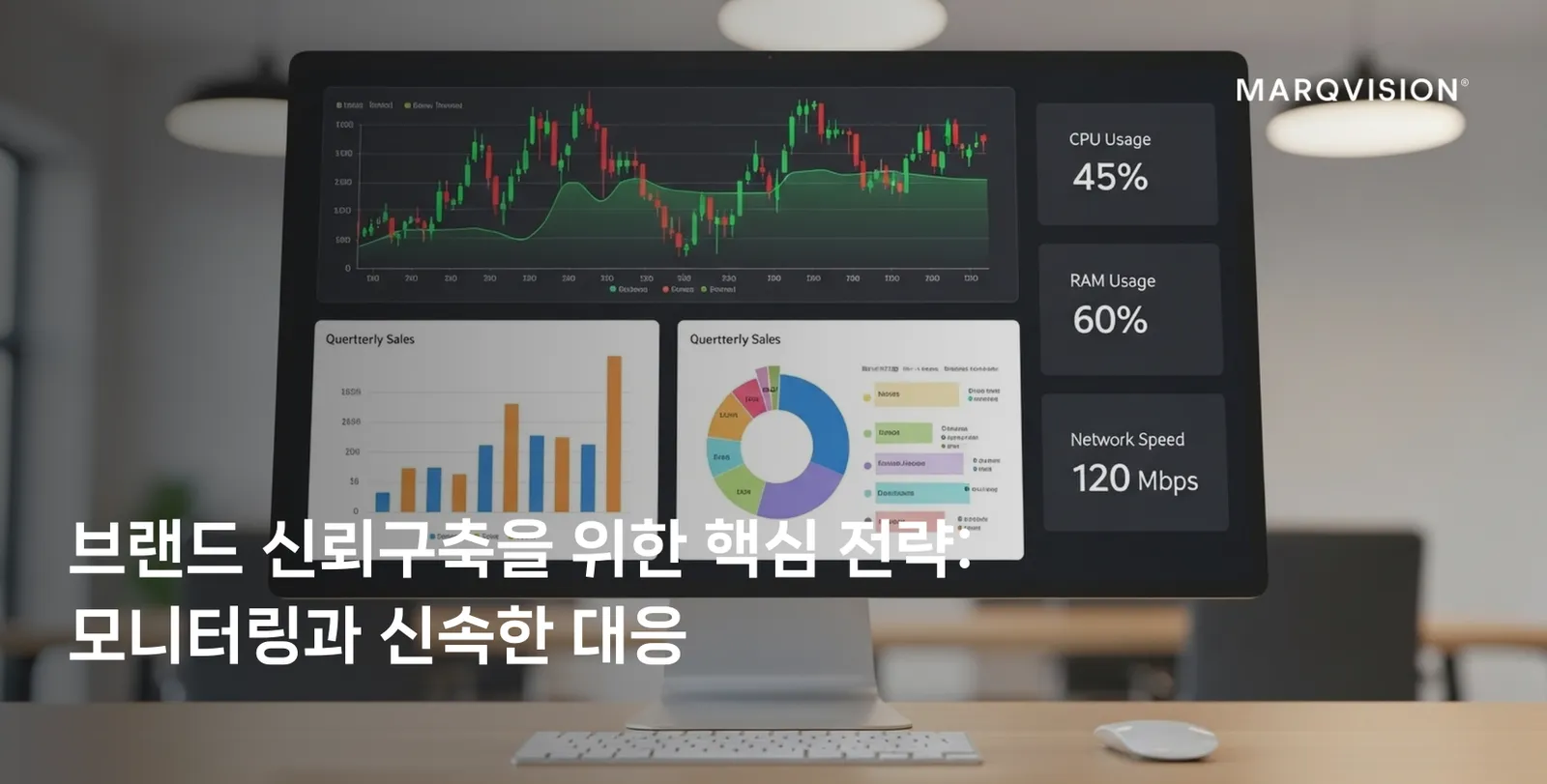
Many brands file a report when they find counterfeits. But where bad actors keep coming back, reports alone may not be enough.
Protecting a brand takes a proactive strategy:
- Continuous monitoring
- Fast takedowns
- A system for identifying and acting on repeat sellers
As marketplaces grow, brands need a more systematic online brand protection strategy too.
Marq AI, a brand integrity platform
MarqVision is an AI-based brand integrity platform that helps brands respond effectively, on one platform, to illegal activity that threatens their assets and intellectual property (IP).
It’s designed to quantify the threats a brand faces and build a strategic response on that basis. Reports are generated automatically from detected counterfeit listings and can be submitted straight to platforms, so brand teams can work more efficiently.
The recently introduced Saturation Rate, a market risk index, goes beyond counting removals to show, as a trend, how much risk the brand is exposed to. Brands can see the riskiest regions, channels and sellers at a glance and respond faster and more effectively.
In the marketplace era, brand trust is a strategy

The beauty and fashion industries have grown on brand trust and refined customer experiences. But as marketplaces expand, counterfeits and the gray market have become the biggest IP problems threatening a brand’s core value. With clear guidance for consumers and continuous monitoring across sales platforms, brands can stay a step ahead of the risk of repeated exposure to counterfeits and bad actors.
Counterfeits and the gray market are spreading fast. How is your brand responding?
Sign up for free monitoring from MarqVision and get a brand protection strategy tailored to your products and sales channels. Brand trust isn’t simply preserved. It’s a competitive advantage you build with effective monitoring and fast response.
FAQ: fighting counterfeits on marketplaces

Q1. Why isn’t reporting counterfeits enough?
Because bad actors can change their seller information or create new accounts and come back. Brands need continuous monitoring and a proactive response system.
Q2. How is the gray market different from counterfeits?
Counterfeits are fakes that imitate a brand. The gray market refers to unauthorized sales of genuine products through unofficial channels. Both can seriously damage brand trust.
Q3. What brand integrity strategy should a brand build first?
The most important thing is a system that detects counterfeits quickly through real-time monitoring and takes them down and responds fast.