Korea's resale market hits 2.8 trillion won in 2026: how its growth affects brand trust
Korea's resale market reached 2.8 trillion won in 2025. How resale, now spreading from sneakers to luxury, beauty and FMCG, affects brand pricing and trust.
 Jinie Park4 min read

On this page8
- Resale spreads beyond sneakers to every category
- How gray-market and resale distribution affect brand channels
- Three ways resale hurts brands
- Platform proliferation makes brand management more complex
- The brand risks growing alongside the resale market
- Brands now need to check the “health” of their distribution channels
- MarqVision’s strategy for managing brand channels
- FAQ: Korea’s 2.8 trillion won resale market and brand trust
We launched a new premium pet food line, and within three months listings below the official price showed up.
We released a limited-edition collab, and the next day it was trading at twice the price on resale platforms.
Resale now affects brands in ways that go well beyond price competition. It has spread into beauty, household goods and health supplements, and become a new distribution channel brands can’t control.
The market is growing, but more and more clearly, the revenue isn’t flowing back to brands.
Resale spreads beyond sneakers to every category

Consumers think differently now. Analysts call it a shift from “owning” to “managing”. As re-commerce (buying, using and reselling) takes hold as a form of investment, the range of resold categories is expanding fast.
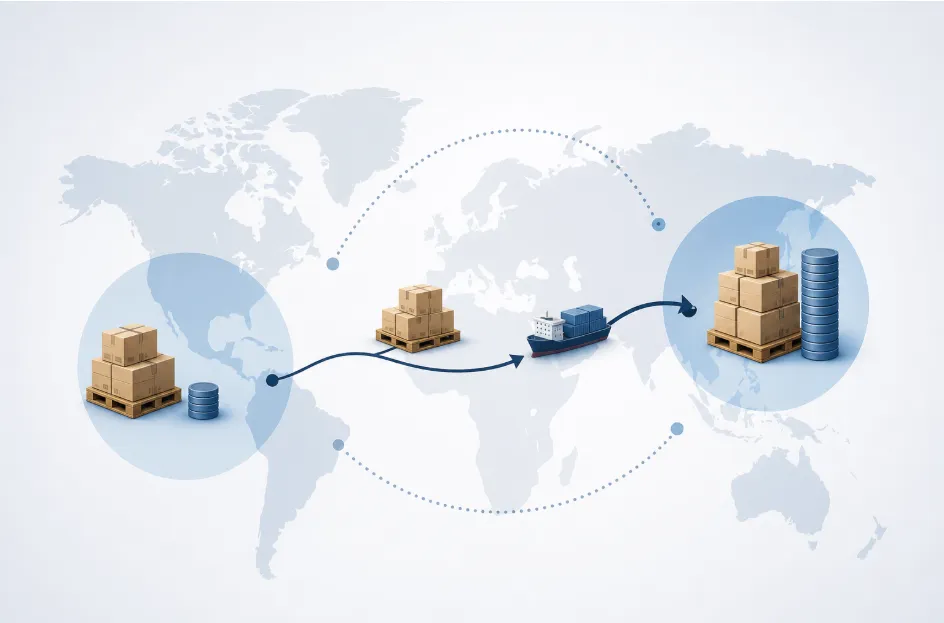
According to eBest Investment & Securities, Korea’s resale market grew from 700 billion won in 2021 to over 1 trillion won in 2022, reaching about 2.8 trillion won in 2025. The category mix at KREAM, a leading resale platform, shows the trend. Sneakers, which made up about 50% of total transaction value in 2024, fell to 37% in 2025, while non-sneaker categories such as apparel, luxury, lifestyle and tech grew to 63%.
How people buy has changed too. As trading in high-end watches and jewelry grows, more buyers inspect items in person instead of simply buying online. Watch transactions rose 11% year over year and jewelry 14%, while transactions reserved online and checked in store rose 70%.
How gray-market and resale distribution affect brand channels

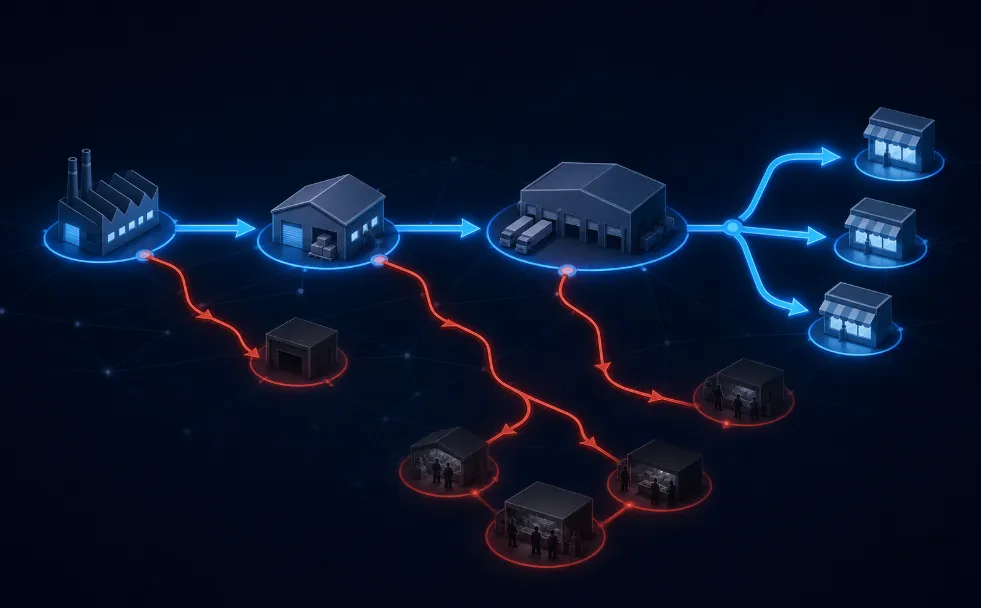
Resale itself isn’t illegal. But as gray-market distribution and unauthorized resale spread, brands face more and more channels they can’t control.
The gray market isn’t the same as counterfeiting. It means genuine products sold outside the brand’s official distribution: products that reach e-commerce platforms through parallel imports, resale and unapproved wholesale. Because the products are genuine, platforms don’t block them automatically. Responding is up to the brand.
When a brand’s products trade outside the official store, three problems follow: the reference price slips, consumers’ experiences land on the brand, and demand the brand paid for leaks into unofficial channels.
Three ways resale hurts brands
1. The reference price slips
Consumers start to see resale prices as “what this product is really worth.” For brands with limited-quantity or premium pricing, resale prices end up shaping the brand’s entire pricing.
2. Consumer trust slips
Resale platforms use different inspection standards, and there are cases where the same product gets different authenticity verdicts. Complaints from consumers who bought through resale come back to the brand’s customer service and reviews. Problems the brand didn’t create chip away at its reputation.
3. Official channel visibility weakens
Demand created by ads and campaigns flows to resale platforms instead of official channels. When unauthorized sellers take the top search spots and the Item Winner position, the official store drops out of view. The return on marketing becomes resellers’ profit.
Platform proliferation makes brand management more complex
As of Q1 2026, average monthly users of Korea’s major secondhand and resale apps were 23.19 million for Karrot, 5.2 million for Bunjang and 2.2 million for KREAM. Compared with two years earlier, KREAM grew 51.4%, Fruits Family 185.3% and SOLDOUT 15%.
The more resale platforms there are, the harder it is for brands to track and manage unofficial trading. Platforms won’t filter it out for them. Without their own monitoring, brands struggle even to see where and how their products are traded.
The brand risks growing alongside the resale market

The resale market’s growth has a downside: consumer harm. From 2020 to 2022, there were 1,276 consumer complaints related to resale platforms, 194 of which were escalated to formal dispute resolution. Some platforms charge penalties of up to 15% for canceled transactions, and differing inspection standards across platforms add to consumer confusion.
There are also concerns that resale could become a hotbed of tax evasion. Korea’s National Tax Service is enforcing comprehensive income tax payments from businesses suspected of tax avoidance. Since bad experiences in the resale market feed into trust in official brands, these risks concern brands too.
Brands now need to check the “health” of their distribution channels
The resale market’s growth can’t be stopped. The shift is already in place: consumers see resale as a form of investment, a way of managing liquid assets. The job for brands isn’t to stop resale. It’s to track and manage, in real time, how resale affects their channels and pricing.
Right now, can you tell which resale platforms your products trade on, and at what prices? Are you tracking how the reference price moves between your official channels and the resale market? Are unauthorized sellers eating into your official channels’ visibility?
If these questions are hard to answer right away, now is the time to review your channels.
MarqVision’s strategy for managing brand channels

Channel risk from resale and the gray market only goes away when brands put their own system in place.
1. Continuous tracking of unauthorized sellers
Monitor unapproved listings in real time on major e-commerce channels such as Coupang and Naver, based on brand and product names.
2. Real-time price flow analysis
MarqVision’s AI agent detects price deviation patterns and abnormal sales flows in real time. Trained on the brand’s product information, platform policies and IP infringement patterns, the agent focuses on keeping the channel pages consumers actually see clean, rather than simply detecting as much as possible.
3. Automated IP-based listing enforcement
Automate platform reports and listing removals based on trademark rights, shortening the time from detection to action.
4. Stronger management of official distribution partners
Continuously monitor whether authorized partners comply with pricing policies, and set up a system to respond immediately when products are redistributed.
The bigger the resale market gets, the more channel management matters. See in a live demo how exposed your e-commerce channels are right now.
Request a free demo now and see your brand’s channel status in the data.
FAQ: Korea’s 2.8 trillion won resale market and brand trust

Q1. How is resale different from the gray market?
Resale broadly means buying genuine products and selling them again. The gray market refers to products sold outside the brand’s official distribution channels. Both can affect a brand’s pricing policy and official channel visibility.
Q2. Why do consumer complaints on resale platforms become a brand problem?
Consumers tend to attribute complaints to the brand regardless of where they bought. Authenticity disputes, quality problems and lack of after-sales service in resale channels come back to official channel reviews and customer service.
Q3. Can brands stop resale completely?
Stopping resale itself is hard. The practical response is to hold the reference price on official channels and monitor so unauthorized sellers don’t eat into your visibility.
Q4. How can resale monitoring be automated?
AI can detect unapproved listings on major platforms in real time based on brand names, product names and images, and automate trademark-based reports and removals. MarqVision’s Marq AI analyzes sellers and price flows in real time to detect abnormal distribution patterns.