Revenue is up, so why are pricing power and margins collapsing? Operating risk at 400 K-brands in 2026
A survey of 400 K-brands: 63% are losing margin to unauthorized distribution. Get the free 2026 report and see how the top 7.5% kept control of their pricing.
 Jinie Park4 min read
On this page5
- Record exports, shrinking profits: the brand profitability paradox
- We asked 400 K-brands directly | MarqVision × Remember Research
- What the top 7.5% that kept their pricing power do differently
- What you’ll find in the “2026 K-Brand Global Growth Report”
- The report shows the problem. The webinar gives you the solution.
Yet when MarqVision and Remember Research surveyed 400 Korean brands, 8 in 10 (81%) said counterfeits and the gray market were directly hurting their revenue. Revenue is growing while profitability falls. Here’s what the data says about why.
Record exports, shrinking profits: the brand profitability paradox
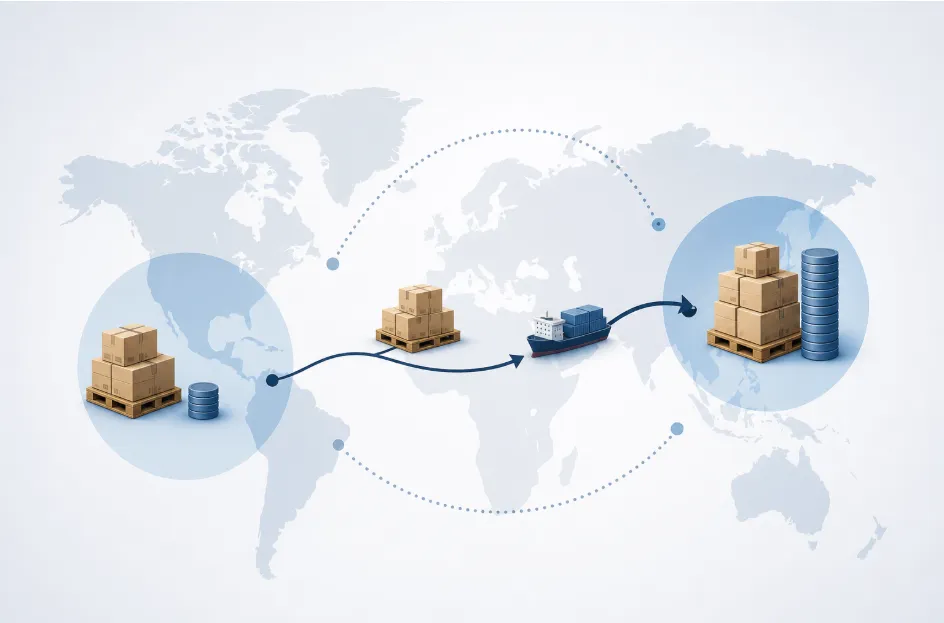
K-brands’ global growth shows in the numbers. In the first half of 2026 alone, K-beauty exports reached $7 billion, K-food $6.6 billion and K-bio $4.5 billion, with all three industries breaking their all-time records.
Add the Korean Wave effect, where every $100 million increase in K-content exports raises related consumer goods exports by $202 million, and brands in every industry are rushing to sell directly through global e-commerce.
Yet many brand teams are asking:
“Revenue has clearly grown, so why are our pricing power and margins collapsing?”
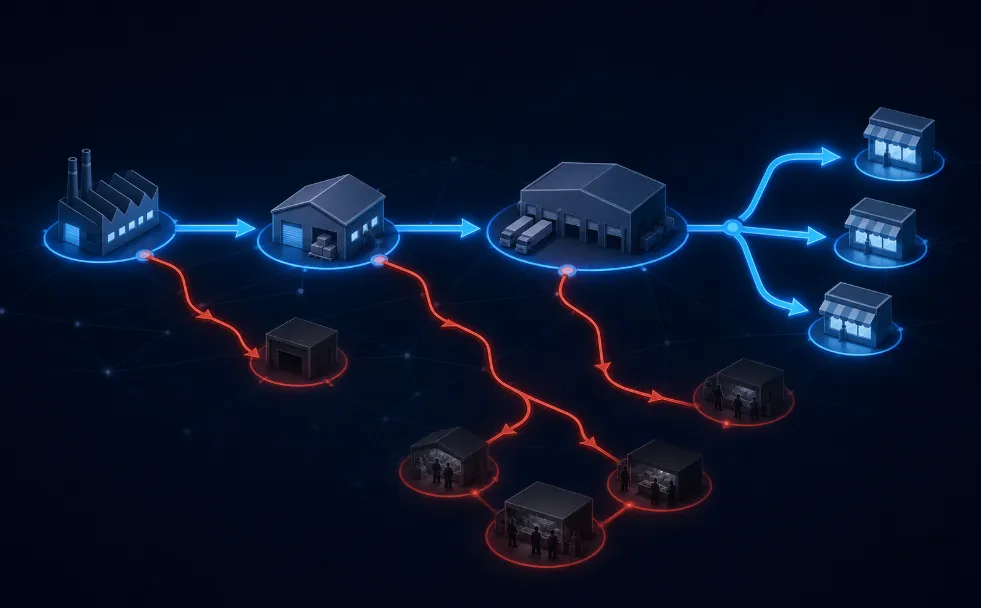
The more global e-commerce channels expand, the easier it is for unauthorized resellers to get in. They buy up stock in bulk through Korean distribution, use AI translation to get onto local marketplaces, and dump products at 30% below the official store’s price.
K-beauty brand A, which had entered Southeast Asia, couldn’t hold out against this gray-market push. Just one year after its official launch, it had lost control of its global pricing entirely and had to pull out of the market. (Source: Woman Donga, July 3, 2025)
We asked 400 K-brands directly | MarqVision × Remember Research
To find out, MarqVision and Remember Research surveyed 400 large and mid-sized Korean companies that have gone global or are preparing to, about how they run their brands. Respondents ranged from assistant managers up to department heads and other decision-makers, across fashion, luxury and beauty; consumer goods, home and leisure; and B2C healthcare and pharma.
The results were clearer than expected.
81%: lost up to 20% of revenue to counterfeits and gray-market sales
81% of respondents had experienced direct revenue loss from counterfeits and gray-market distribution, with losses reaching up to 20%. The global market for counterfeit K-brand products is worth $9.7 billion a year (about 11.1 trillion won), and 35.9% of it is K-beauty. China is the shipping country for 97.7%.
The bigger problem: these losses often aren’t even measured. According to MarqVision × Remember Research, 74.5% of companies that had lost revenue measured it only irregularly or not at all. 3% of executives (decision-makers) said quantitative measurement was impossible, compared with 58% of practitioners, revealing a paradox in which executives know less about the reality than their teams.
95%: don’t know how their brand appears in AI search
About 20% of global e-commerce spending during the 2025 holiday season (about $262 billion) was influenced by AI and agents, and traffic to US retail sites from generative AI jumped 693% year over year. As agentic commerce takes off, a new threat is spreading fast: AI search engines that learn from manipulated data recommend counterfeit and gray-market products as genuine.
82% of respondents had already experienced AI-driven threats, yet only 14% regularly monitor their brand in AI search and recommendation services. The report covers how many companies can trace the cause when AI recommends a counterfeit as genuine, and how wide the monitoring gaps are by industry.
What the top 7.5% that kept their pricing power do differently
Some brands kept growing through the same crisis. Only 7.5% of companies connect internal and external data in real time for integrated analysis, and they have something in common.
They manage threats as a business KPI, not as a cost.
The companies that protected their margins quantified revenue loss every month and reported it to leadership. They used data to spot pricing issues before they happened, and their sales and IP teams shared live status on the same dashboard so they could act at once. The report shows exactly what they managed and how.
What you’ll find in the “2026 K-Brand Global Growth Report”
This isn’t a trend roundup. Using real operating data from 400 K-brands, the report breaks the structural causes of lost pricing power and falling margins into three pain points, and shows with real data how leading companies overcame them.
Four key analyses in the report
- The golden window for global expansion, and the real crisis K-brands are missing
- Why pricing power and margins collapse even as revenue grows
- Three secrets of leading companies that keep growing through the same crisis
- Real customer cases and operating strategies built on brand intelligence
Download it free now.
[Download the 2026 K-Brand Global Growth Report →]
The report shows the problem. The webinar gives you the solution.
If the report shows why pricing power and margins are collapsing, the webinar covers how to win them back.
53% of surveyed companies already plan to budget for brand intelligence, for three reasons: to win back pricing power, to clear decision bottlenecks caused by fragmented data, and to monitor AI agentic commerce.
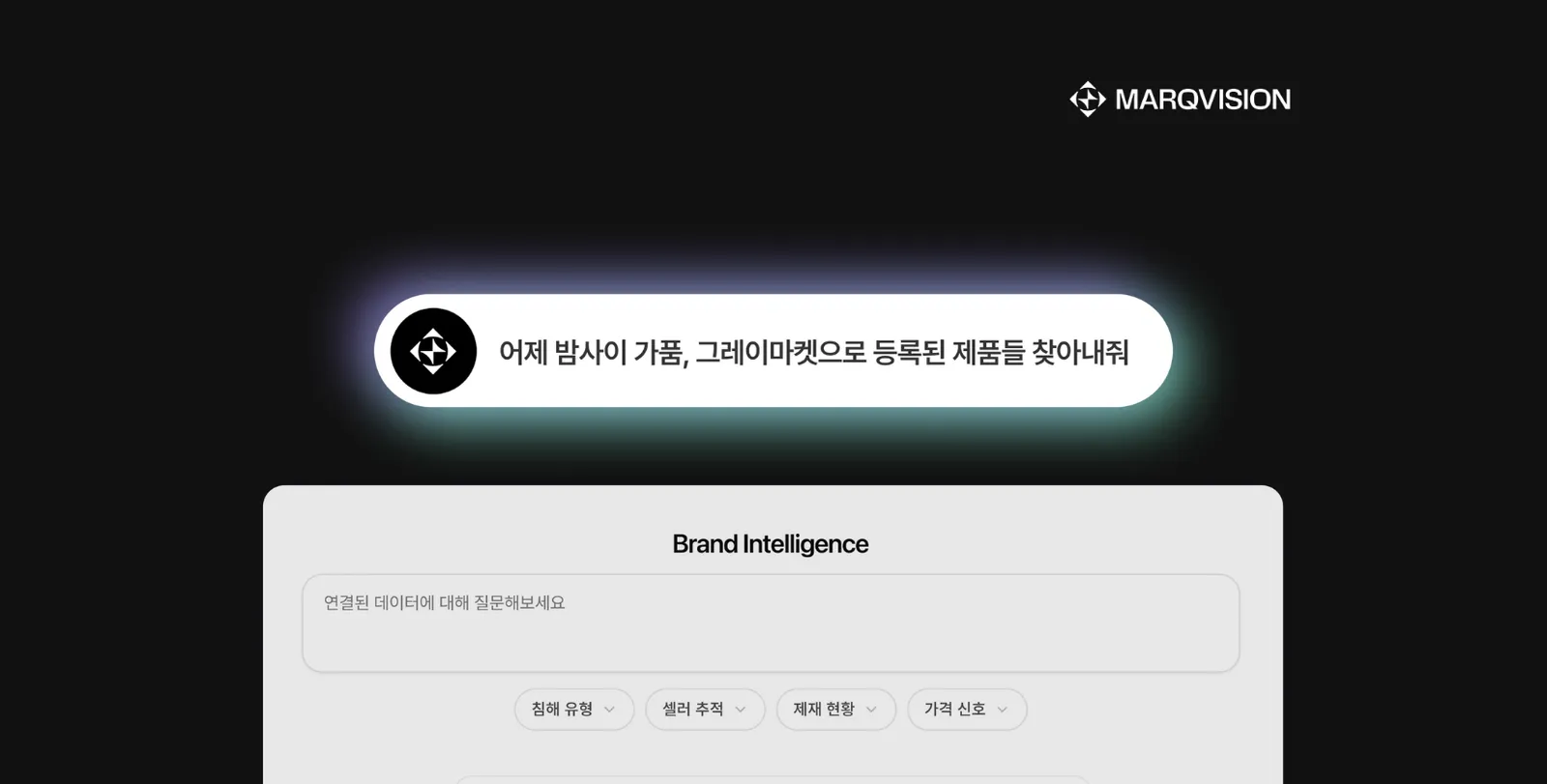
The webinar digs deeper into the report’s raw data and, through real customer cases, shows what the companies that protected their pricing power and margins did differently, and how the MarqVision Brand Intelligence Agent changes the way a brand runs.
Free online webinar on Wednesday, August 5 - how to pre-register
When: Wednesday, August 5, 2026, online
What we’ll cover:
- An in-depth analysis of data from 400 K-brands (including data not published in the report)
- Brand operation strategies that worked for real K-brands
- A demo of how the Brand Intelligence Agent works in practice
- Live Q&A
Pre-register now to receive the webinar slides and recording by email.
[Pre-register for the webinar “Revenue is up, so why are pricing power and margins collapsing?” →]
Start with the “2026 K-Brand Global Growth Report” to size your brand’s risk, then join the August 5 webinar to see the Brand Intelligence Agent at work and leave with a plan.