Global Brand Protection: Digital Strategies (September 2026)
Protect your brand from counterfeits, phishing, and gray market risk. Core strategies for global consumer brands explained. September 2026.
 Christopher ChaeHead of Marketing4 min read
On this page13
- What Digital Brand Protection Means
- The Threat Environment Driving Demand
- Anti-Counterfeiting, Anti-Piracy, and Digital Risk Protection: Key Differences
- How Digital Brand Protection Works
- AI-Powered Detection vs. Traditional Manual Monitoring
- Finding and Removing Fake Products from Online Marketplaces
- Deepfake and Brand Impersonation Detection
- Monitoring Unauthorized Resellers and Gray Market Activity
- Key Features to Review in Brand Protection Solutions
- Building a Brand Protection Strategy
- How MarqVision Approaches Digital Brand Protection
- FAQ
- Final Thoughts on Digital Brand Protection and What Actually Works
If your customers can’t tell your real store from a fake one, your brand protection strategy has a gap worth closing. The threats targeting global consumer brands today go well beyond counterfeits on a single marketplace, and the right response depends entirely on where your actual exposure sits.
TLDR:
- Counterfeit and pirated goods hit $467 billion in global trade in 2021, per the OECD/EUIPO, with 75% of consumers cutting ties after a brand-impersonation incident.
- Anti-counterfeiting, anti-piracy, and digital risk protection are three distinct disciplines with different legal bases; vendors that only cover one leave your other exposure unaddressed.
- Register trademarks in every jurisdiction before enforcement begins, since an unregistered mark removes the legal basis for marketplace takedowns and customs recordation.
- Gray market enforcement relies on contract terms and MAP surveillance, not IP claims, because the product is genuine and standard trademark takedowns have no basis.
- MarqVision runs anti-counterfeiting, digital risk protection, anti-piracy, and unauthorized seller monitoring across more than 1,500 platforms in over 180 countries in one system.
What Digital Brand Protection Means
Digital brand protection is the practice of monitoring and defending how your brand shows up across the public internet, beyond the servers, apps, and networks you actually control. It covers phishing sites, counterfeit marketplace listings, fake social accounts, lookalike domains, pirated content, and unauthorized resellers trading on your name.
Here is the boundary. Traditional cybersecurity guards what you own: endpoints, internal systems, customer data. Digital brand protection guards against what attackers build to look like you.
For a legal or IP team, the daily work sits outside the firewall, where a fake storefront can capture a customer before you ever see the listing.
The Threat Environment Driving Demand
Counterfeit and pirated goods reached an estimated $467 billion in global trade (2021 data, per the OECD/EUIPO 2025 Fakes report), with clothing, footwear, and leather goods making up 62% of seized items. That is the largest single driver.
Four other threats sit alongside it:
- Brand impersonation and phishing, where the average phishing-caused breach hit $4.88 million in 2024 per IBM, and 82.6% of phishing emails carry AI-generated content.
- Social media fraud through fake accounts and cloned profiles.
- Unauthorized resellers and gray market distribution eroding pricing control.
- AI-accelerated deepfakes and synthetic brand content.
The financial damage is real, but the reputational fallout can be worse. Research indicates 75% of consumers would sever ties with a company after a cyber incident wearing your brand.
Anti-Counterfeiting, Anti-Piracy, and Digital Risk Protection: Key Differences
Procurement teams and legal buyers often conflate these three, but each solves a different problem with a different legal basis.
Some vendors solve one category well and stop there. Others run all three in one system, which matters when a single counterfeit operator also spins up phishing domains and pirated content.
How Digital Brand Protection Works
Every program runs on the same four-phase loop, regardless of vendor.
Discovery: Automated crawlers scan marketplaces, domain registries, social platforms, ad networks, and the open web to surface listings, domains, and accounts referencing your brand. The breadth of that coverage determines how much of your total threat exposure you can actually see and act on.
Analysis: Each signal gets classified by threat type, scored for severity, and validated against genuine product data to filter false positives before anyone acts.
Action: Confirmed threats route to the right channel: marketplace IP complaints, registrar and hosting abuse reports, ad-platform takedowns, or legal escalation when a case stalls.
Monitoring: Operators relist, register new domains, and migrate to fresh platforms, so continuous re-scanning catches threats that resurface after the first takedown.
AI-Powered Detection vs. Traditional Manual Monitoring
Traditional monitoring ran on analyst hours. Teams manually searched marketplaces, flagged listings by hand, built spreadsheets of infringing URLs, and filed takedowns one at a time. Coverage capped at whatever people could review.
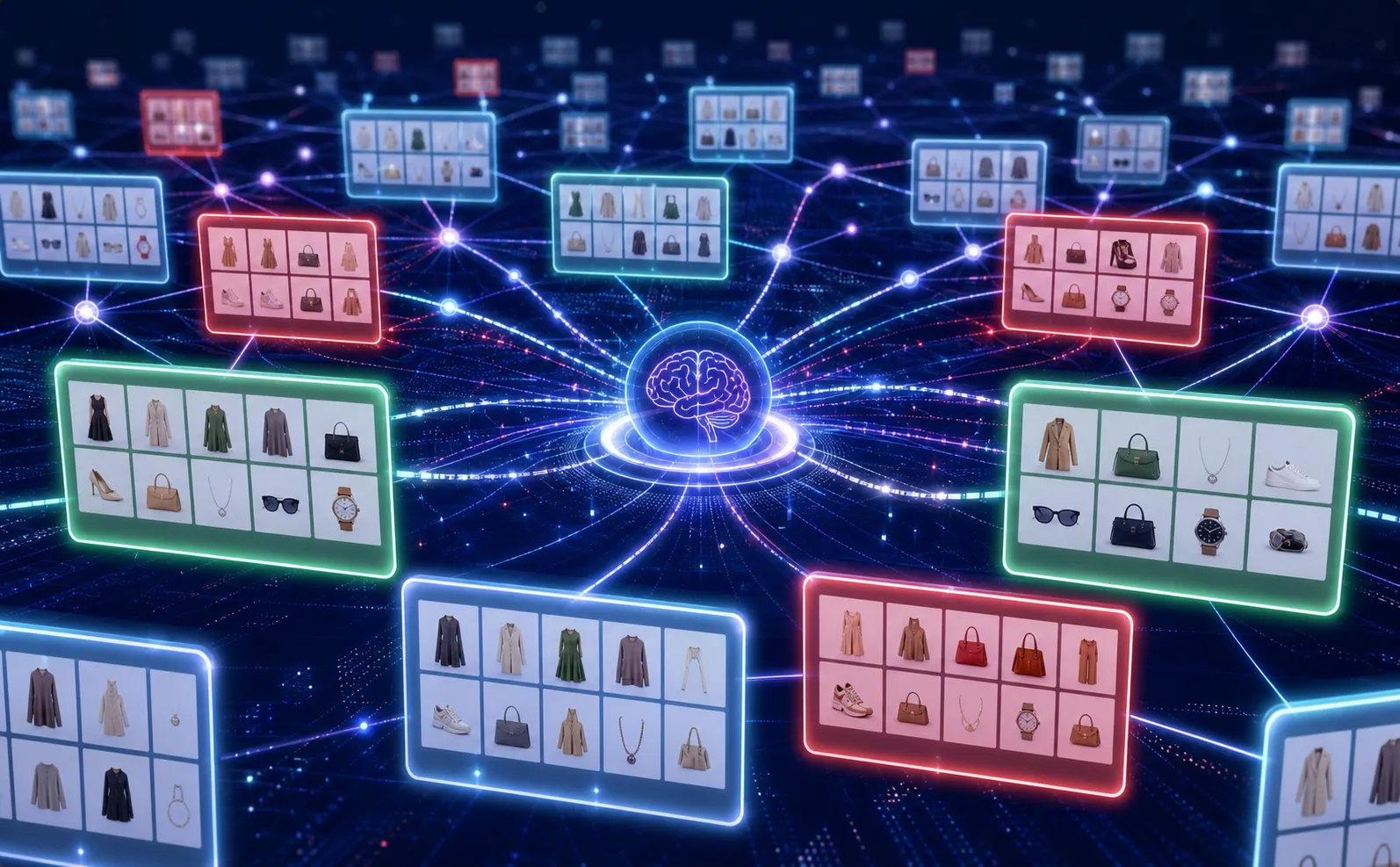
AI-native detection changes the mechanics:
- Computer vision matches logos and product images across millions of listings at once.
- Text analysis compares listing copy against genuine product data at the SKU level.
- Image recognition catches counterfeit packaging that swaps details to evade keyword filters.
- Network algorithms cluster related sellers and domains into single cases.
The trade-off is real: AI models require training data and a tuning period before automation is trustworthy, and ambiguous product categories still benefit from human review. That same evolution is reshaping the market and the online brand protection software market is estimated to grow to nearly $966 million in 2026 and projected to reach $4.6 billion by 2035, per Market Reports World.
Finding and Removing Fake Products from Online Marketplaces
Marketplace monitoring starts with two query types run against marketplace APIs or scraping: keyword searches on your brand and product names, and image-based searches matching your genuine product photos. Detected listings get classified, separating infringing sellers from authorized ones before enforcement.
Each platform routes takedowns differently:
- Amazon Brand Registry: Report a Violation workflow, tied to your registered trademark
- eBay: the VeRO program for verified rights owners
- Alibaba: the IP Protection reporting portal
- Regional platforms carry their own submission rules
A trademark claim that clears on Amazon US can stall on a regional storefront running different review standards. Dupes complicate this: when a seller copies your design or packaging without your logo, standard trademark claims have no basis. Pursuing them requires pre-registered trade dress or design rights.
Deepfake and Brand Impersonation Detection
Deepfakes weaponizing your brand take several forms: AI-generated video of executives authorizing fraudulent transactions, cloned voice audio for social engineering calls, synthetic promotional content pushing counterfeits, and manipulated affiliate footage repurposing legitimate brand video.
Detection runs on three layers:

- Behavioral and biometric inconsistency analysis: unnatural blinking, lip-sync misalignment, audio artifact detection
- Provenance analysis tracing content origin and manipulation history
- Network-level monitoring surfacing distribution across social platforms and dark web forums
Without automated detection, humans catch deepfakes at roughly coin-flip odds, making automation a structural requirement, not an optional add-on.
Speed decides the outcome. The average phishing site stays live under 24 hours, and half of victims fall within the first hour.
Monitoring Unauthorized Resellers and Gray Market Activity
Gray market goods are genuine products diverted through unauthorized channels. The product is real, but the seller violates pricing agreements, territorial restrictions, or channel policies. That breaks IP-based takedowns, since there is no counterfeit or trademark misuse to claim.
Monitoring relies on four methods:
- Price surveillance across marketplaces to catch MAP violations
- Seller identity matching against your authorized distributor list
- Social network analysis mapping influencer-led sales and group buying
- Buy Box monitoring on Amazon to flag unauthorized offers winning the sale
Enforcement leans on contract terms and soft-notice outreach. That matters in markets like Korea, where reselling itself is not illegal.
Key Features to Review in Brand Protection Solutions
When you compare vendors, work down a functional checklist instead of a feature brochure:
- Coverage breadth across marketplaces, social platforms, ad networks, and domains, including non-English and regional sites
- Detection accuracy and false positive rates, since noise consumes analyst time
- Automated versus manual takedown workflows and how much human review each threat needs
- Enforcement velocity, measured as median time from detection to removal per channel
- Trademark and IP portfolio integration, so registered marks map to enforceable claims
- Domain impersonation and typosquatting detection
- Reporting tied to business impact, not activity counts
One distinction matters most. Vendors rooted in cybersecurity are built for phishing and digital risk protection. Vendors rooted in IP enforcement are built for counterfeit takedowns and gray market controls. Confirm which foundation matches your dominant threat profile before scoping.
Building a Brand Protection Strategy
No universal template fits every brand. Your strategy follows from documented exposure, jurisdictions, and budget. Still, most programs share the same foundation:
- Register trademarks across every jurisdiction and product category before enforcement begins, since a registered mark is the legal prerequisite for takedowns.
- Map your actual threat surface by geography and channel type.
- Point monitoring resources at your highest-risk channels first.
- Set escalation protocols defining when platform enforcement hands off to legal action, typically a 30-day threshold on unresponsive cases.
- Measure program health through outcomes: percentage of infringing listings removed, time to detection, enforcement success rate by platform.
Recalibrate as operators migrate to fresh platforms.
How MarqVision Approaches Digital Brand Protection
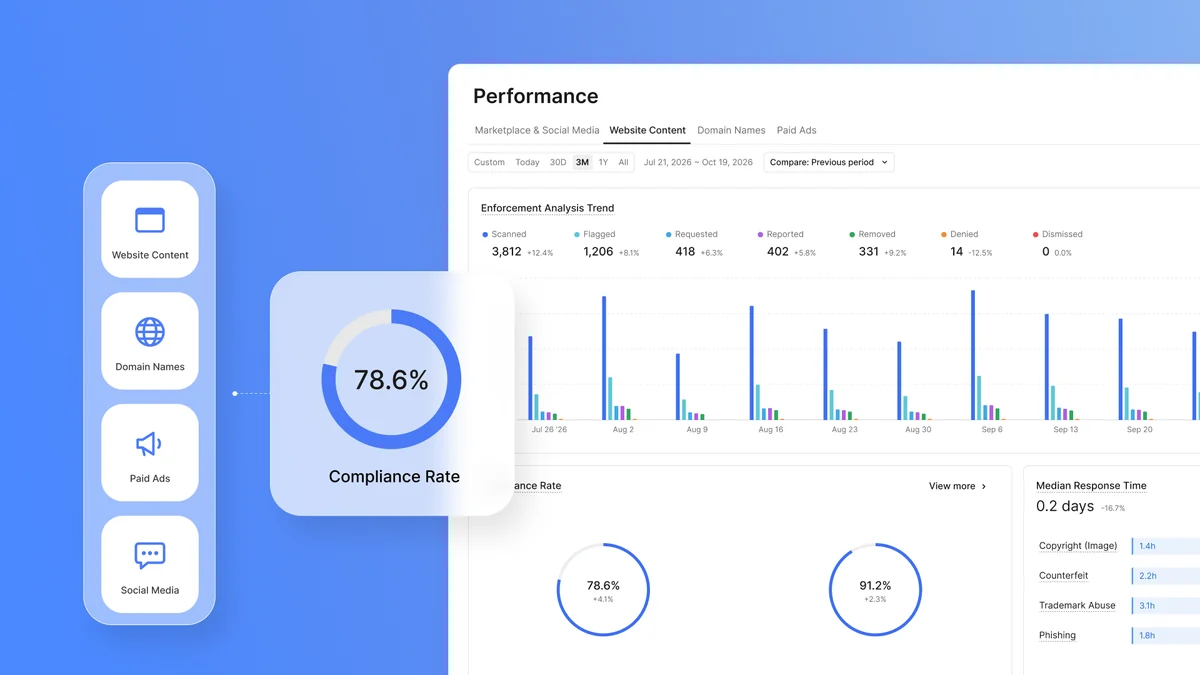
We built MarqVision as an AI-native brand protection platform running anti-counterfeiting, digital risk protection, anti-piracy, and unauthorized seller monitoring in one system across more than 1,500 platforms in over 180 countries.
The pieces map to what this article covered:
- MarqAI’s Full-Stack Detection reaches 99.8% accuracy by comparing listings against genuine product data at the SKU level, catching counterfeits that strip out your trademark entirely.
- The Digital Risk Protection module monitors 1.3 billion domains, tracks 5 million daily, and removes infringing domains at a median of 5.3 hours.
- Partnerships with Google TCRP, Meta Trusted Reporting (99% takedown rate on Meta Ads), and Cloudflare cut hosting-level enforcement times by up to 20x.
- The Brand Intelligence Agent, reaching general availability in June 2026, lets your team query enforcement data in plain language, surfacing seller patterns, channel clustering, and priority recommendations without manual reporting.
FAQ
What is the difference between anti-counterfeiting, anti-piracy, and digital risk protection?
Each discipline targets a distinct threat with a different legal basis. Anti-counterfeiting pursues fake goods sold under your trademark on marketplaces, using trademark and copyright claims as the enforcement mechanism. Anti-piracy targets unauthorized copying of protected content (video, software, live events) under copyright and DMCA frameworks. Digital risk protection covers identity-based attacks: phishing sites, lookalike domains, fake social accounts, and brand impersonation. The enforcement lever for each category is different, which means a vendor built for one may lack the workflows, platform relationships, and legal grounding to handle the others. Before scoping any program, map your documented threat mix against these three categories to confirm your vendor covers the one where your exposure is highest, and ideally all three in one system.
What should I look for in a brand protection platform for a mid-market consumer goods company?
Focus on coverage breadth, detection accuracy, and enforcement velocity over feature count. Confirm the platform monitors your actual threat channels: the specific marketplaces, social networks, ad networks, and domain registries where infringing activity already appears, including regional and non-English sites. Ask for median time-to-removal per channel, beyond aggregate removal rates, because a 95% takedown rate means little if unresponsive cases sit unresolved for weeks. Verify whether trademark registration is a hard prerequisite for platform-level enforcement on the channels you care about most, and confirm whether the platform handles anti-counterfeiting, digital risk protection, and unauthorized seller monitoring in one system or requires separate contracts per threat type.
How does AI-powered brand protection work compared to traditional manual monitoring?
AI-native detection replaces the analyst-hours ceiling with computer vision, text analysis at the SKU level, and network clustering that scales enforcement without adding headcount. The trade-off is real: models require a training period before automation is trustworthy, and ambiguous product categories still benefit from human review. Plan for a tuning period of roughly six months before hands-off automation reaches reliable accuracy.
What tools help fashion brands monitor unauthorized resellers and gray market sales?
Gray market enforcement requires seller intelligence and pricing surveillance, not IP-based takedowns. The goods are genuine, so trademark infringement claims have no basis. The four core methods (MAP price monitoring, seller identity matching, social network analysis, and Buy Box monitoring) are covered in the gray market section above. For fashion brands specifically, the critical variable is jurisdiction: in markets like Korea, where reselling is not illegal under fair trade law, rights-based takedowns have no standing and enforcement depends entirely on soft-notice outreach and volume-based deterrence. That affects which escalation path you choose and whether your vendor has regional relationships to support it. MarqVision’s Anti-Unauthorized Sales module adds a proprietary database of over 800,000 reseller profiles for reverse-tracing distribution leakage back to the source.
How does deepfake detection work for brand impersonation protection?
Deepfake detection runs on behavioral and biometric analysis, provenance tracing, and network-level distribution monitoring. The full breakdown is in the body section above. The urgency is structural: humans score near coin-flip accuracy at spotting deepfakes unaided, and the average phishing site stays live under 24 hours with half of victims falling within the first hour. Detection speed, not human review, decides whether the campaign succeeds. If your brand uses video in affiliate or promotional contexts, confirm your vendor explicitly covers AI-manipulated video assets and static image impersonation alike.
Final Thoughts on Digital Brand Protection and What Actually Works
The four-phase loop of discovery, analysis, action, and monitoring only works if your detection layer covers the channels where threats actually appear, including regional marketplaces, non-English ad networks, and the domains that get registered the week after your last takedown. Your threat profile determines where to point resources first. Vendors rooted in cybersecurity and vendors rooted in IP enforcement solve different problems, so matching the tool to the threat is the real first decision. When you’re ready to see how that plays out in practice, a demo walks through it directly.