.jpeg)
Counterfeit goods hit $467 billion in global trade in 2021 (the most recent full year measured by OECD/EUIPO), per a 2025 report, and that figure only counts what got caught at the border. If your brand touches apparel, cosmetics, or consumer goods, the fakes targeting your customers are already out there. The range of anti-counterfeiting measures available to brand teams has grown considerably, and so has the specificity of brand protection technology built to detect and remove them. Here's a practical look at what those tools actually are, how they work, and how to build a program around your documented risk instead of a generic checklist.
TLDR:
- Counterfeit goods hit $467 billion in 2021, per OECD/EUIPO, with clothing and footwear making up 62% of seizures.
- Filing the wrong claim type stalls enforcement: counterfeiting, gray market, piracy, and dupes each require different legal tools.
- Physical authentication tiers trade off consumer accessibility against replication resistance, so most brands layer more than one.
- Trademark registration in each relevant jurisdiction is a structural prerequisite; gaps in your IP portfolio cap every downstream enforcement channel.
- Build your program in sequence: IP foundation first, then product authentication, serialization, continuous monitoring, and escalation protocols.
- MarqVision covers the full stack across marketplace detection, IP portfolio management, and offline legal action including civil litigation and criminal referrals.
The Scale of the Counterfeiting Problem
Global trade in counterfeit goods reached $467 billion in 2021, equal to 2.3% of total world imports, according to a 2025 OECD and EUIPO analysis. That figure captures only cross-border seizures, so the real exposure your brand faces runs higher.
The concentration matters. Clothing, footwear, and leather goods make up 62% of seized items, and China alone accounts for 45% of reported seizures. If your catalog touches apparel or accessories, you sit in the highest-volume category counterfeiters target.
What was once a luxury problem now reaches categories where a fake can hurt someone. The same report tracks growth in counterfeit automotive parts, medicines, cosmetics, toys, and food.
That expansion changes the stakes. Beyond lost sales and depressed brand equity, counterfeits here put consumers in front of untested formulations, faulty components, and unsafe materials. Enforcement carries legal and moral weight alongside its commercial dimension.
What Counterfeiting Is (and What It Isn't)
Counterfeiting, strictly, means the unauthorized use of a brand's trademark or copyright on physical goods, where a fake is passed off as genuine. That definition matters because the enforcement tools you reach for depend on which problem you actually have. Teams that lump every threat under "counterfeiting" file the wrong claims and watch them stall.
Here is how the four categories separate:
The distinction has real enforcement consequences. A gray market seller moves real product, so a counterfeit takedown gets rejected; you enforce through distribution agreements. A dupe avoids your logo entirely, so trademark claims fail and you need registered design rights or trade dress to act.
Physical Anti-Counterfeiting Measures
Physical measures live on the product itself, applied during manufacturing or packaging, and split into three tiers by how much equipment it takes to read them.
- Overt features: holograms, color-shifting inks, tamper-evident seals, and security threads. Anyone can check them, including your customers and trade inspectors.
- Covert features: UV-reactive inks, micro-printing, chemical taggants, and steganographic patterns embedded in print. These need special equipment or trained eyes to verify.
- Forensic markers: DNA taggants and molecular signatures that only laboratory analysis can confirm.
The trade-off runs one direction. Overt features build consumer-facing trust, but sophisticated counterfeiters clone convincing holograms and seals routinely. Covert and forensic markers resist replication far better, yet a shopper cannot check a DNA taggant at purchase. Verification depth and consumer accessibility pull against each other, which is why most brands layer more than one tier.

Digital Authentication Technologies
Where physical markers sit on the product, digital authentication ties each unit to a record a buyer or inspector can check with a phone or scanner. Four tools dominate.
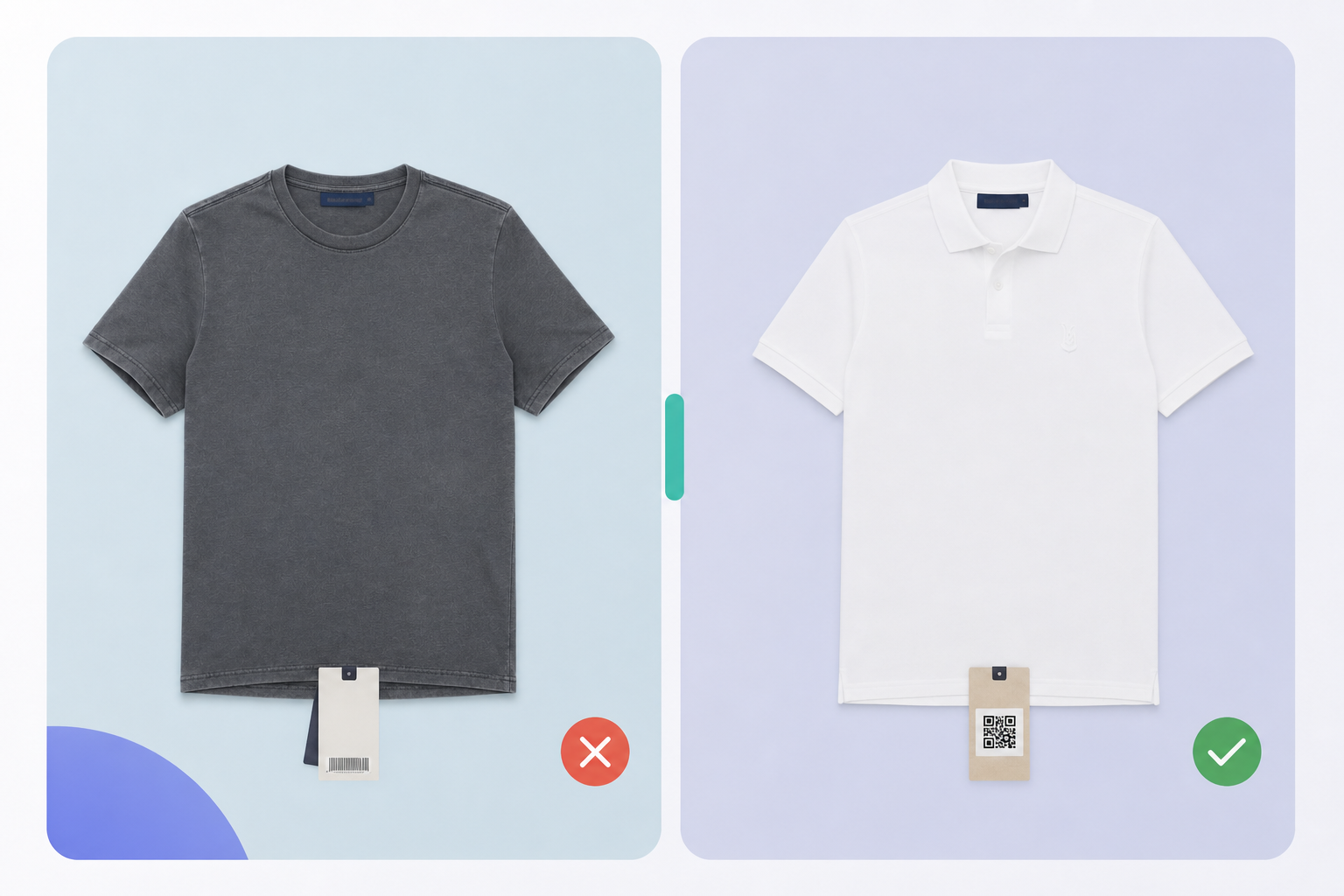
- Serialized QR codes: cloud-linked codes unique to each unit, letting a shopper scan and confirm the item against a backend database.
- NFC chips: embedded in the product or packaging, authenticated by a smartphone tap, harder to clone than a printed code.
- RFID tags: built for high-speed bulk scanning across the supply chain, not consumer checks.
- Blockchain provenance: an immutable ledger recording product history from manufacture through point of sale.
One caveat governs all of them. A QR code carries no security on its own, since a counterfeiter can print a working code that points to a spoofed verification page. The protection lives in the backend system the code connects to, not the format stamped on the box.
Track-and-Trace and Supply Chain Security
Serialization gives every unit a unique, verifiable identifier. Track-and-trace layers movement data on top, logging when that identifier passes through customs, a distribution hub, or a retail endpoint. When a serial number surfaces in a market it was never shipped to, or scans twice in two countries, you have located where diversion or counterfeit injection entered the chain.
Consumer goods teams can borrow the same architecture without the regulatory floor. A cosmetics brand, for example, can assign a unique serialized QR code to every unit at the factory and link each code to that unit's intended distribution path in a cloud backend. When a retailer scans the code at point of sale, the system logs the scan against the unit's expected region. If a unit allocated to a distributor in Germany surfaces at a scan in Mexico, the mismatch fires a diversion alert in real time. The brand then has a timestamped, location-stamped record it can use to enforce the distribution agreement against the specific partner who leaked inventory, instead of opening a broad investigation with no traceable evidence.
One structural problem undercuts all of it. Postal and small-parcel shipments now dominate counterfeit routing, per a 2025 EUIPO and OECD report, fragmenting shipments below the thresholds where customs inspects and traceability holds.
Online Marketplace Monitoring and Digital Enforcement
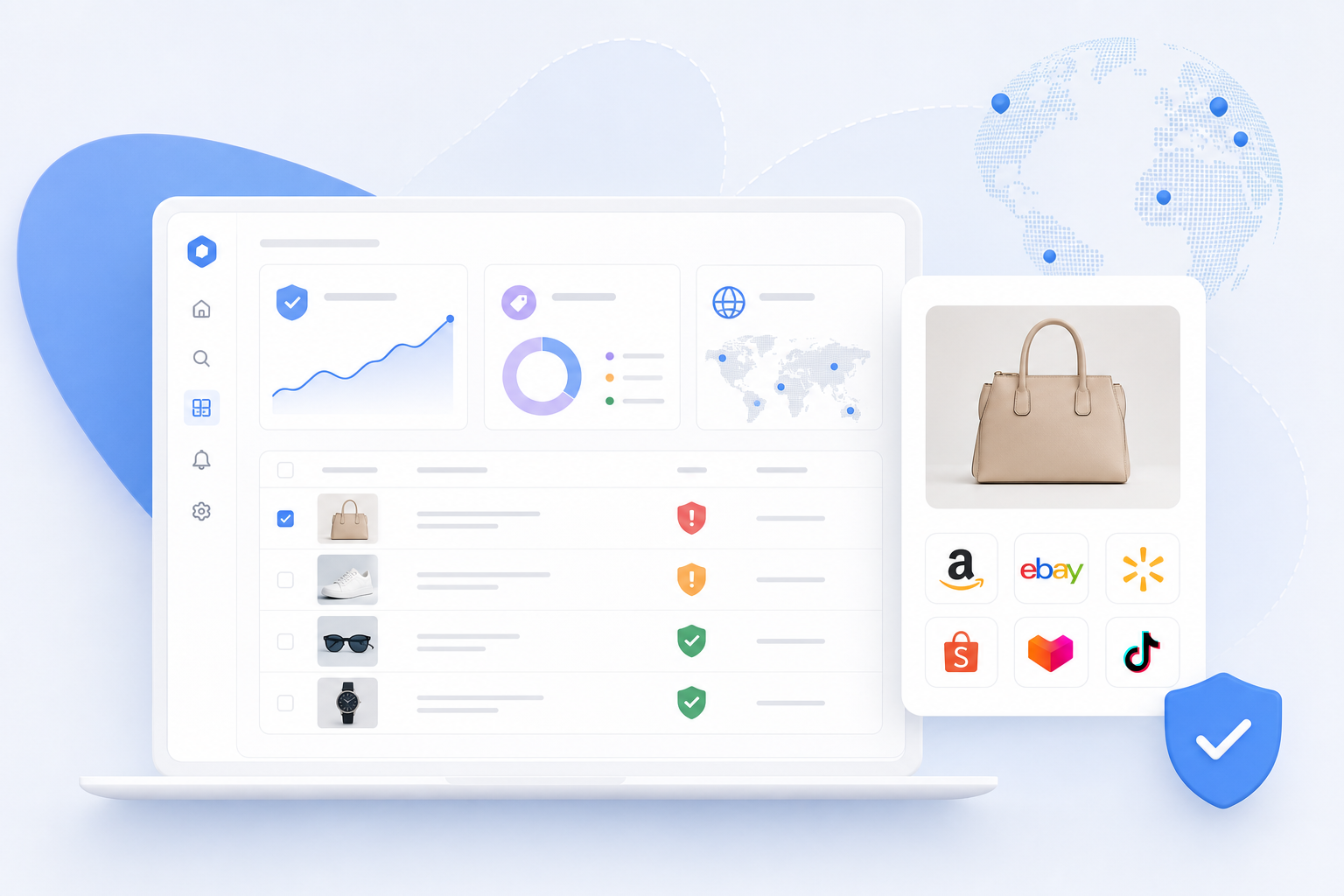
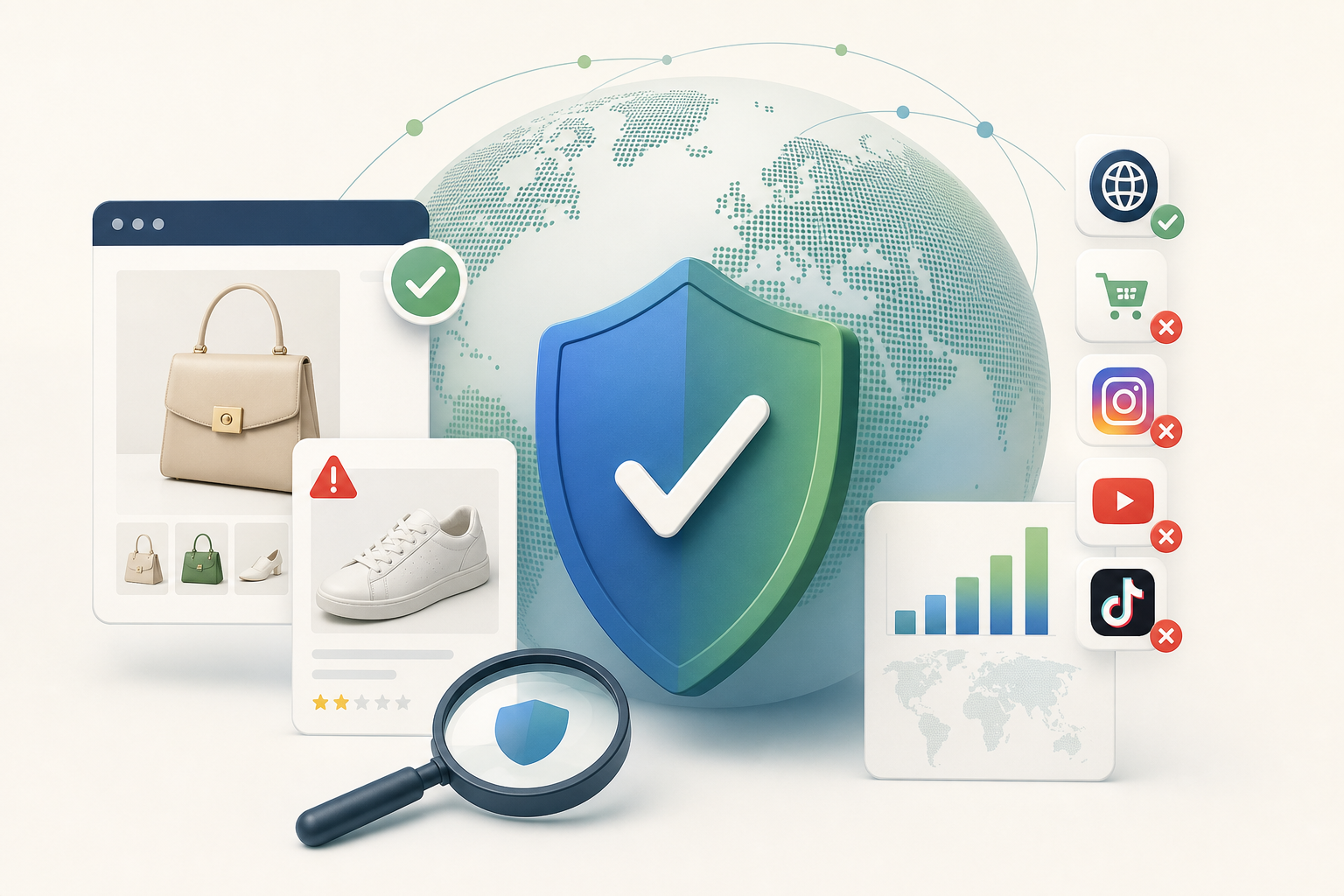
Counterfeit volume online outpaces any manual review team. AI-powered detection scans millions of listings across major and regional marketplaces, social commerce storefronts, and paid ads, flagging matches against your product catalog and brand assets. Flagged items get validated against your registered IP. Confirmed infringements then route to the right channel: marketplace IP complaint programs, registrar abuse reporting, or ad network takedown workflows.

One condition gates the entire chain. Trademark registration in each relevant jurisdiction is a structural prerequisite for most marketplace enforcement, and complaints filed without a registered mark in that market stall no matter how strong your detection is. Brands carrying gaps in their registration coverage carry matching gaps in enforcement.
Legal Frameworks and IP-Based Enforcement
Legal tools work alongside the physical and digital measures already covered. The registered trademark that gates marketplace complaints also unlocks every mechanism below.
- Customs recordation: filing your registered marks with customs authorities (US Customs and Border Protection, EU member agencies) lets officers detain suspected shipments at the border before goods reach sellers.
- Civil litigation: multi-defendant Schedule A lawsuits name hundreds of anonymous online sellers in one filing, freeze payment accounts, and secure asset recovery.
- Criminal referral: coordinated actions through the IPR Center and INTERPOL target organized operations civil remedies cannot reach.
- UDRP arbitration: to seize or cancel infringing domains without full litigation.
One point compounds across all of them. Courts, arbitration panels, and marketplace IP programs weigh whether you have actively policed your marks. A consistent, well-documented enforcement record becomes a legal asset, strengthening standing in your next case.
How to Assess and Choose Anti-Counterfeiting Measures
Choosing among these measures is not a checklist you run top to bottom. The right mix follows your documented risk, not a fixed template. Five criteria decide where budget lands:
- Threat channel profile: where fakes actually reach your buyers. Marketplace-heavy exposure points to digital brand protection detection and takedown; border interception points to customs recordation.
- Consumer safety risk: a fake that fails or poisons someone warrants forensic markers and physical verification. A knockoff handbag does not.
- IP portfolio completeness: which marks and design rights are registered, and in which jurisdictions. Gaps here cap every enforcement channel downstream.
- Production scalability: whether an authentication feature applies at volume without meaningful unit-cost increase.
- Enforcement readiness: whether the measure generates evidence a complaint program or court will accept.
No single measure covers every vector. Concentrate spend where exposure is highest and harm is worst.
Building a Multi-Layered Anti-Counterfeiting Strategy
Each measure in this guide builds on the ones before it, and the sequence you follow determines how much each later layer can do. Sequence them like this:
- IP foundation first. Register trademarks and design rights ahead of market entry, not after a copycat appears. Every downstream channel depends on it.
- Product-level authentication next, matched to your category and how customers interact with the item. A consumable that touches health warrants deeper verification than a low-risk accessory.
- Serialization and supply chain controls for high-value or high-risk SKUs, where diversion tracking earns its cost.
- Continuous monitoring across marketplaces, social commerce, and digital channels using brand protection software, feeding confirmed infringements into your enforcement pipeline.
- Documented escalation protocols, moving a case from channel-level reporting through customs action to civil litigation when a seller ignores takedowns.
The layers compound only if you run them consistently. Counterfeiters watch which brands use online brand protection tools to enforce and which file once and disappear, then route volume toward the softer target. Consistent enforcement, backed by a documented record of every action, is what makes counterfeiters route their volume to a softer target instead of yours.
How MarqVision Fits Into an Anti-Counterfeiting Program
The five-layer sequence maps onto three of our product lines, so you run the stack through one system instead of stitching vendors together.
MarqAI covers the monitoring and enforcement layer, operating as one of the leading AI brand protection platforms. Our Full-Stack Detection scans millions of listings across 1,500+ channels in 118 countries and compares each against your genuine product data at the SKU level, catching fakes that copy specifications and images while avoiding your logo. Detection runs at 97% accuracy. In 2025 we removed more than 60 million infringements at a 99.1% removal rate, enforced against 500,000+ bad actors, and saved customers an average of 80 hours a month otherwise spent on manual takedowns.
The other two layers connect directly to it. MarqFolio handles the IP foundation, registering and managing the trademark and design-right portfolio every downstream takedown depends on. MarqLaw handles what stays offline: test purchases for physical evidence, Schedule A civil litigation, and criminal raids against organized operations.
That coverage spans the full stack, from the registered mark at the base to courtroom action at the top.
FAQ
What's the difference between enforcing against counterfeits versus dupes, and does it change which anti-counterfeiting measures you need?
Yes, and the difference is structural. Counterfeits copy your trademark or copyrighted assets, so enforcement runs through trademark and copyright claims. Dupes copy your product's design or silhouette while avoiding your marks entirely, meaning trademark claims get rejected and you need registered design rights or trade dress to act. If your catalog faces dupe exposure, physical authentication features and marketplace monitoring alone won't close the gap: your IP portfolio has to include the right registrations before any enforcement channel can move.
How do I know which physical and digital anti-counterfeiting measures are worth the investment for my product category?
Start with two variables: consumer safety risk and how buyers interact with the product. A consumable that touches health (pharmaceuticals, cosmetics, supplements) warrants covert markers, forensic taggants, and test purchase programs because visual detection cannot confirm formulation-level counterfeiting. A fashion accessory with lower safety stakes may get adequate coverage from serialized QR codes and AI-powered marketplace monitoring. The key limitation to account for upfront: QR codes and NFC chips protect nothing on their own, because the security lives in the backend verification system they connect to, not the format on the packaging.
Can AI brand protection tools catch counterfeits that don't use my logo or trademark?
Yes, if the detection methodology goes deep enough. Standard keyword and logo matching misses fakes that copy product specifications, images, and packaging while avoiding trademark use. SKU-level detection (where each listing is compared against your genuine product data at the individual item level) catches this evasion pattern. MarqVision's Full-Stack Detection uses this approach, reporting 97% detection accuracy across 1,500+ channels. The practical implication: if your brand protection technology relies solely on brand-name or logo matching, sophisticated counterfeiters who avoid your marks entirely will pass through undetected.
What's the fastest way to close enforcement gaps when my trademark registrations don't cover every relevant jurisdiction?
File the missing registrations immediately and treat the gap as a live enforcement ceiling, not a future to-do. Marketplace takedown programs, customs recordation, and paid ad enforcement on platforms like Google and Meta all require a registered mark in the jurisdiction where the infringing activity appears: complaints stall regardless of evidence quality without it. While applications are pending, concentrate enforcement resources on the jurisdictions where registration is confirmed, document every enforcement action you take to build a policing record, and use that record to strengthen standing once registration clears.
Should I use physical authentication features or online marketplace monitoring as my first layer of brand protection technology?
Neither alone is sufficient, but the sequencing matters. IP registration comes first: without registered trademarks and design rights, neither physical features nor marketplace monitoring can generate enforceable takedowns. Once the IP foundation is in place, marketplace monitoring gives you the widest early-warning coverage because counterfeit volume online outpaces any manual review process. Physical authentication earns its cost when your product category carries consumer safety risk or when your supply chain has documented diversion points where forensic or covert verification provides evidence a complaint program will accept.
Final Thoughts on How to Protect Your Brand From Counterfeit Goods
The measures here are not a fixed checklist. They are a set of conditional choices that follow your actual exposure, your IP portfolio, and where fakes are reaching your buyers. Start with the foundation, build toward the channels where risk is highest, and enforce consistently enough that counterfeiters route their volume somewhere easier. A well-documented program that shows up every week is the deterrent. See how the full stack works for a program built around your specific risk profile.
Stay up to date on the latest IP Protection content from MarqVision.




4 Enforcements a Week to 400: Scale Brand Safety with Marq AI

Don’t Just Find Counterfeits. Dismantle the Entire Network.

.png)
Discover the latest trends and challenges in IP protection

Take Control of Your Trademarks with MARQ Folio
Renew and Manage Your Trademarks Easily With MARQ Folio

We’re waiting to hear from you

See the best brand protection solution in action

Don’t let piracy steal your growth

Talk to us about your brand protection problems