.jpeg)
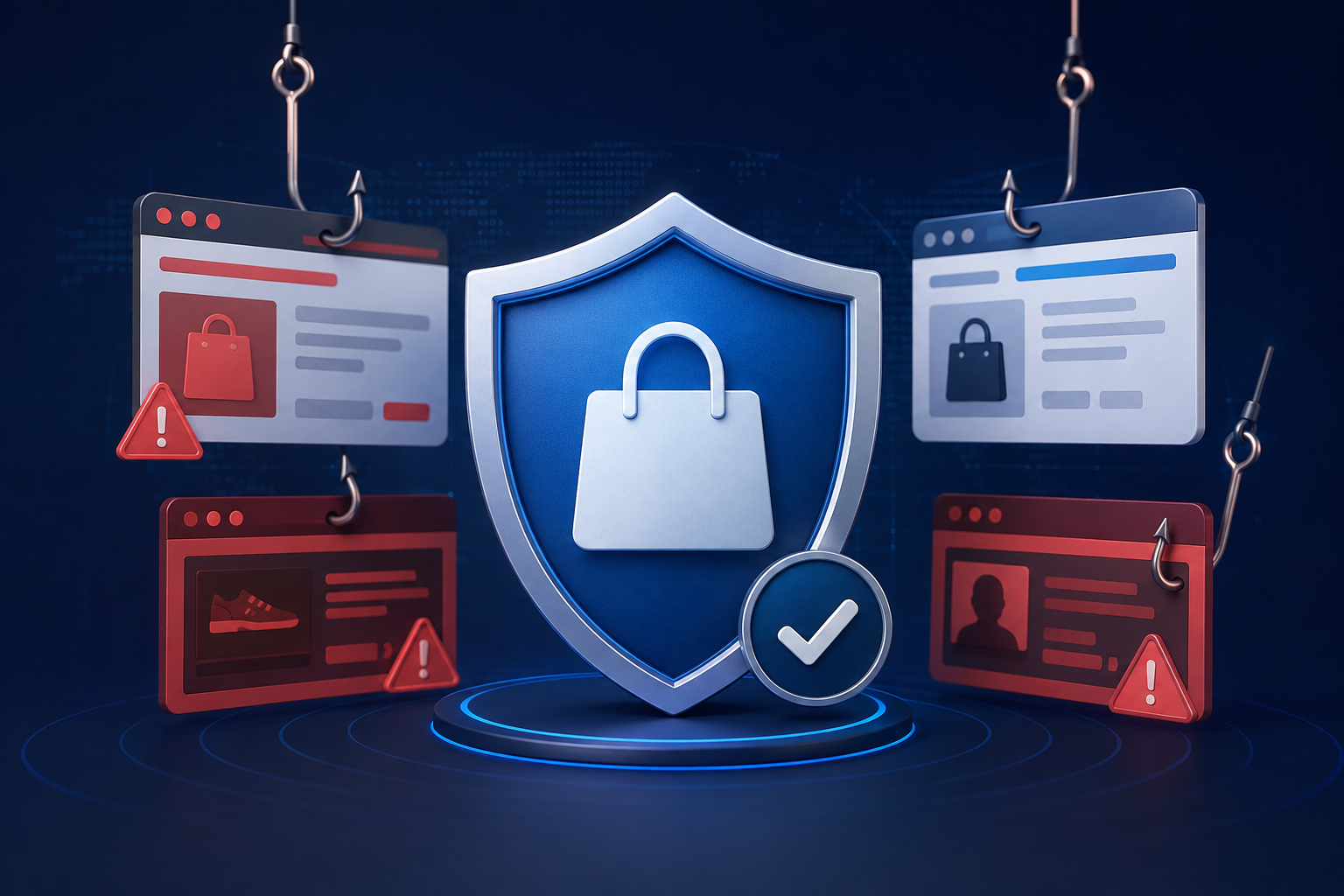
A fake domain that looks like yours, a cloned storefront, a fraudulent ad on Google borrowing your brand identity, these are the phishing threats your team actually has to deal with. Most anti phishing software reviews won't help you here because they're written for security operations, not brand teams. Here's what actually fits your use case.
TLDR:
- Brand impersonation phishing targets your customers outside your firewall via fake domains, cloned sites, and fraudulent ads.
- 55% of phishing sites impersonate popular brands, and impersonation drove $16 billion in US consumer losses in 2025.
- Match your tool to your documented exposure: domain-specialist tools for typosquatting, social monitors for fake profiles, Meta/Google ad detection for malvertising.
- Fragmented point tools create enforcement gaps; a counterfeiter identified on a rogue domain stays anonymous on marketplaces when the two datasets never meet.
- MarqVision's Digital Risk Protection monitors 1.3 billion domains and tracks 5 million new domains daily, with a median domain takedown time of 5.3 hours.
What Anti-Phishing Protection Means for Brand Teams
Search for "anti phishing software" and you land in email gateways, Microsoft Defender configurations, and security awareness training. That framing serves IT and security operations. It leaves brand protection teams solving a different problem.
For legal, IP, and brand protection teams, phishing is brand impersonation. Criminals register lookalike domains and clone your website, spin up fake social profiles, and buy fraudulent ads that borrow your logo to deceive customers at scale. The threat lives outside your firewall, on the same digital surfaces your real customers use.
So when we talk about anti-phishing protection here, we mean the detection and takedown of that impersonation infrastructure. This is not about filtering suspicious messages in an employee inbox. It is about finding the fake domains, storefronts, and profiles carrying your brand and removing them fast.
How Brand Impersonation Phishing Attacks Are Built
A brand impersonation campaign starts with a domain. Attackers register typosquatted and lookalike variants of your name, then clone your website by scraping your logo, imagery, and product pages into a convincing replica. Around 55% of phishing sites impersonate popular brands to harvest credentials and financial data, per Astra's phishing statistics.
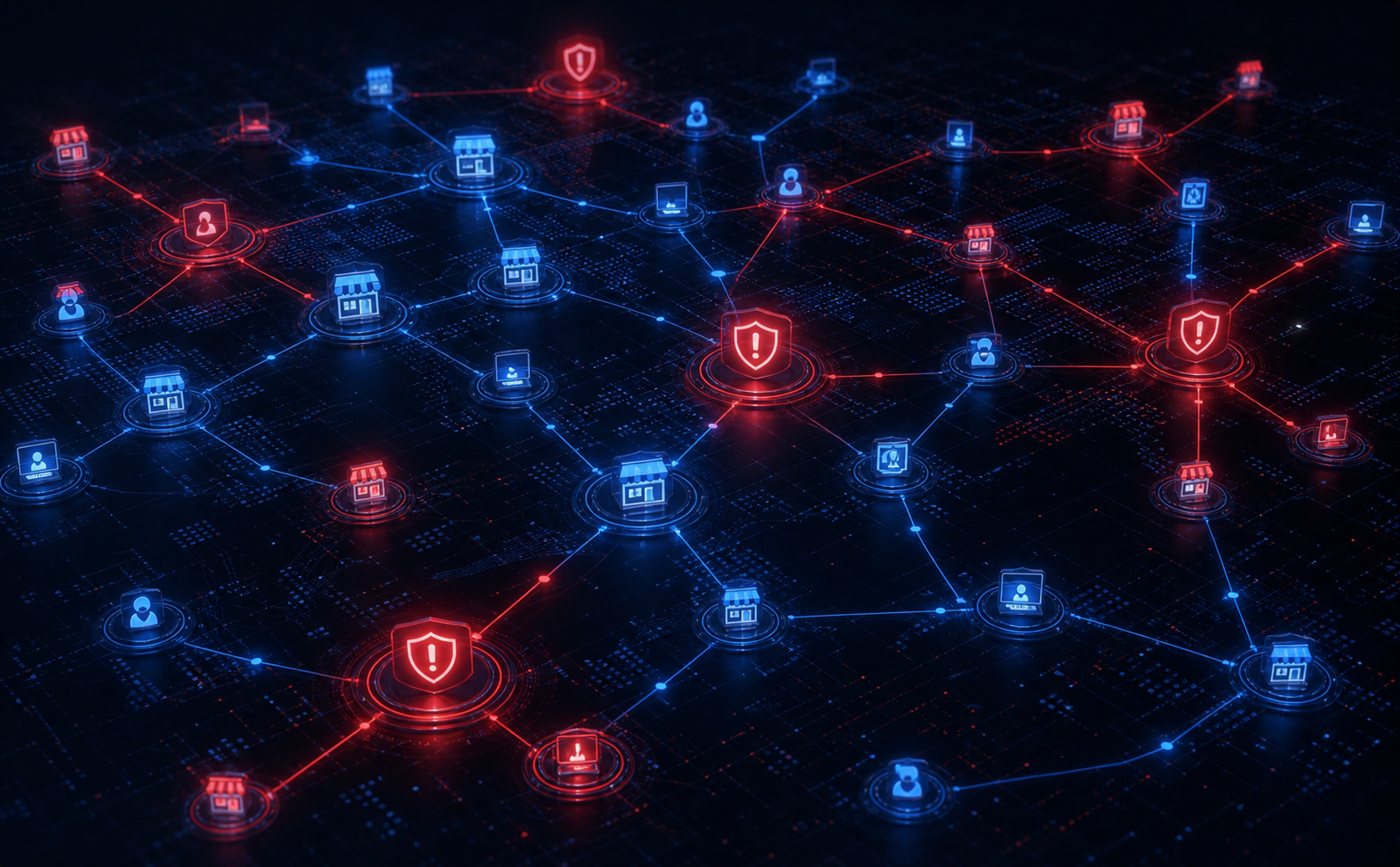
From there the infrastructure spreads. Fake social profiles echo your voice, fraudulent ads on Meta and Google route clicks to the clone, and standalone counterfeit storefronts sell fakes under your identity.
AI collapsed the skill barrier. Phishing kits now package cloning, hosting, and credential capture into templates a low-skill actor can deploy in minutes. WIPO's 2024 Domain Name Dispute Report notes a surge in lookalike domain registrations since 2020, and one 2025 operation spun up nearly 200,000 fraudulent websites in 20 days.
The Brand Damage Behind Every Fake Domain
When a customer loses money to a site carrying your name, they blame you, not the criminal who cloned you. Brand impersonation attacks drove $16 billion in US consumer losses in 2025, per CybelAngel's 2025 research, and every dollar lands against a brand that did nothing wrong.
The reputational cost compounds the financial one. A customer who enters card details on a fake storefront ties the fraud to your brand, not the counterfeiter. Trust erodes fastest after a high-profile spoofing incident, and it does not return with a single takedown.

Then comes the enforcement burden. Left unchecked, impersonation infrastructure multiplies faster than legal and IP teams can file abuse reports one at a time. That gap is the ROI case for dedicated anti-phishing investment. General cybersecurity budgets protect your network. They do nothing for the fake domains harvesting your customers.
Key Features to Assess in Anti-Phishing Software for Brand Teams
Not every tool that claims anti-phishing coverage serves a brand protection mandate. As you compare options, weigh these eight dimensions against your threat profile.
- Domain monitoring breadth: how many registries the tool covers and how many new domains it scans daily. With 88% of homoglyph domains registered by third parties, scanning across registries is non-negotiable.
- AI-powered lookalike detection: visual and structural matching against your assets, not keyword-only watchlists that miss URL-agnostic clones.
- Takedown speed and depth: direct registrar and hosting partnerships that beat standard abuse-report cycles.
- Social media and paid ad coverage: fake profiles plus fraudulent Meta and Google ads, not domains alone.
- Multi-channel integration: domains, marketplaces, and social monitored in one system instead of siloed point tools.
- Evidence quality: documentation built for trademark and copyright takedown workflows.
- False positive control: how analyst workload stays manageable at scale.
- Reporting: dashboards that translate to IP counsel and executive stakeholders.
The 10 Best Anti-Phishing Software Solutions for Brand Protection Teams
We assessed each tool on brand impersonation detection and takedown, not inbox filtering. No hands-on trials were run here; capabilities below reflect vendor documentation, product pages, and published case studies.
MarqVision
Our Digital Risk Protection module monitors domains, social profiles, and paid ads for impersonation, with registrar, hosting, and Meta partnerships driving fast takedowns. Best fit for consumer brands wanting phishing, counterfeit, and marketplace enforcement in one system.
ZeroFox
External threat intelligence covering social media, domains, and dark web, aimed at enterprise security and brand teams. Strong for organizations blending executive protection with impersonation takedown.
Bolster (CheckPhish)
AI-driven scanning of domains, phishing sites, and social channels, with a free CheckPhish tier for spot checks. Suits teams wanting automated detection at high volume.
Netcraft
A well-proven phishing detection and takedown platform, heavy on domain and URL analysis. A common fit for financial services and brands facing large phishing volumes.
BrandShield
Brand-focused monitoring across marketplaces, social media, and domains, built for legal and IP teams. Fits brands whose enforcement strategy is built around trademark-driven action.
Fortra PhishLabs
Managed digital risk protection covering domains, social, and dark web, delivered as an analyst-supported service. Best for teams wanting outsourced enforcement operations.
CybelAngel
External attack surface and dark web monitoring with domain and impersonation coverage. Suits security-led teams tracking exposed assets alongside brand abuse.
Doppel
AI-native detection across domains, social, and paid ads, positioned for fast-moving impersonation threats. Fits brands facing high-velocity, AI-generated campaigns.
CSC Digital Brand Services
Domain management paired with brand protection, drawing on registry-level access. A fit for enterprises consolidating domain portfolio and enforcement under one provider.
Red Points
Self-service brand protection across marketplaces, social, and domains, aimed at the mid-market. Suits smaller teams wanting an accessible dashboard-led workflow.
How to Match an Anti-Phishing Solution to Your Brand's Threat Profile
Match the tool to your documented exposure, not to a feature list.
- High-volume domain spoofing and typosquatting: focus on breadth of registry coverage, daily scan volume, and direct registrar and hosting takedown relationships. Domain-specialist and registry-linked tools fit here.
- Social media impersonation and fake accounts: put profile and post monitoring first, across the platforms your customers actually use, including Asian channels if relevant.
- Fraudulent paid advertising: make Meta and Google ad detection with trusted-reporting takedown the top requirement, since domain-only tools miss malvertising entirely.
- Unified multi-channel enforcement: put a single system covering domains, social, and ads with consolidated evidence and reporting at the top of your list.
A point tool is enough when one channel dominates your threat data. When impersonation spans domains, social, and ads at once, fragmented tools create gaps between them, and one enforcement workflow closes those gaps.
Anti-Phishing Protection Within a Wider Brand Integrity Strategy
Phishing rarely operates alone. A fake domain that harvests credentials today often becomes a counterfeit storefront tomorrow, selling physical fakes under your name instead of stealing logins. The same networks running domain spoofing and social media impersonation tend to list on marketplaces and move gray-market inventory in parallel.
That convergence exposes the weakness of channel-by-channel vendor relationships. When your domain tool, marketplace monitor, and social enforcement live in separate systems, seller intelligence gathered in one channel cannot inform action in another.
Integrated brand protection closes that gap. Detection, evidence, and takedown share one workflow across domains, marketplaces, social, and ads, so a pattern surfaced anywhere feeds enforcement everywhere.
MarqVision's Digital Risk Protection for Brand Impersonation
We built our Digital Risk Protection module for exactly the convergence problem the previous section describes. It monitors 1.3 billion domains and tracks 5 million new and updated domains every day, flagging lookalike registrations through AI risk scoring before they go live against your customers.
Detection is only half the value. Our median takedown time for domain names is 5.3 hours against an industry baseline measured in days, and as a Meta Trusted Reporting partner we remove impersonating paid ads at a 99% takedown rate. Direct integrations with Cloudflare's Abuse API, Google's Trusted Copyright Removal Program, and payment providers including Stripe, Visa, and American Express let us disrupt hosting and report payment infrastructure in parallel with domain enforcement, so a single fake site gets attacked from several angles at once.
What separates us from the pure-play tools above is scope. Our brand impersonation protection module runs inside the same system as anti-counterfeit, anti-piracy, and gray market enforcement. That removes the separate vendor contracts most teams stitch together across threat categories.
Want to see it against your own brand? Request a demo.
FAQ
What is anti-phishing software, and how is it different for brand protection teams versus IT security teams?
Anti-phishing software for IT security filters suspicious emails from employee inboxes and blocks malicious links inside the corporate network. For brand protection teams, anti-phishing protection means detecting and removing the external impersonation infrastructure attackers build against your customers: lookalike domains, cloned websites, fake social profiles, and fraudulent paid ads that carry your logo. The threat lives outside your firewall, so the tools that tackle it monitor registries, social channels, and ad networks. Not mail servers.
What should I look for in anti-phishing tools when my brand faces impersonation across domains, social media, and paid ads simultaneously?
When impersonation spans multiple channels at once, point tools create enforcement gaps between them because seller intelligence gathered on a rogue domain never reaches the team monitoring fake ads. Make a solution that covers domains, social profiles, and paid advertising in a single workflow with shared evidence your first requirement, and check whether the vendor holds trusted-reporting status with Meta or Google, since that status directly determines takedown speed on fraudulent ads. Domain-only tools miss malvertising entirely, and social-only tools leave typosquatted domains undetected.
How do I block phishing sites impersonating my brand if the domain uses hosting infrastructure in Russia or China?
Standard abuse reporting to uncooperative hosting jurisdictions fails most of the time. The practical response is a two-layer approach: request Google Safe Browsing flagging immediately to trigger browser-level warnings and cut off organic search traffic while the takedown is in progress, then file with domain registrars directly instead of routing through the hosting provider. Vendors with direct registrar partnerships and Cloudflare Abuse API integration can reach the true hosting provider behind privacy-protected WHOIS records, which is the step that separates an 85-90% removal rate on impersonation sites from the 65-70% rate typical for content-only infringement on adversarial infrastructure.
MarqVision DRP vs. a standalone anti-phishing app for brand protection: which fits a brand team running counterfeit enforcement at the same time?
A standalone anti-phishing app removes fake domains and profiles but keeps that data siloed from your marketplace enforcement records, so a counterfeiter identified on a phishing domain stays anonymous on Amazon because the two datasets never connect. MarqVision's Digital Risk Protection runs inside the same system as anti-counterfeit and gray market enforcement, meaning a bad actor surfaced through a fake domain feeds directly into seller intelligence used for marketplace takedowns. If your threat profile is purely domain impersonation with no marketplace exposure, a specialist tool is sufficient; if phishing and counterfeiting overlap, a unified system closes the gap between them.
How fast does anti-phishing protection actually remove a fake domain, and what drives the difference between hours and days?
The gap between a 5-hour median and a multi-day industry baseline comes down to three structural factors: whether the vendor has direct relationships with registrars and registries instead of routing through standard abuse queues, whether they hold Google Safe Browsing integration for immediate de-indexing as a first-response tactic, and whether they can unmask true hosting providers behind privacy-protected WHOIS records using tools like the Cloudflare Abuse API. Vendors without these integrations rely on sequential cease-and-desist cycles, which typically produce lower removal rates. Vendors with registrar partnerships, Safe Browsing integration, and hosting-provider unmasking achieve higher documented removal rates.
Final Thoughts on Brand-Focused Anti-Phishing Protection
Every fake domain, cloned site, and fraudulent ad carrying your name is a liability your team did not create but still has to resolve. The tools that serve IT and security operations were built for a different problem, and brand teams working from that same toolset end up with real gaps in their coverage. Building an enforcement workflow that spans domains, social, and ads in one system is what keeps a single detected threat from slipping through a channel no one was watching. Request a demo to walk through what that looks like for your brand.
Stay up to date on the latest IP Protection content from MarqVision.


4 Enforcements a Week to 400: Scale Brand Safety with Marq AI

Don’t Just Find Counterfeits. Dismantle the Entire Network.

.png)
Discover the latest trends and challenges in IP protection

Take Control of Your Trademarks with MARQ Folio
Renew and Manage Your Trademarks Easily With MARQ Folio

We’re waiting to hear from you

See the best brand protection solution in action

Don’t let piracy steal your growth

Talk to us about your brand protection problems