K-beauty's successful US expansion in 2024, and the long-term growth challenges for 2025
K-beauty's US success, the consumer trends behind it, and the long-term work ahead: handling counterfeits and regulation with an IP protection strategy.
 Irene Lee4 min read
On this page4
K-beauty’s global standing and its results in the US
Over the past five years, as growth stalled in China, its main market, K-beauty found success in new markets and is now enjoying a second golden age. Once focused mainly on Asia, K-beauty is now highly popular in many markets, including the US, Japan and Southeast Asia. Its standout results in the US, a market with high barriers to entry, show K-beauty’s potential for global growth. Exports hit an all-time high in the first quarter of 2024, and cumulative exports through the third quarter reached $7.4 billion, up 19.3% year over year. (Source: Dong-A Ilbo) According to the Ministry of Food and Drug Safety, that’s 8.8% above the previous record set in 2021, reflecting K-beauty’s successful push into the US. (Source: Ministry of Food and Drug Safety)
K-beauty is thriving in the US mainly because trust in its quality has grown, especially among younger consumers, and brands going viral on social media and online platforms has amplified that trust. In this post, we look at K-beauty trends in the US, what’s driving its popularity, and strategies for sustainable growth.
K-beauty trends in the US: indie brands rise as buying patterns shift

K-beauty cosmetics exports to the US reached $870.31 million in the first half of 2024, up 61.1% year over year. (Source: Dong-A Ilbo) K-beauty first caught attention in the US as trust built in its high quality for the price. Indie brands’ product results have gone viral on social platforms such as Instagram and TikTok, and brands have won fans by clearly communicating their own philosophy and values. Sunscreens and basic skincare are in especially high demand, and indie brands, rather than conglomerates such as Amorepacific and LG H&H, are leading the K-beauty trend.
Indie brands build awareness and popularity by connecting with consumers through many touchpoints, including beauty multi-brand stores, online channels and pop-up stores. Since the COVID-19 pandemic, shopping has shifted rapidly from offline to online, and as the ingredient-focused clean beauty trend has spread, demand for affordable, high-quality products has grown. On Amazon, K-beauty category sales rose 78%, with popular small brands such as COSRX, Anua and d’Alba driving trends and sales in the US. With products made from high-quality ingredients, K-beauty has established a stable position in the US market. (Source: Allure)
Unauthorized sellers undercutting your official store: check now
What K-beauty brands need to enter the US: regulation and brand protection
To succeed in the US, brands need both regulatory compliance and a brand protection strategy. In particular, MoCRA (the Modernization of Cosmetics Regulation Act of 2022), enacted in 2022, includes important rules for cosmetics manufacturers in the US. Under MoCRA, facility registration for manufacturing and processing, compliance with good manufacturing practices (GMP) and labeling of allergens are now mandatory, and these have become key requirements for consumer safety and brand trust.
MoCRA strengthens brands’ quality control so consumers can buy products more safely, while also enabling faster action against counterfeiters. Counterfeiters are more likely to include harmful substances in packaging or containers or to produce in unsanitary conditions, so regulation plays an important role in protecting brands and consumers. Based on it, marketplaces and the FDA can identify and act on bad actors more effectively.
But the law applies equally to brands. If a brand doesn’t comply with MoCRA, the FDA can inspect its manufacturing facilities and take action such as mandatory recalls or suspension of registration. Beyond the facility, a regulatory violation found online gets listings removed immediately, and fixing them takes time, so thorough compliance is a must.
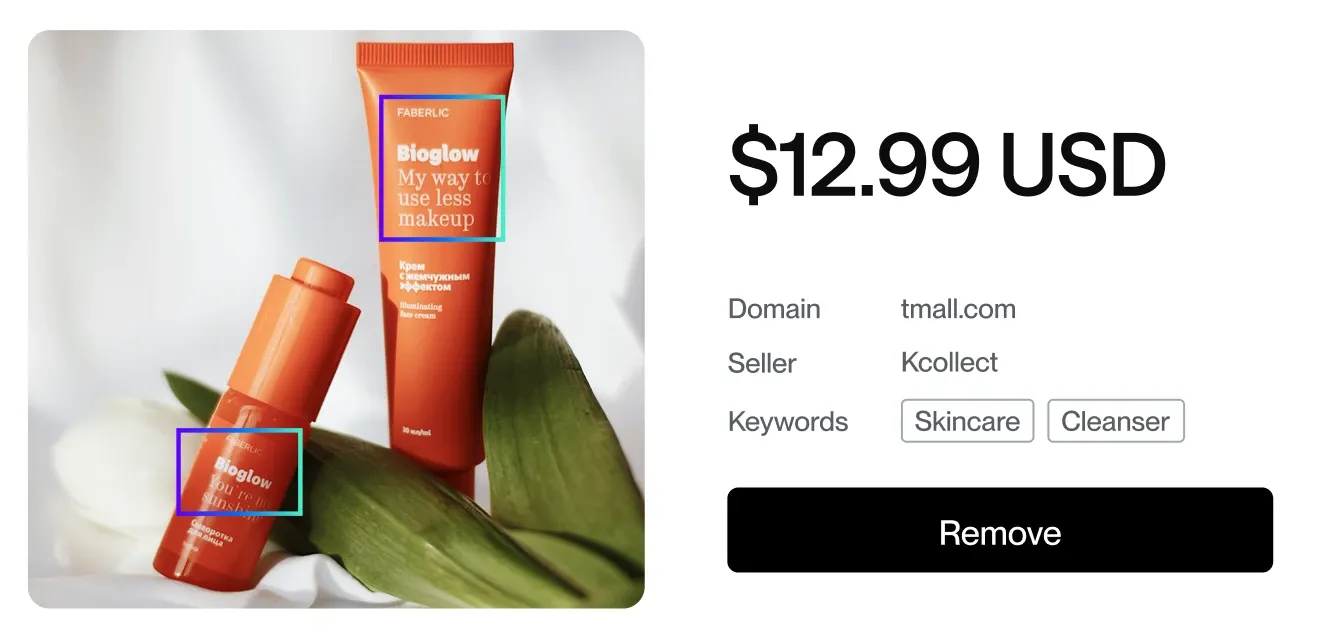
Another challenge K-beauty brands face is counterfeits. As K-beauty grows more popular in the US, counterfeits exploiting that popularity are spreading fast on online marketplaces. Fakes are frequently found and sold on major platforms; counterfeit K-beauty sunscreen was recently discovered on Amazon, for example. In a MarqVision survey, 71.6% of US consumers said they had unintentionally bought a counterfeit, and counterfeit beauty products in particular threaten consumer safety and deal a heavy blow to brand trust. To prevent this, brands must monitor counterfeits on the platforms where they sell and put a strong enforcement strategy in place.
IP management and brand protection for global success

For K-beauty brands to grow sustainably, thorough IP management and a brand protection strategy are essential. Counterfeits don’t just cost revenue. They threaten consumer health and directly affect brand reputation. Here are the key strategies for responding to counterfeits effectively.
IP management
Building and managing an intellectual property (IP) portfolio systematically, in line with your business strategy, is essential. Registering trademarks and copyrights strategically in each country you enter lets you expand your IP-based business as far as possible. A systematic IP portfolio is the foundation and a prerequisite for global success and brand protection.
Brand protection strategy
Brands need a strategy to spot IP infringement quickly and respond fast. IP infringement such as counterfeits, unauthorized sales and brand impersonation damages a brand’s unique value and resources, and the tactics are becoming more varied and sophisticated. Brand protection strategies have to get stronger as infringement tactics evolve.
We’ve looked at K-beauty’s standing in the US and the challenges ahead. K-beauty’s growth is expected to continue, but to grow safely, brands need to prepare thoroughly for brand protection and regulatory requirements. In our next post, we’ll cover how brands can make effective use of, and prepare for, Amazon’s patent protection system, the APEX program, and MoCRA.
You can also download MarqVision’s report analyzing US consumer buying patterns. It gives you the latest data on where US consumers most often encounter counterfeits, how often they buy them and which product categories are most affected, so you can build a more effective business and brand IP protection strategy for 2025 and beyond.
Download the report now and build a brand protection strategy tailored to you.