
Proven in the Hardest Market First
- 20% → 5%Counterfeit saturation rate on the houses onboarded first, within a year.
- 4Houses running one program
- 1Point of contact for the whole group
- Day oneGlobal scope granted to the newest house
- Challenge
- A federation of independently run houses, 10+ point vendors, and near-exact dupes in mainland China built to slip past trademark enforcement.
- Approach
- Start in the group's hardest market for two houses, verify the enforcement team in person, and report to the group's own saturation definitions.
- Results
- Saturation fell from 20% to 5% within a year, and the program grew to four houses, the newest with global scope from day one.
Key Takeaways
- This group assigned MarqVision to mainland China, its single hardest and most complex counterfeit market, to stress test before trusting MarqVision with more of its portfolio.
- Two years on, the engagement covers four houses across fashion, leather goods, watches, and jewelry.
- Using the group's own saturation rate metric (the share of listings on a monitored search that are infringing, not authentic), the figure fell from 20 percent to 5 percent within a year.
- A fourth house joined with full global monitoring scope granted from day one, skipping the market-by-market rollout earlier houses went through. Shortly before this case study was written, the relationship grew again into a new price and channel compliance service line.
- The group also tracks an early financial view of these same houses internally, pointing to roughly five times the program's cost coming back in recovered revenue.
The Problem
A Federation, Not One Brand
Conglomerates like this one run as a federation of independently managed houses, each carrying its own decades of brand equity and its own budget, not a single brand with regional offices. A house's brand protection has to be won on its own terms; nothing here comes down as one mandate from the top.
Mainland China sits at the center of that exposure: the group's single largest source of counterfeit supply, and the market its internal brand protection function considered too high-volume and too complex for a single vendor to prove itself against. Before this program, the group had worked through 10+ point vendors, one per function or per house, with no consistent way to prove any of them were actually working.
Sellers copy a product's shape, materials, packaging, and color exactly, then strip the logo or change a single letter of it — a listing built to slip past standard trademark enforcement, since, on paper, the mark itself isn't being copied.
And in China, the problem itself wasn't crude counterfeits. It was this dupe pattern above. That's the shape of the threat this case study covers. Not obvious fakes on obviously disreputable sites, but near-exact copies sitting on the same marketplaces real customers already shop, built to avoid the kind of enforcement a rules-based program can catch.
The Test
Assigned the Hardest Market on Purpose
This group doesn't run a standard vendor selection process. It decides on its own timeline when it wants to buy, and it tests before it buys, on its own terms. Instead of starting somewhere easy, the group's brand protection function assigned MarqVision to mainland China, its most complex and highest-volume counterfeit market, for two houses at once. The logic was direct: if detection and enforcement held up in the hardest market in the portfolio, trusting MarqVision anywhere else would be a much smaller decision.
Detection and enforcement held, and that result is what carried MarqVision into every stage that followed. But a strong number wasn't enough on its own for the group to act on. In this industry, a vendor can post strong numbers while quietly routing local enforcement through a subcontractor or an offshore team that has never worked the market, and a dashboard can't tell a real presence from a rented one. So before trusting the result, the group sent its own people to China to meet the MarqVision enforcement team in person, and confirmed the team behind the numbers was dedicated to this market, not standing in for one.
The Expansion
From Two Houses to Four
What began as a contained engagement for two houses, scoped to one market, grew over roughly two years into a standing program across four houses: fashion and leather goods on one side, watches and jewelry on the other. Each stage of that growth was earned on results, not sold on promise. The group broadened scope, and eventually moved the engagement onto standing annual agreements, after its own saturation numbers held up over time.
When a fourth house joined, the group granted MarqVision full global monitoring scope from the outset, skipping the market-by-market rollout earlier houses had gone through. About two months before this case study was put together, that same house expanded the relationship again, into a new service line: monitoring retail price and channel compliance alongside counterfeit takedowns.
Why MarqVision
Built to the Group's Own Bar, Not a Default One
Instead of running MarqVision's standard, off-the-shelf saturation report, the program was built to match existing definitions and thresholds within the group's own brand protection function. Every flagged listing is also broken down by type: trademark infringement, visual or image infringement, or a shape-and-packaging dupe, so a house sees the composition of its problem, beyond a single takedown count.
Reporting flows through the group's central brand protection function. That function distributes findings to each house on its own terms and relays feedback back, a structure built to fit an organization of independently run houses, not one imposed on top of it.
| The old model | MarqVision brand protection | |
|---|---|---|
| Staffing | A different vendor per function or per house | One team, coordinated through the group’s central function |
| How results are judged | Takedown counts, hard to compare across vendors | The group’s own saturation bar, tracked the same way everywhere |
| What a house sees | Its own disconnected reporting, no group-wide view | A report built to match definitions the group already used |
| How infringement is broken down | Takedowns only | By type: trademark, visual, or shape-and-packaging dupe |
The Results
20 Percent to 5, on the Group's Own Bar
Saturation rate, the share of listings on a monitored search that are infringing, not authentic, is what the group's own brand protection function uses to judge whether a market is under control. On the houses onboarded first, that number fell from 20 percent to 5 percent within a year.
Saturation rate trend: month-by-month decline
Key metrics at a glance
- Houses running one program
- 4
- Point of contact for the whole group
- 1
- Global scope granted to the newest house
- Day one
Reading the Number
Why Five Percent Is Unusually Low
Most saturation programs settle well above zero. Once the obvious, easily enforceable infringement is gone, what's left is slower marketplaces, sellers who relist fast, and edge cases where classification is a judgment call. A five percent floor on a market this complex is low for the industry, and it traces back to two things: a detection system tuned to this group's own thresholds instead of a generic default, and two years of the same team the group verified in Shanghai learning this market's marketplaces and sellers in detail, instead of a vendor roster that turns over.
The financial view above is built the same conservative way. Only listings the program's own enforcement can show it removed count toward it; a seller who quietly pulls a listing before a takedown doesn't count, even though enforcement pressure likely caused it. And every dollar in that estimate assumes only a small share of counterfeit buyers would ever have paid full retail price for the real thing. It's an early estimate, not a final number, and it will tighten as a full year of data comes in.
Beyond the Number
What the Group Actually Cares About
Ask this group why it renews, and the answer isn't revenue. A counterfeit buyer was rarely going to become a paying customer anyway. What the group's brand protection function has to prove every year, to make the case for its own budget, is that the online buying experience stays clean: that a customer searching for one of its houses doesn't land on a near-exact copy before finding the real thing. In luxury, the product and the experience of buying it aren't separate; every touchpoint, before a purchase, during it, and after, has to stay controlled to protect what a customer is actually paying for.
The trust markers point the same way. A fourth house was handed full global scope with no phased rollout, the first time this group had done that immediately. Then, about two months before this case study was written, it expanded the relationship again, into price and channel compliance. None of that is bought with a low price. It's earned by acting like an extension of the group's own brand function instead of a vendor selling takedown volume.
FAQ
What is a "dupe," and why is it hard to enforce against?
A dupe copies a product's shape, materials, packaging, and color closely enough to pass at a glance, while stripping the logo or changing a single letter of it. Because the trademark itself isn't reproduced, a dupe often falls outside what standard trademark enforcement can act on, even though a customer would struggle to tell it apart from the real product without close inspection.
Why does this group's saturation floor sit lower than what's typical for the industry?
This number sits lower because the detection work was built to this group's own thresholds, not a generic default, and because one team has worked this market for two years instead of rotating through a roster of vendors.
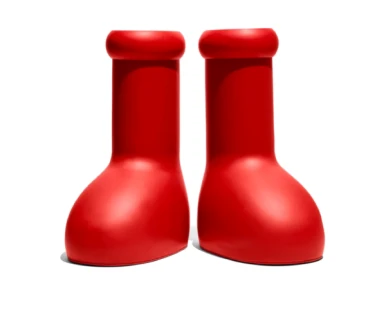

MSCHFFashion
530infringements removed in the first six months
Knockoffs of the Big Red Boot came down fast, and a data-backed report helped win trade dress protection.


F&FFashion
10,000+detections per month
Counterfeit and gray-market sellers posing as official retailers, found across nine countries.
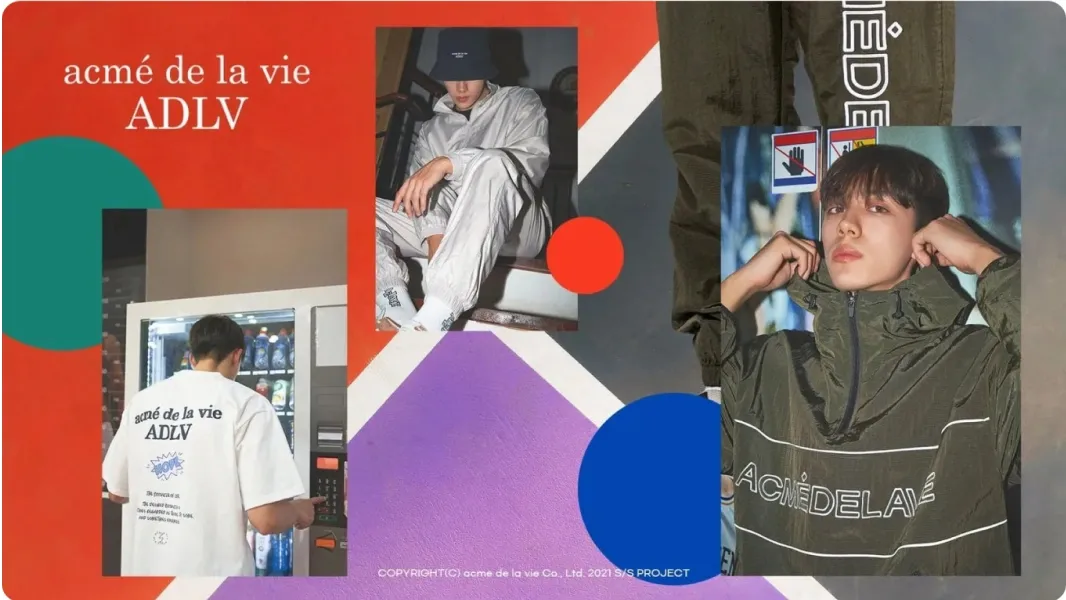

Acme De La VieFashion
4,000+enforcements per month
A fast-growing street fashion brand enforcing against counterfeits at scale across Asian marketplaces.
See what’s selling under your name.
Bring a brand and a market. We’ll show you the fakes, imposters and unauthorized sellers, and what removing them is worth.