.jpeg)
Most people picture counterfeit drugs as a problem that happens somewhere else. The reality is that fake medicine moves through the same marketplaces, social channels, and distribution networks your real supply chain depends on, and it reaches patients before anyone flags it. The WHO estimates roughly 1 in 10 medical products in lower-income markets is falsified or substandard, and high-income countries aren't exempt either, mostly exposed through online channels where counterfeit pills get listed right alongside the genuine product. Here's what counterfeit drugs actually are, where they come from, and what stopping them realistically requires.
TLDR:
- Counterfeit drugs kill an estimated 1 million people per year; fake antimalarials alone cause 120,000+ deaths annually in Africa, per WHO-cited research.
- 1 in 10 medical products in low- and middle-income countries is substandard or falsified, per the WHO.
- Fakes enter your supply chain through unauthorized wholesalers, parallel import channels, and rogue online pharmacies before detection is possible.
- Visual checks catch obvious signs like spelling errors and broken seals, but only lab analysis confirms what a pill actually contains.
- No single detection tool closes the gap; serialization, QR verification, and spectroscopy work only when stacked together.
- MarqVision scans listings across 50+ global marketplaces and pairs digital detection with physical test purchases to build ingredient-level evidence for takedowns.
What Are Counterfeit Drugs
A counterfeit drug is a medicine deliberately and fraudulently mislabeled as to its identity, composition, or source. The fraud is the defining trait: someone knew the product was not what the label claimed and sold it anyway.
The World Health Organization groups these under substandard and falsified (SF) medical products, retiring "counterfeit" in formal work because the word carried trademark baggage. The terms are not interchangeable:
- Substandard: authorized medicines that fail quality standards through manufacturing error, not intent.
- Falsified: products that deliberately misrepresent identity, composition, or source.
- Counterfeit: falsification tied to trademark or intellectual property infringement.
- Spurious: an Indian drug law term overlapping with falsified.
The Global Scale of Counterfeit Drugs
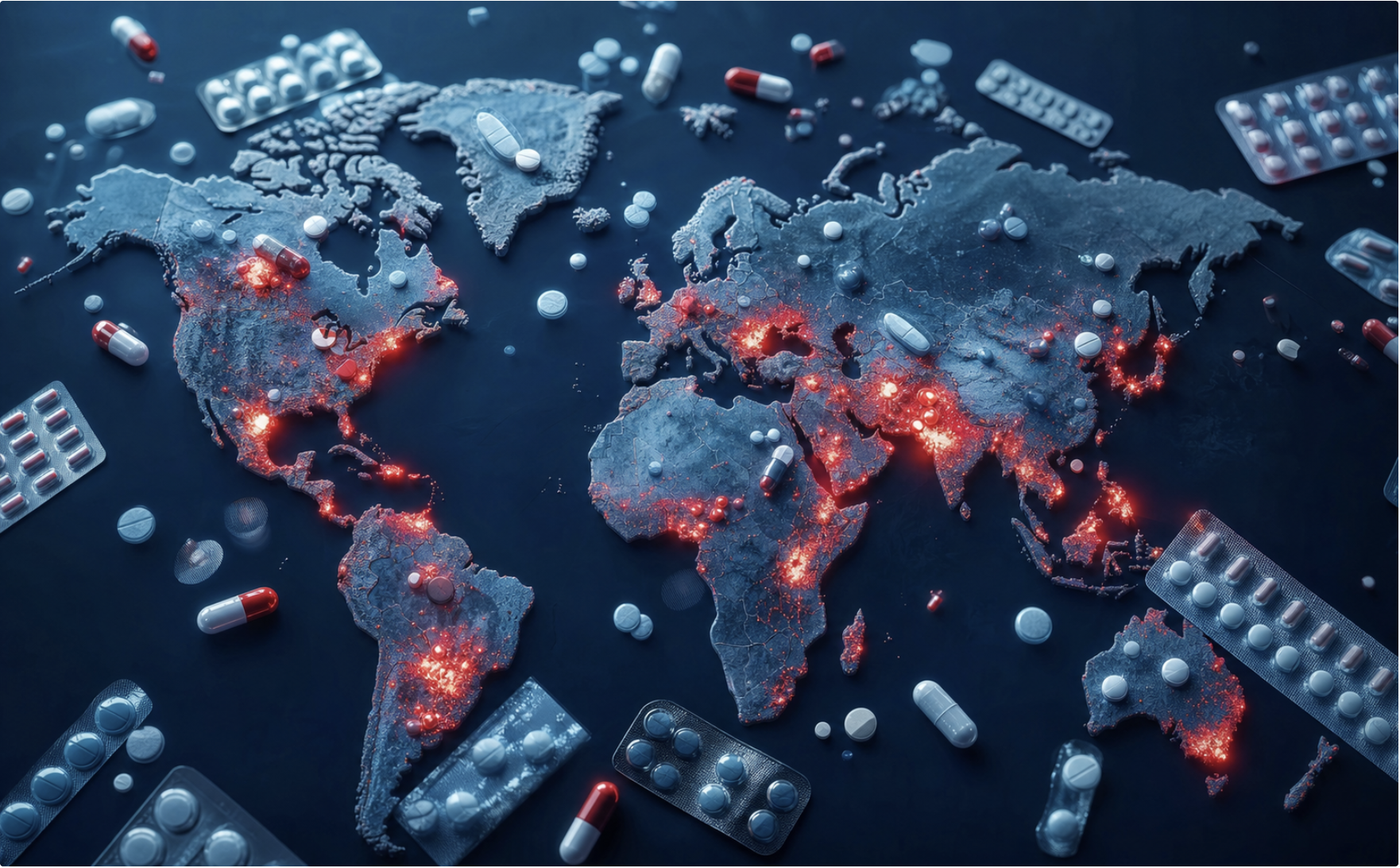
Fraud hides, so exact figures stay elusive, but the estimates alarm. The World Health Organization reports that roughly 1 in 10 medical products in low- and middle-income countries is substandard or falsified, spanning antibiotics to cancer treatments.
The financial scale matches. The global counterfeit pharmaceutical market is valued at up to $200 billion each year, among the most profitable illicit trades on earth.
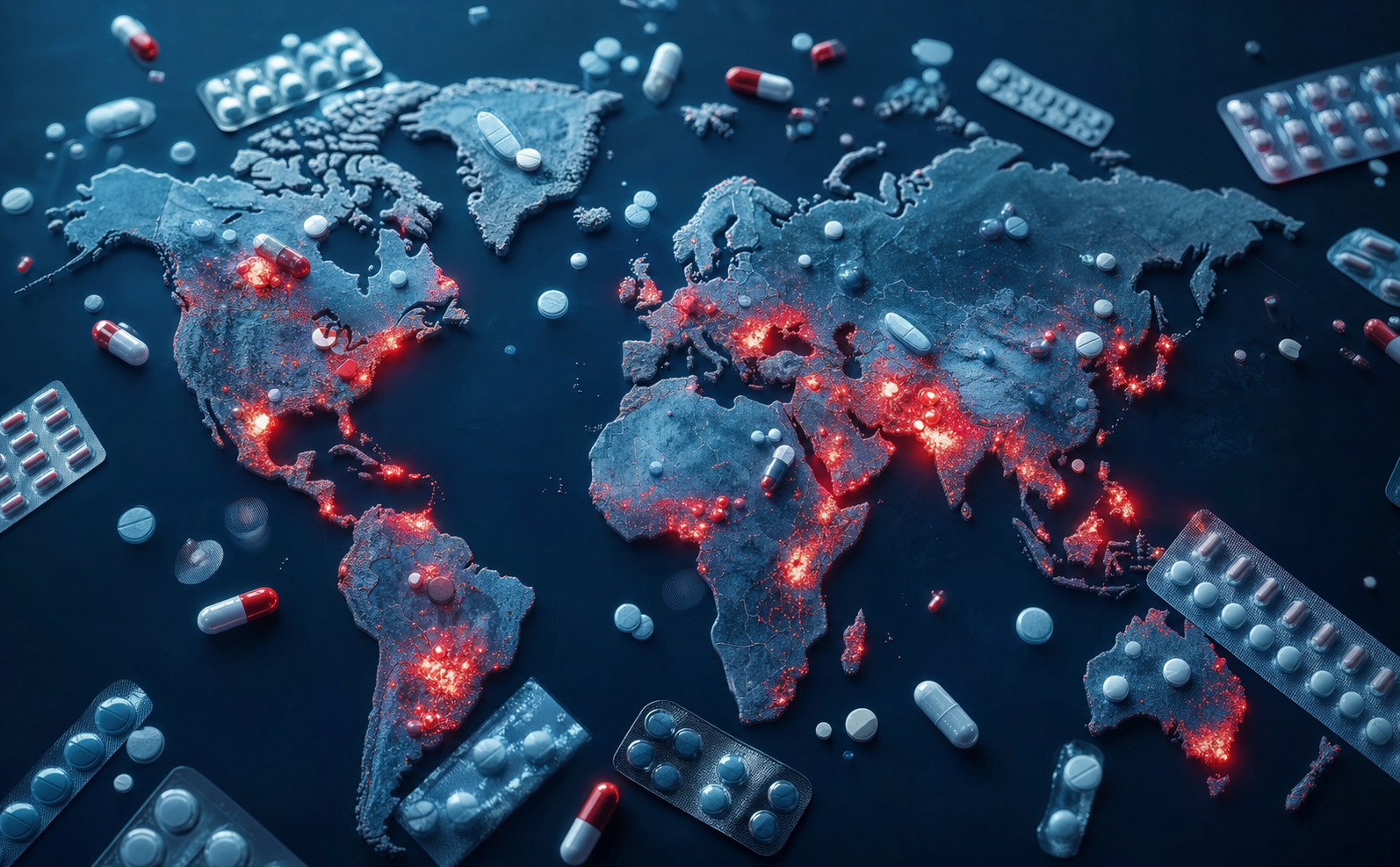
Behind the money sits a human cost: an estimated 1 million deaths per year are attributed to counterfeit medicines.
Which Drugs Are Most Frequently Counterfeited
Counterfeiters follow demand, price, and scarcity. The drug categories they target most share at least one of those traits, often all three.
- Anti-malarials: heavily faked across sub-Saharan Africa and Southeast Asia, where demand is constant and oversight thin.
- Antibiotics: high volume and everyday use, with falsified versions often under-dosed or containing no active ingredient.
- Erectile dysfunction drugs: strong demand plus buyer embarrassment pushes sales into unregulated online channels.
- Cancer drugs: extreme price per dose makes small-batch fakes lucrative.
- HIV medications: lifelong demand and high cost drive persistent fraud.
- Opioids: diverted and faked, frequently laced with fentanyl.
- Weight-loss drugs like semaglutide: shortages and viral demand created a fresh market for social-channel fakes. Brands selling fake supplements face similar pressures across adjacent health categories.
How Counterfeit Drugs Enter the Supply Chain
Legitimate medicine moves through manufacturers, wholesalers, repackagers, and pharmacies. Every handoff is a seam a counterfeiter can pry open.
The weak points are consistent:
- Unauthorized wholesalers on Alibaba who buy from unverified sources and sell into licensed distribution, blending fakes with genuine stock.
- Parallel import channels, where drugs bought cheaply in one country get repackaged and resold across borders with little traceability.
- Manufacturing hubs producing fakes for export, then routing them through transshipment points to obscure origin.
A 2023 PMC review identified China, India, Turkey, Pakistan, and Russia as common source countries for counterfeit drugs reaching the United States.
The Role of Online Pharmacies in Spreading Counterfeit Drugs
The internet collapsed the distance between a counterfeiter and your customer. A rogue site can clone a licensed pharmacy's storefront through domain impersonation, logos and trust badges included, then ship falsified product to an unsuspecting buyer.
The NABP reports that nearly 95% of online pharmacies operate outside legal and safety standards. They skip prescription requirements, hide their location, and source stock from unverified suppliers.
Distribution now extends past standalone websites:
- Social media impersonation and direct messages, where sellers advertise prescription drugs and route buyers to encrypted chats.
- Marketplace and search ads surfacing unlicensed sellers alongside legitimate results, often aided by desktop cloaking tactics that hide the fraud from detection.
- Counterfeit pills pressed to mimic brand-name medication, often laced with fentanyl.
The fake reaches the buyer before anyone flags the listing.
The Health Risks of Counterfeit Drugs
A counterfeit drug harms in several ways, depending on what the pill actually contains.
- Treatment failure: with no active ingredient, the disease goes untreated while the patient believes they are covered.
- Overdose: too much active ingredient, or the wrong substance, poisons the person taking it.
- Antimicrobial resistance: under-dosed antibiotics kill weak bacteria and leave resistant strains to multiply.
- Direct toxicity: confirmed counterfeits have contained mercury, arsenic, fentanyl, and rat poison. The same threat applies to natural health supplements that consumers purchase without a prescription.
The death toll is real. Fake antimalarials alone are blamed for more than 120,000 deaths a year in Africa, per WHO-cited research.
Where the Problem Is Most Severe
The burden concentrates where regulatory oversight is thinnest. Low- and middle-income countries carry the heaviest load, and a few regions stand out.
- Africa: weak port inspection and fragmented supply chains make it the hardest-hit region, with antimalarials and antibiotics the most common fakes.
- India: a large domestic manufacturing base and the term "spurious drugs" written into national law reflect both scale and legal attention.
- The Philippines and wider Southeast Asia: porous borders and busy informal markets feed steady falsified stock.
High-income markets are exposed too. In the United States and Europe, the danger runs mostly through online channels, where counterfeit pills bought from rogue sites bypass the tightly controlled physical supply chain.
How to Identify Counterfeit Drugs
Most fakes betray themselves before a lab ever sees them. Train your eye on the packaging and the pill.
- Spelling errors, mismatched fonts, or faded logos on the box.
- Broken or resealed tamper seals.
- Tablets that crumble, differ in color, or carry an odd smell.
- Missing or unreadable batch and expiry codes.
Cross-check the batch number and expiry date with the manufacturer. For online sellers, verify accreditation through the NABP's Safe Pharmacy tools before buying.
One caveat matters most: visual checks catch the obvious. Only laboratory analysis confirms what a pill actually contains.
Laws and Regulatory Frameworks
Enforcement splits across agencies and borders, so no single body owns the problem.
- FDA (US): the Drug Supply Chain Security Act mandates electronic, unit-level tracing of prescription drugs through the supply chain.
- WHO: the IMPACT initiative coordinates member-state policy and detection standards.
- Interpol: Operation Pangea runs annual multi-country sweeps against illegal online pharmacies.
Frameworks differ by market. The EU relies on falsified medicines directives, India codifies "spurious drugs" penalties, and the Philippines enforces through its Food and Drug Administration.
Technologies Used to Detect Counterfeit Drugs
Detection now runs on layers, from a phone scan to spectroscopy that reads a pill's chemistry.

No single tool closes the gap. Serial codes get cloned, QR labels get faked, and lab testing does not scale, so detection works best stacked.
How to Prevent Counterfeit Drugs from Spreading
Prevention works only when every layer of the chain acts, so no single group carries it alone.
- Consumers: buy from licensed pharmacies, verify the source before paying, and report suspected fakes to your national agency, such as FDA MedWatch in the US.
- Pharmacists and providers: purchase only from authorized distributors, inspect packaging on intake, and flag patients whose treatment fails unexpectedly.
- Manufacturers: invest in tamper-evident packaging, serialized codes, and covert authentication features that raise the cost of copying, and consider brand protection software to monitor for fakes at scale.
- Regulators and agencies: mandate supply chain transparency, share enforcement intelligence across borders, and coordinate takedowns of rogue online sellers.
How MarqVision Helps Pharmaceutical Brands Fight Counterfeit Drugs Online
Everything so far leans on manufacturers, regulators, and consumers. The online layer needs its own owner, and that is where we come in.
Fake medicines cluster where demand runs highest, listed on the same marketplaces and social channels your real products depend on, often reaching buyers first. Our Anti-Counterfeit module, one of the leading AI brand protection platforms, scans listings across 50+ global marketplaces, including Alibaba and Amazon, to close that gap.
Our Social Media Network Search maps the seller networks behind fake drug distribution, tracing connected accounts instead of chasing single posts.
When counterfeiting happens at the formulation level, images cannot confirm what is inside the pill. We pair digital detection with physical test purchases, so suspicious listings get bought, inspected, and tested for ingredient-level evidence that supports takedowns and legal action.
FAQ
What's the difference between counterfeit drugs, falsified medicines, and spurious drugs?
These terms describe overlapping but distinct categories. Falsified medicines deliberately misrepresent identity, composition, or source; the fraud is intentional. Counterfeit drugs are a subset of falsification tied directly to trademark or IP infringement. Spurious drugs is an Indian drug law term that largely overlaps with falsified. The WHO now uses "substandard and falsified" in formal work to separate manufacturing failures (substandard, no intent) from deliberate fraud (falsified), so the category you're dealing with determines which regulatory framework and enforcement mechanism applies.
How do I verify whether a medicine is genuine before dispensing or purchasing it?
Start with the batch number and expiry date: cross-check both directly against the manufacturer's database or SMS verification service, since a code that fails, repeats, or returns no result is a red flag. For online purchases, confirm the pharmacy holds accreditation through the NABP's Safe Pharmacy tools before completing any transaction. Visual checks (inspecting for spelling errors, broken tamper seals, crumbling tablets, or missing lot codes) catch obvious fakes, but only laboratory analysis using mass spectrometry or Raman spectroscopy can confirm what a tablet actually contains.
Should a pharmaceutical brand rely on digital detection alone to stop counterfeit drug listings, or is physical verification also needed?
Digital detection handles packaging replication and unauthorized seller listings well, but counterfeiting in pharmaceutical categories frequently happens at the formulation level: a fake pill can be visually indistinguishable from the genuine article while containing the wrong active ingredient, a toxic substitute, or no active ingredient at all. Image recognition and text analysis cannot detect that. Physical test purchases allow direct inspection, ingredient-level analysis, and lot number verification, producing the evidentiary documentation that platforms increasingly require before actioning a counterfeit report. For pharmaceutical brands, test purchase programs are a required layer of enforcement, not an optional add-on.
What are the four main types of fake drugs and what health risk does each carry?
The four types are: no active ingredient (treatment fails while the patient believes they are covered), under-dosed active ingredient (drives antimicrobial resistance by killing weak bacteria and leaving resistant strains), wrong active ingredient (risk of direct toxicity or overdose), and contaminated product (confirmed fakes have contained mercury, arsenic, fentanyl, and rat poison). The health consequence varies by type, which is why the same fake drug can cause treatment failure in one patient and fatal overdose in another. The risk profile depends entirely on what the pill actually contains, which only lab testing can confirm.
How can pharmaceutical brands monitor and remove counterfeit drug listings across online marketplaces and social channels?
Detection must cover both marketplace listings and social distribution networks, since counterfeit drugs now spread through direct messages, encrypted chats, and social commerce channels alongside traditional marketplace listings. Effective enforcement pairs automated scanning across 50-plus global marketplaces, including Alibaba and Amazon, with social media network mapping that traces connected seller accounts instead of chasing individual posts. When formulation-level counterfeiting is suspected, digital signals alone are insufficient: physical test purchases provide the ingredient-level evidence needed to support takedowns and legal action on cases where listing imagery cannot confirm what is inside the product.
Final Thoughts on the Global Counterfeit Drug Problem
Counterfeit drugs thrive wherever oversight is thin and demand is high, and online channels have made both conditions easier to exploit. The good news is that detection tools, regulatory frameworks, and consumer awareness are all improving. If your brand needs to close the gap on fake listings before they reach your customers, talk to MarqVision about fake listings.
Stay up to date on the latest IP Protection content from MarqVision.




4 Enforcements a Week to 400: Scale Brand Safety with Marq AI

Don’t Just Find Counterfeits. Dismantle the Entire Network.

.png)
Discover the latest trends and challenges in IP protection

Take Control of Your Trademarks with MARQ Folio
Renew and Manage Your Trademarks Easily With MARQ Folio

We’re waiting to hear from you

See the best brand protection solution in action

Don’t let piracy steal your growth

Talk to us about your brand protection problems