Parallel imports and brand pricing control: a gray-market guide
How parallel imports undercut MAP policies and official distribution, and how to tell counterfeits from unauthorized sales and respond to each.
 Jinie Park4 min read
On this page11
- What are parallel imports?
- Official and parallel imports: how the supply chains compare
- Why parallel imports are cheaper
- How are parallel imports different from counterfeits?
- The drawbacks and limits of parallel-imported products
- Where parallel imports are most active
- How to check a parallel import is genuine
- How parallel imports affect brands
- Managing parallel imports and protecting your brand: MarqVision’s approach
- FAQ
- Parallel imports, price gaps and brand protection: key takeaways
If you think parallel imports are cheaper just because “the supply chain is shorter,” you know half the story. Marketing costs, after-sales service costs and the timing of overseas outlet sales each push prices down, and the more they stack up, the wider the gap. Here are official and parallel imports side by side.
Key points:
- Parallel-imported products are genuine. They’re different from counterfeits and have been legal in Korea since 1995.
- They cost 15–60% less than official imports: fewer distribution steps, and no advertising or after-sales service costs in the price.
- The lower price comes with trade-offs: no free after-sales service in Korea, no Korean-language support, and possibly old stock.
- Checking the import declaration certificate, serial numbers and holograms, and the seller’s business details reduces the risk of buying a fake.
- MarqVision’s gray-market solution monitors MAP prices hourly on major marketplaces such as Amazon, eBay and Walmart, and uses a database of more than 10 million sellers worldwide to trace where gray-market goods come in and how stock leaks out, automating distribution integrity.
What are parallel imports?
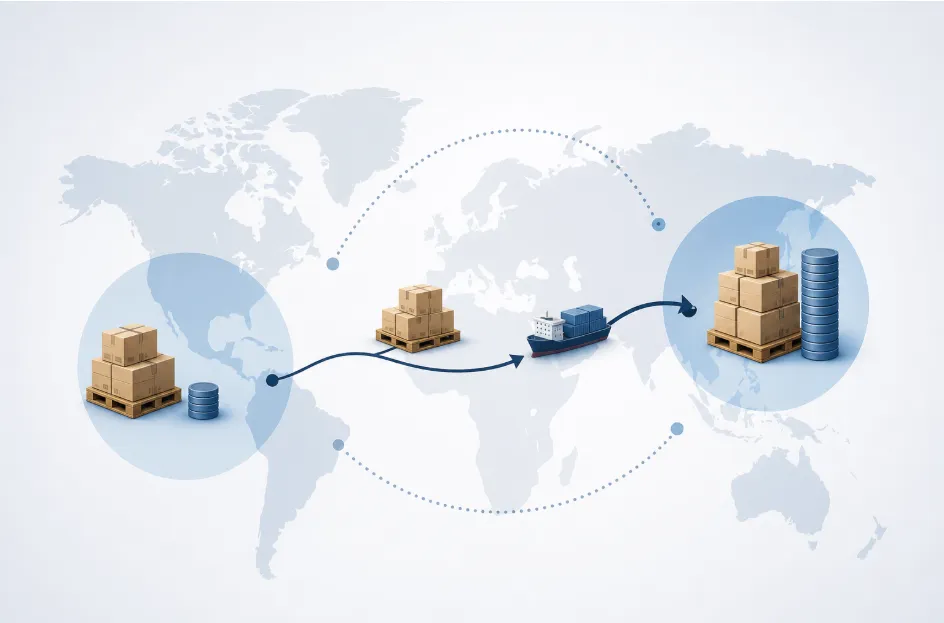
A parallel import is a genuine product brought into Korea and sold by a third party, not the brand’s designated exclusive importer, through legitimate retail channels abroad. The key point: the product is genuine, not counterfeit. What separates it from an official import is the route. Instead of the official line from the brand’s headquarters, it comes through a separate channel such as a store or wholesaler abroad. According to INTA’s definition of parallel imports, these products are classified as genuine goods made on authorized production lines, even when imported into another market without the trademark owner’s permission.
Korea formally allowed parallel imports in 1995, for a clear reason: to stop exclusive importers from controlling the market and raising prices at will, and to give consumers more choice and fair prices. Once the same genuine product could be bought through several routes, price competition moved into distribution itself.
Official and parallel imports: how the supply chains compare
The price gap starts with the length of the route. For the same genuine product, the number of steps before it reaches the consumer decides how many margins stack up.
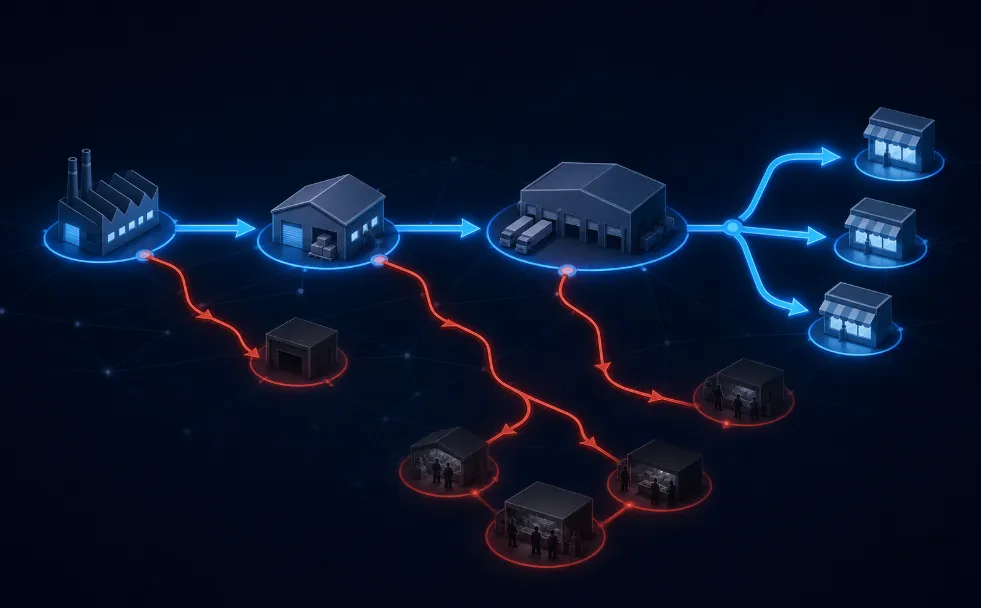
Official imports pass through several steps. Products leave the overseas headquarters, go through a Korean subsidiary or exclusive importer, then on to authorized channels such as department stores, duty-free shops and official dealers. Each step adds overhead and margin. Parallel imports take a shorter route: a Korean parallel importer buys from overseas wholesalers or outlets and sells straight to consumers. Fewer steps, fewer added costs.
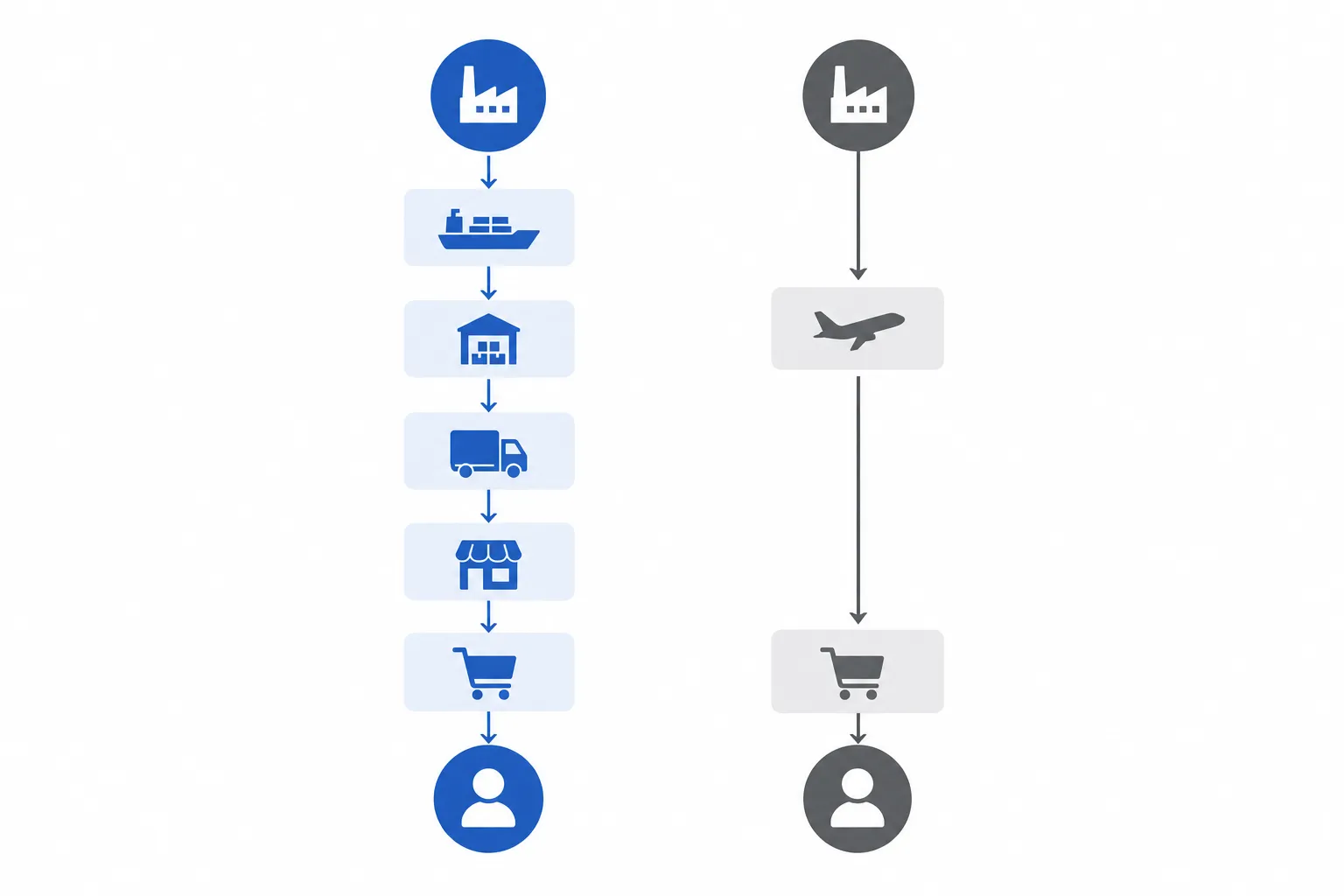
This structural difference is where prices start to diverge.
Why parallel imports are cheaper
Fewer steps are only the start. Four cost factors combine to make parallel imports typically 15–60% cheaper than official imports.
Fewer distribution steps, lower costs
The costs of running a Korean subsidiary, department store fees, store fit-outs and staff largely disappear with parallel imports. Official import prices carry these costs. Buyers of parallel imports, on the shorter route, don’t pay them.
No marketing or advertising costs
Brand headquarters and official importers spend heavily on TV, magazine and digital advertising, and that spend shows up in list prices. Parallel importers don’t do their own marketing, so the whole line item drops out.
Overseas promotions and exchange rates
Parallel importers cut costs by buying in bulk at overseas outlet sales, from end-of-season stock and when exchange rates are favorable. The same genuine product costs very different amounts depending on where and when it’s bought.
No after-sales service costs in the price
Official import prices include the cost of service centers and warranties in Korea. Parallel import prices don’t. The lower price hides a gap in service coverage.
How are parallel imports different from counterfeits?
Plenty of consumers think parallel imports and counterfeits are the same thing. The confusion is easy to understand: both are sold outside official channels, and both cost less than the official price. But they are fundamentally different. Parallel imports are genuine, made on the same production lines as the brand’s own products. Nothing is wrong with how they’re made. They count as “gray-market goods” only because they skip the official channels the headquarters designated. They’re genuine, but their distribution route is in a gray zone.
Counterfeits are another matter. They’re illegal copies that misuse a brand’s IP, such as its trademarks, designs and logos. Whoever makes them has nothing to do with the brand, and selling them is itself IP infringement.
In short:
- Parallel imports: genuine products, only the distribution route is unofficial. Legal to sell.
- Counterfeits: fakes that infringe IP. Illegal to sell.
That’s why parallel imports are recognized as legal in Korea.
The drawbacks and limits of parallel-imported products
A lower price has a cost. Before choosing a parallel import, consider what the official import’s price was paying for. The biggest issue is after-sales service. Official dealers and service centers often refuse to repair parallel imports, or charge for it. Without an official Korean warranty, free repairs are often off the table.
Other limits worth noting:
- Packaging and storage: passing through several hands can mean damaged boxes or poor storage.
- No Korea-specific specs: products may be made for overseas domestic markets, without Korean manuals, Korean voltage or features specific to the Korean market.
- Possible old or outlet stock: products may be end-of-season or previous-season stock rather than the latest season.
- Hard to guarantee authenticity: if the sourcing route is opaque, consumers find it hard to verify authenticity themselves.
Once you can’t be sure a product is genuine, the price advantage means nothing. This is where a route through a gray zone becomes a real risk.
Where parallel imports are most active
Parallel imports aren’t spread evenly across products. The bigger the price gap between Korea and abroad, and the more a brand prices by country, the more room parallel importers have.
Typical categories include:
- Luxury fashion, bags and watches: price differences by country combined with high margins make this the most active gray market. According to Mayer Brown’s legal analysis of the gray market (2025), gray-market volume accounted for 20% of the luxury watch market as of 2016.
- Cosmetics and fragrance: lower overseas list prices and easy bulk buying mean high volumes.
- Electronics and cameras: there’s a big gap between overseas domestic models and official Korean launch prices.
- Sporting goods: end-of-season and outlet stock flows in steadily.
They share one thing: the harder a brand differentiates prices by region, the more the structure invites buying where it’s cheap and selling where it’s expensive.
How to check a parallel import is genuine
Consumers can check a parallel import’s authenticity themselves. A few checks filter out much of the risk.
- Check the import declaration certificate: products that went through official customs come with a Korea Customs Service import declaration certificate. Asking the seller for it is the surest place to start.
- Seller credibility: sellers with a long track record, plenty of reviews and high transaction volume carry less risk. Check that business information and contact details are clear.
- Serial numbers, QR codes and holograms: check that unique numbers, QR codes and holograms aren’t damaged, and that scanning them returns the brand’s information normally.
- Be suspicious of prices that are too low: abnormally low prices compared with the market can be a sign of counterfeits.
- Compare with official information: match the model name, specs and components against the brand’s official website. For models not launched in Korea, check the overseas headquarters’ pages too.
Passing the checklist doesn’t guarantee a product is 100% genuine. But it makes a counterfeit far less likely than skipping the checks.
How parallel imports affect brands
So far, the consumer’s view. For brand headquarters and official distributors, parallel imports weigh differently. When the same genuine product comes in through several routes, the pricing the brand designed starts to give way.
The key impacts:
- Lost pricing control: country-specific list prices collapse in the face of parallel import volume, and MAP (minimum advertised price) policies lose their force.
- Eroded revenue for official distribution: authorized channels such as department stores and dealers compete with lower parallel import prices and lose margin and sales.
- Diluted premium image: as products are sold through discount channels and outlet stock, the premium image the brand has built fades.
- Cracks in the customer experience: refused after-sales service, damaged packaging and specs unsupported in Korea all happen under the brand’s name, and complaints go to the brand, not the seller.
A balanced view matters, though. Parallel imports serve the public interest by checking price-fixing in exclusive distribution and widening consumer choice. That’s why they’re legal.
For brand protection and legal teams, the question isn’t parallel imports themselves. It’s how to spot and manage the counterfeits and unauthorized sales that slip in under cover of that gray zone. Without a digital brand protection strategy, and without brand protection software, you can’t tell genuine parallel imports from IP infringement, and your response loses direction.
Managing parallel imports and protecting your brand: MarqVision’s approach
Brands can’t stop parallel imports. What they can do is pick out the unauthorized sales and price collapses mixed into that gray zone. Chasing hundreds of unapproved sellers by hand can’t keep pace. MarqVision’s gray-market solution automates the job, from hourly price monitoring to tracing who the sellers are.
- Hourly MAP monitoring: tracks price changes on major marketplaces such as Amazon, eBay and Walmart in real time to detect MAP violations instantly and analyze revenue leakage.
- Seller intelligence: matches a database of more than 10 million sellers worldwide against the customer’s internal partner and supplier data to trace how gray-market goods enter and how inventory leaks.
- Coupang Rocket Delivery monitoring: tracks the direct-purchase channel every hour to catch dynamic pricing abuse and distribution contract violations early.
The goal is to manage distribution integrity systematically, with automation built on seller monitoring.
FAQ
How can you tell parallel imports from counterfeits before buying?
The import declaration certificate is the fastest test. Parallel-imported products that went through official customs come with a Korea Customs Service import declaration certificate, so ask the seller for it. Also check that serial numbers, holograms and QR codes are intact, and compare the model specs with the brand’s official website. Treat a price far below the market as a sign of a counterfeit.
Are parallel imports cheap simply because they’re fake or low quality?
No. Parallel imports are cheaper because of differences in distribution structure, not product quality. Korean subsidiary operating costs, department store fees, brand advertising and the cost of running after-sales service centers in Korea drop out of the price, so the same genuine product sells for roughly 15–60% less. Before buying, though, know that the lower price comes without official warranty coverage.
As a brand protection manager, what real risks should I manage as parallel import volume grows?
Parallel imports themselves are legal, but the unauthorized sellers, MAP violations and price collapses that slip in under cover of that gray zone are what you need to manage. Eroded margins in official distribution, a diluted premium image and after-sales complaints all land on the brand’s reputation, and tracking unapproved sellers by hand can’t keep up. The practical starting point is seller intelligence and price monitoring that automatically separate your designated official channels from unauthorized ones.
Parallel import enforcement or counterfeit enforcement: which should we focus on first?
The two problems rest on different legal grounds and need different enforcement, so mixing them up points enforcement the wrong way. Counterfeits are IP infringement, so trademark- and copyright-based takedowns are possible and platform reports are an immediate enforcement tool. Unauthorized sales of parallel imports, on the other hand, hinge on breaches of distribution contracts rather than legal vulnerabilities, so mapping sellers against a database and tracing inventory leaks are the practical starting points. First identify who the unapproved sellers are and which routes their stock came through. That’s how you prove a contract breach and turn it into control of your distribution. Split your enforcement resources: IP enforcement first for counterfeits; seller intelligence and distribution contract management first for unauthorized sales of parallel imports.
Parallel imports, price gaps and brand protection: key takeaways
The price advantage of parallel imports is structural. Fewer distribution steps, no marketing costs and overseas promotions combine to undercut official import prices. Consumers get options. Brands lose pricing control. Telling genuine parallel imports from counterfeits is where brand protection starts. To see how to manage distribution integrity with automation, request a MarqVision demo.