New IP threats targeting K-beauty brands, and how to respond: impersonator websites and social accounts
Impersonator websites and social accounts sell fakes and steal personal data, eroding trust in K-beauty brands. The new IP threats, and how to respond.
 Irene Lee4 min read
On this page4
November and December are when spending surges worldwide. During the holiday season in particular, sales events and gift buying drive a big jump in purchases. But bad actors targeting shoppers get busier too. K-beauty brands, which are hugely popular in the US, face not only counterfeit and gray-market (unauthorized) sales but also a new IP risk: impersonation of their official websites and social accounts. These schemes deceive consumers and damage brand trust, and they get more sophisticated every year. In this post, we look at the new IP problems targeting K-beauty brands and how to respond.
K-beauty impersonator websites: IP harm that exploits trust
Impersonator websites designed to look like a brand’s official site are one of bad actors’ favorite tactics. They steal K-beauty brands’ names, logos, trademarks and product images to confuse shoppers, and often sell counterfeits posing as genuine products or never send anything at all.
In a MarqVision survey of 500 US consumers, nearly 10% of respondents said they had bought counterfeit beauty products through an impersonator website. That may still seem relatively small, but brand impersonation cases are rising every year.
K-beauty impersonator websites mainly take two forms, and both do enormous harm to consumers and brands. Here’s a closer look at each.
1. Impersonator websites identical to the official site
Some impersonator websites deceive shoppers with designs very similar to the brand’s official site. They steal the brand’s imagery and product photos and lure shoppers with domains similar to the brand’s name. Shoppers mistake them for the official site and buy, but often receive fakes or nothing at all. Refunds can also be impossible or difficult, causing further harm.
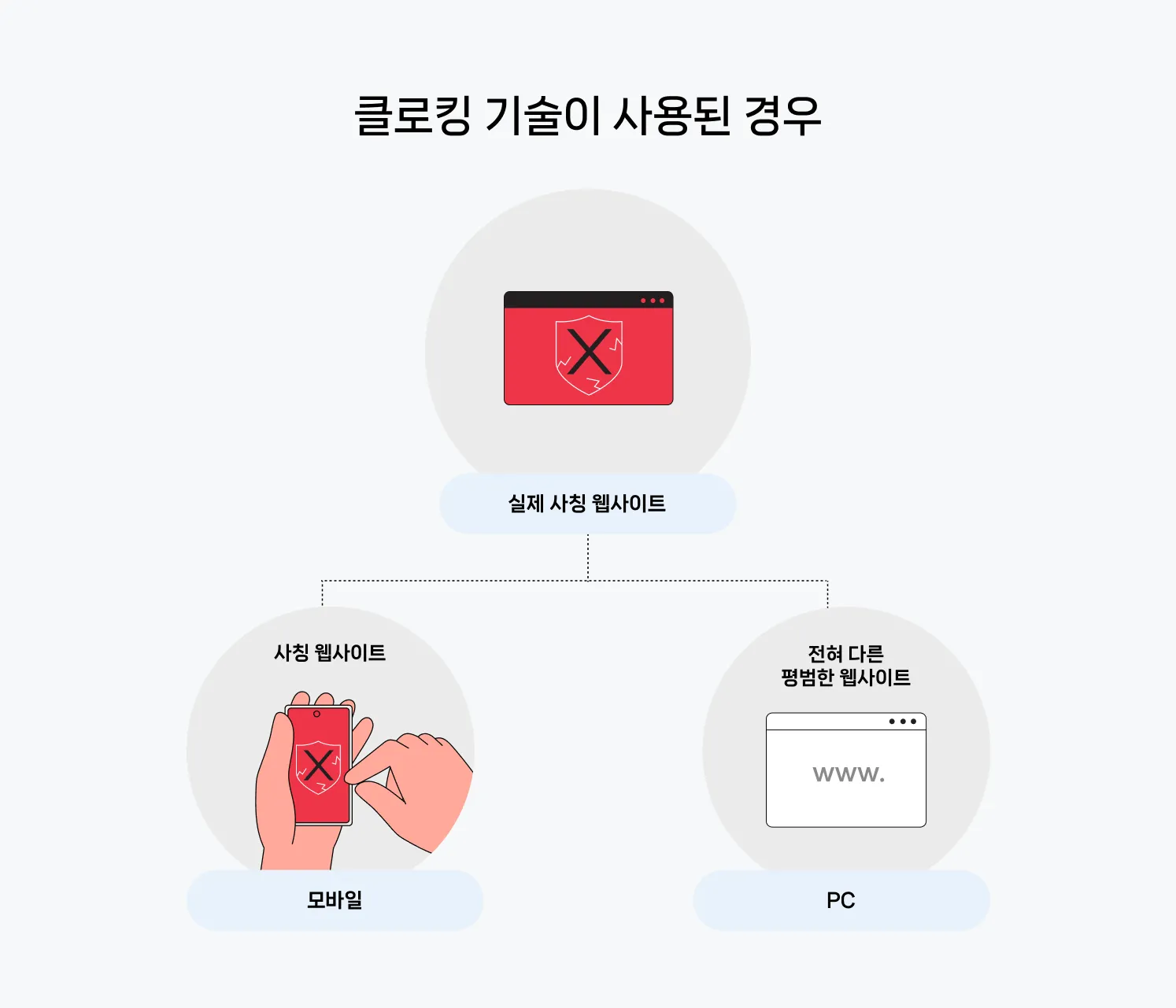
Bad actors also use cloaking to show different screens on mobile and desktop, making it even easier to fool shoppers. Cloaking evades brand monitoring by showing certain content only to consumers, making the site look official.
Cloaking hides the real information by showing different content to people and to search engines. With it, rogue shopping sites can make a website look like the official brand only to consumers, gaining their trust and selling counterfeits. Learn more in “10 brand protection trends to know in 2024.”
2. Fake shopping sites posing as authorized beauty retailers
Another type of impersonator site disguises itself as a shopping mall selling products from many brands. Shoppers often mistake it for a new marketplace and buy, believing its products come from an authorized retailer.
For example, if you search Google for a particular K-beauty brand, a site selling other, unrelated products alongside it may appear in the results. These sites use the brand’s official images or their own to win shoppers’ trust, then sell counterfeits or products of unclear origin. As a result, consumers are harmed by buying low-quality fakes or genuine products of unknown provenance.
To block these impersonator sites, beauty brands need to monitor bad actors through regular searches and report IP problems. Overseas-based sites are often hard to monitor from Korea and use various complex techniques, so brands need to respond actively with a monitoring system and effective legal action.
Social media impersonation: harm to K-beauty brands from fake accounts and ads
Social media is an important platform for brands to communicate directly with consumers, but it’s also where impersonation is most active. In a recent MarqVision survey of US consumers, 43% of 500 respondents said they had bought counterfeits on social media. Consumers use social media as a main channel for buying beauty products, but that also leaves them exposed to many IP problems. In particular, bad actors create fake accounts on social media that look like official brand accounts to deceive consumers. They steal brand names and images to sell fake products, and consumers lured by tempting discounts often end up receiving counterfeits.
How do impersonator social accounts deceive consumers?
1. Opening fake official accounts
Fake accounts that use a brand’s name and logo draw consumers in with names similar to the official account. Bad actors use these accounts to run ads or message consumers directly to distribute fake products.
2. Using ads to push counterfeit sales
Impersonator accounts push purchases with attractive prices and special deals. They’re dressed up to look like the real brand’s ads, but they sell counterfeits. According to MarqVision’s US beauty market insight report, 31.8% of consumers first bought a fake through a social media ad. Consumers mistake these for official beauty brand promotions and buy, only to receive low-quality fakes, which deals a heavy blow to K-beauty brands’ credibility.
3. Pushing direct deals through messaging
More recently, selling fakes by messaging consumers directly is on the rise too. As generative AI becomes widespread, this approach has grown more sophisticated. Bad actors use AI chatbots to win consumers’ trust in one-on-one DM conversations and trick them into buying counterfeits. Deals through social media messages are one of the hardest forms of IP harm for brands to track, and 3.0% of US consumers said they had bought counterfeit beauty products through messages. The share is small, but it could spread, so caution is needed. Buying through DMs is also very risky because consumers may be asked to send money first.
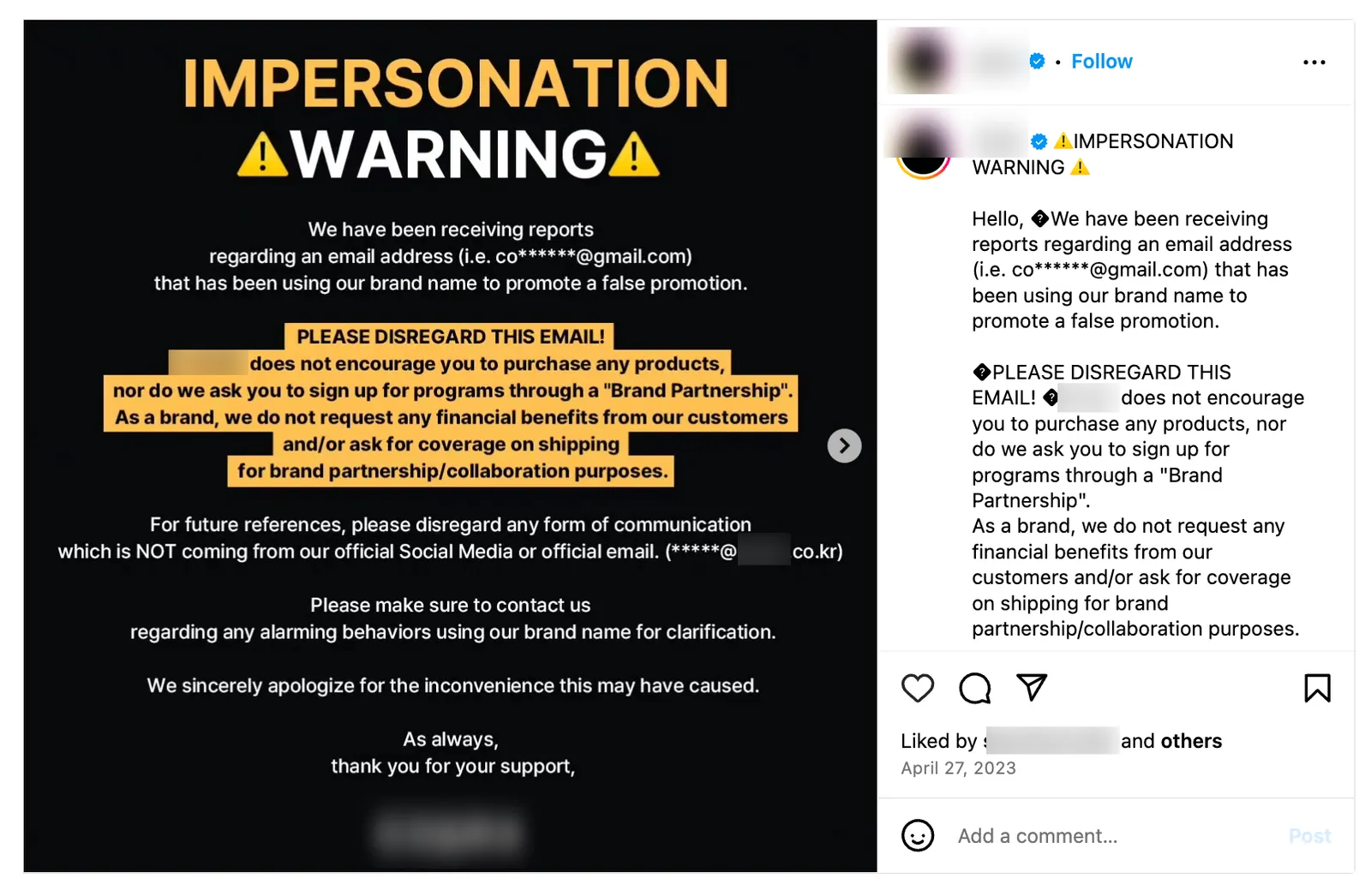
4. Leaking personal and payment information
Impersonator accounts may also ask consumers for personal or payment information under the guise of partnership offers or special deals. This can lead to leaked personal data or financial loss for consumers, and deals a heavy blow to the brand’s trust and reputation.
Impersonation on social media misuses K-beauty brands’ IP, harming the brand and putting consumers at risk. Brands need to build a social media monitoring system and respond actively to these threats with swift legal action.
Why K-beauty brands are vulnerable to impersonation
K-beauty is loved worldwide for its distinctive branding and high quality. But that popularity is also why it’s a prime target for impersonation. The better known a K-beauty brand becomes online, the more attention it draws, and the easier a target it becomes for impersonator sites. Consumers often find it hard to tell official sites from impersonator sites, so K-beauty brands face an even greater risk of harm. That can cause brand trust to fall sharply and seriously hurt growth in global markets.
See the impersonation threats popular brands have faced, the harm and the solutions now.
Effective ways to respond to brand impersonation
To prevent and respond to IP problems including impersonation, what matters most for K-beauty brands is fast, continuous monitoring and thorough response.
1. Build a 24/7 online monitoring system
Brands should continuously search for their brand name on portals such as Google and on social media, or set up a dedicated team, to monitor impersonation online. This lets them spot impersonation quickly and minimize harm.
2. Strengthen legal action
Quickly file trademark misuse reports against impersonator sites and social accounts, and block them through legal procedures. This keeps consumers from being harmed any further.
Want to know how to report impersonator websites? See how here.
3. Educate and inform consumers
Brands should help consumers tell official accounts from impersonators. Giving consumers accurate information helps them distinguish impersonator accounts and websites and strengthens the brand’s credibility.
Brand impersonation doesn’t just damage image. It causes real harm to consumers and can seriously damage a brand’s credibility and reputation. For K-beauty brands in particular, strengthening IP protection and building a fast response system are essential for continued growth in global markets. These efforts protect brand value and give consumers an authentic experience.
Wondering whether your brand has impersonator accounts or websites too? Request a free demo now.