Where distribution monitoring falls short for food, beverage and pet food brands
Why do online prices keep slipping? Where F&B and pet food distribution falls short, why the gray market keeps coming back, and a structural way to manage it.
 Jinie Park4 min read
On this page8
- Why the gray market keeps coming back, and a structural way to respond
- Why price control is structurally hard for food, beverage and pet food online
- The distribution limits F&B and pet food brands keep running into
- Where distribution monitoring usually falls short
- What’s needed now is management, not just enforcement
- How can F&B and pet food brands change their distribution structure?
- Where building trust starts
- FAQ: distribution monitoring for F&B and pet food brands
Why the gray market keeps coming back, and a structural way to respond
As online channels grow, the food and beverage (F&B), pet food and wider pet markets are expanding fast. With more than 15 million people in Korea now living with pets, pet spending is booming, and gray-market distribution issues are growing too, especially for pet food brands.
Because these products are eaten, distribution, pricing and quality control tie directly to brand trust. When prices wobble from channel to channel and sellers who aren’t official partners multiply, it’s more than an operational issue. It becomes a question of brand integrity: how the brand is seen online.
This post looks at the structural limits F&B and pet food brands face in online distribution, why traditional monitoring and enforcement don’t solve recurring problems, and what kind of distribution management is needed now.
What is distribution monitoring for food, beverage and pet food (F&B) brands?
It means continuously tracking and managing at what price, by which sellers and through which distribution routes a brand’s consumable products are sold across the internet. It goes beyond checking prices: it’s a core operating standard for keeping brand trust and safety intact.
Why price control is structurally hard for food, beverage and pet food online

As online channels grow, pet food brands, like food and beverage brands, are making e-commerce a core sales channel.
But many brands face the same questions:
- Why do online prices keep slipping?
- Why are there so many sellers who aren’t official partners?
The problem isn’t just a failed pricing policy. It comes from structural limits in how F&B and pet food products are distributed.
The distribution limits F&B and pet food brands keep running into
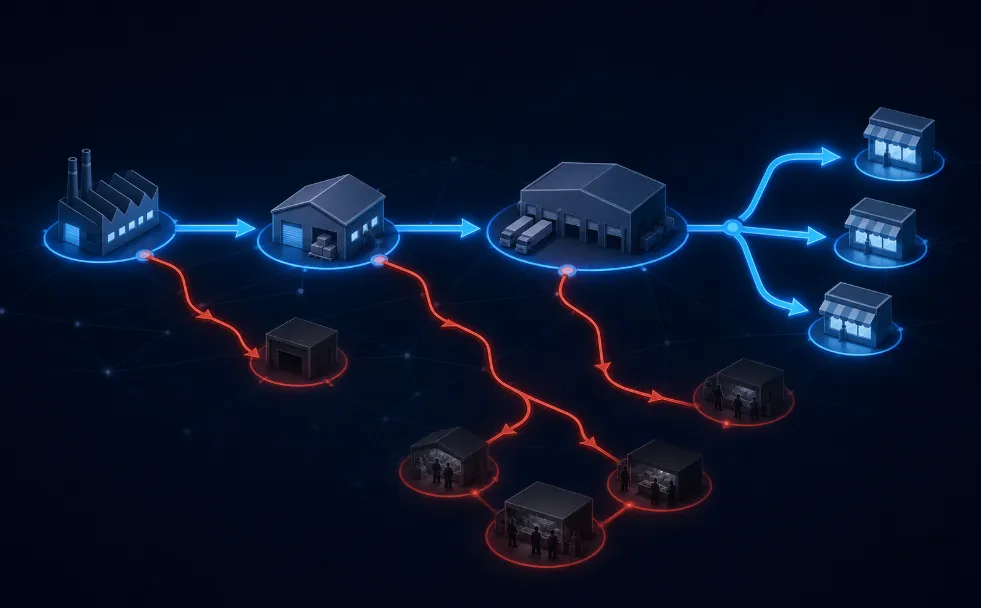
F&B and pet food brands share a multi-layered distribution structure.
When distribution runs [large distributors → regional wholesalers → small sellers], stock that leaks out along the way easily ends up online as gray-market supply.
And in F&B and pet food, expiry dates, the push to clear inventory and the incentive to discount or dump combine, so price disruption keeps recurring.
Where distribution monitoring usually falls short

Many brands already monitor online. But in practice they hit limits like these:
- The number of platforms to manage keeps growing
- One person checks prices and sellers by hand
- Sellers keep reappearing by changing account or product names
So, again and again, problems get found but their causes don’t. This isn’t about any one seller. It’s because marketplace structures and the way consumers buy are intertwined. That’s why temporary blocks and case-by-case enforcement can’t solve the gray market, and why it keeps coming back.
Block a gray-market seller and it reappears under another account, with another product or on another platform, and sales and e-commerce teams clean up the same issue every day. That drains internal resources, weakens trust with official partners and leaves the brand unable to take charge of its distribution and pricing.
Yonsei Dairy, which now uses Marq AI, was one of the brands struggling with the limits of manual monitoring and repeated enforcement. By switching to managing its online distribution flows structurally, it reduced gray-market exposure and price confusion at the same time.
What’s needed now is management, not just enforcement

The gray market and price disruption don’t come down to a lack of effort by individual sellers or managers. They come from the limits of the online distribution structure itself. As Korean e-commerce grows, similar distribution risks are appearing across F&B, FMCG, health supplement and pet food brands alike. It isn’t one brand’s problem. It’s a structural change across online distribution.
What F&B and pet food brands need isn’t more people or more manual searches, but
- identification at the seller level
- recognition of repeat patterns
- a manageable distribution structure that lets you act in advance rather than after the fact.
In other words, F&B and pet food brands need to move from responding after problems occur to a management system that continuously tracks and controls sellers, channels and distribution flows.
How can F&B and pet food brands change their distribution structure?
Some F&B and pet food brands have already switched to managing online distribution flows structurally, and are seeing changes like these:
- Less gray-market exposure
- Stable prices
- More efficient internal work
- Restored partner trust
These changes come not from one-off enforcement but from making the distribution structure manageable. A leading example is Yonsei Dairy’s success in managing online distribution.
Where building trust starts
For F&B and pet food brands, trust isn’t just image management. It means price, distribution and quality staying consistent wherever the brand appears online.
MarqVision helps F&B and pet food brands manage everything that threatens their trust on one platform. This management system is the foundation for brands to take charge of their distribution and pricing and give official partners and consumers a consistent experience.
If you run an F&B or pet food brand and want to strengthen brand integrity more systematically, explore an initial distribution risk assessment and management design with MarqVision. A demo shows the monitoring scope and management flow that fit your brand.
FAQ: distribution monitoring for F&B and pet food brands

Q. Does pet food need the same management as food and beverage (F&B) brands?
A. Yes. Pet food is a consumable product tied directly to pets’ health, so it needs the same level of distribution and pricing management as food and beverage.
Q. Is the gray market a serious problem in the pet market too?
A. Yes. As the pet market grows, unauthorized sellers and price disruption are increasing fast.
Q. What’s the biggest limit of manual monitoring?
A. Checking by hand limits how much can be covered, and makes it hard to track structurally when sellers change accounts or reappear.
Q. Can price monitoring alone solve the gray market?
A. No. Price monitoring alone struggles to reveal recurring seller patterns and distribution routes. A fundamental response requires identifying sellers and managing distribution flows as well.