Selling big on Coupang and Naver? The seller data you need to monitor
88% of brands already monitor unauthorized sellers. The reseller data and seller lists MarqVision recommends tracking, and how to build a gray-market strategy.
 Irene Lee4 min read

On this page5
Coupang and Naver are the key channels driving brand growth today. They let you see quickly how products are received and grow revenue efficiently with performance-based advertising, so they’ve become central to brand strategy, not just distribution channels.
But the more influential the platform, the more active unauthorized sellers outside the brand’s control tend to be. In a recent MarqVision survey, a striking 96.57% of brands said they had lost the Item Winner spot to unauthorized sellers on Coupang and Naver.
That means the pricing policies, marketing investment and consumer trust brands build are being handed over to unauthorized sellers, also known as black-market resellers. To protect distribution order and brand trust, control over unauthorized sellers is essential.
So which data should you monitor to deal with black-market resellers?
1. Identify seller networks across platforms
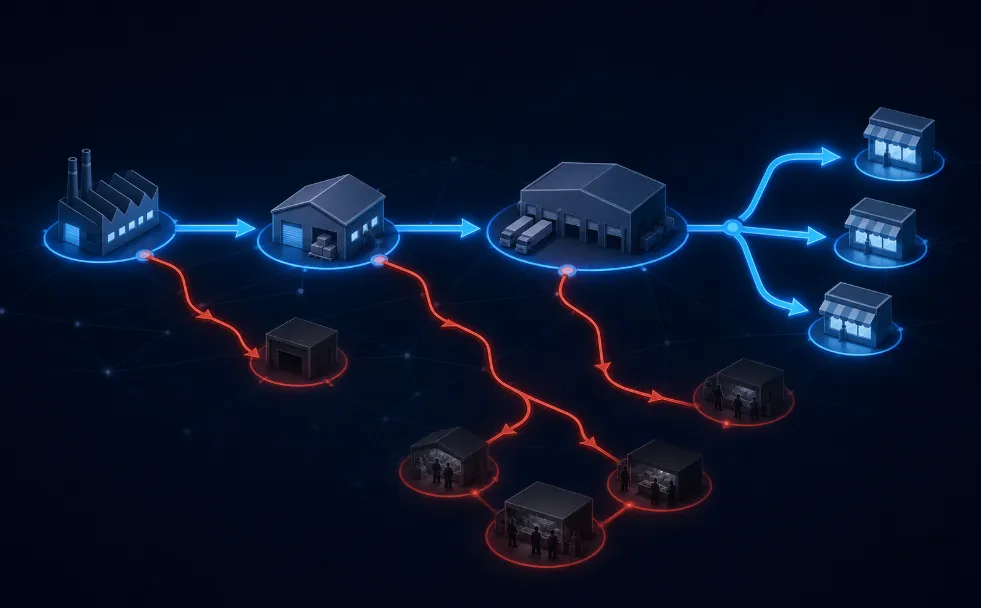
Unauthorized sellers aren’t confined to one platform. They often operate under different account names across several channels, such as Coupang, Naver Smart Store and 11st.
To detect them effectively, you need to combine and analyze seller-level information based on data such as:
- Business registration number
- Email and contact details
- Address and store name
- Similarities in product images and product page details
Applying AI-based clustering to these factors identifies networks of related sellers accurately, dozens of times faster than manual work.
Unauthorized sales detection that took all day, done in 10 minutes with Marq AI
2. Monitor sellers who undermine your pricing policy
Coupang runs on dynamic pricing. When an unauthorized seller lists the lowest price, that price becomes the reference point and the selling price on Coupang drops automatically. This undercuts official sellers’ normal prices and can even threaten the pricing policies of contracted partners.
That’s why these types of sellers need constant monitoring:
- Sellers who repeatedly sell below your official store’s price
- Sellers who create price gaps between platforms
- Sellers who lure shoppers with low prices, then distort the final price with shipping fees
This data becomes an important benchmark for your pricing strategy and distribution partner management.
3. Monitor sellers who rank at the top of search results

On Coupang and Naver, review counts and star ratings are key factors in the search ranking algorithm, alongside the lowest price. In this setup, when an unauthorized seller takes the Item Winner spot, the consumer trust your brand has built transfers straight to the unauthorized seller’s listing.
On Naver in particular, review-based search credibility directly affects visibility, so this can hit your brand image hard in a short time.
This leads to side effects such as:
- Weaker visibility for official listings
- Lower brand image and trust
- Lower ad efficiency and conversion rates
- Poorer customer service and an inconsistent customer experience
So on platforms where competition is driven by reviews, monitoring reviews at the seller level is key to staying competitive.
Strategic response with seller monitoring
For seller monitoring to work as a real brand protection strategy, it has to go beyond detection and connect data-driven classification, prioritization and automated response.
This lets brands pick out the high-risk sellers who cause direct revenue loss and act on them immediately. By analyzing unauthorized sellers’ distribution routes and activity patterns, brands can also identify risks on each platform in advance and refine their response strategy.
The results of this analysis also serve as strong evidence when negotiating pricing policies with official partners or restructuring distribution. And by automating follow-up actions such as warning letters, enforcement requests and platform reports, brands gain strategic control that goes beyond repetitive, manual response.
In the end, this is the starting point for building lasting competitiveness online.
MarqVision’s gray-market solution
MarqVision offers a solution that brings everything from detection to response into one platform. It goes beyond data collection with a system that extends to risk assessment and real-time response.
Key features
- AI-based seller clustering that automatically identifies related sellers across platforms
- Pattern analysis of emails, store names, images and more to map unauthorized seller networks
- Automatic warning letter generation and integrated reporting for each platform
- Prioritization of high-risk listings and gray-market sellers that need quick action, based on selling price and repeat violations
With this system, brands can automate the entire process from detection to analysis to action and minimize repetitive manual work.
In e-commerce channel management today, what matters is clearly understanding and acting on who is selling and how they’re selling. These are core strategic factors that shape brand revenue, trust and ad efficiency.
Only brands that use seller monitoring strategically can maintain stable relationships with distribution partners, consistent pricing and a high-quality customer experience all at once.
Curious about MarqVision? Request a free consultation now and get 7 days of free monitoring.