.jpeg)
At $64.3 billion in 2025 sales, TikTok Shop has grown too large for brand protection teams to overlook. The enforcement challenge it creates is one that older marketplace tooling was never designed to handle. The open third-party seller model lets counterfeit and unauthorized listings sit beside genuine products on the same surfaces your brand depends on, and TikTok's recommendation engine pushes high-engagement fakes to millions of buyers before moderation ever acts. That compressed window between a fake going live and its first completed transaction is where most revenue and trust damage occurs. The counterfeit problem on TikTok Shop is not a buyer protection issue your customers have to handle on their own. It's a digital brand protection problem that moves at algorithmic speed, and the enforcement playbook that worked on search-driven marketplaces doesn't map cleanly onto a feed-driven commerce channel.
TLDR:
- TikTok Shop is a legitimate channel, but its open third-party model lets counterfeit listings sit beside genuine products on the same surfaces your brand depends on.
- TikTok blocked over 70 million listings in the first half of 2025, yet enforcement still trails the speed at which high-engagement fakes spread algorithmically.
- Prices far below your authorized retail floor, logo misspellings, and clustered listings under marginally different names are the strongest counterfeit signals to act on.
- Always pay through in-app checkout; any external payment link bypasses TikTok's buyer protections entirely.
- MarqVision enforces against TikTok Shop counterfeits through TikTok's Real IP Owner Program, giving verified rights holders priority takedown access beyond standard public reporting.
What TikTok Shop Is and How It Works
According to research aggregated by Surfshark, shoppers spent $64.3 billion on TikTok Shop in 2025, spanning 16 regions.
The seller structure underneath matters most for authenticity risk. TikTok Shop runs on an open third-party model where individual merchants, resellers, and brands each list and fulfill products. That openness fuels catalog growth and lets unauthorized sellers and counterfeit listings appear alongside legitimate products.
Is TikTok Shop Legit?
Yes, TikTok Shop is legitimate. It is an officially operated feature of TikTok, with verified seller onboarding, in-app payment processing, and buyer protections built into checkout. The company is real, the transactions are real, and the storefront is not a scam by design.
Legitimacy stops there. A trustworthy channel does not make every seller or product trustworthy. The open model lets anyone list, and the algorithm pushes whatever gains traction, so fraudulent and counterfeit listings surface alongside genuine ones. That gap is why buyer vigilance still matters here.
Why Products on TikTok Shop Are So Cheap
Low prices on TikTok Shop are not automatically a red flag. Several legitimate structures push costs down. Many sellers source factory-direct from manufacturers, cutting the distributors and retail markups baked into traditional channels. Others run dropshipping models with no inventory overhead. TikTok itself subsidizes promotions, coupons, and free-shipping offers to pull buyers into the feed.
Where the signal flips is the size of the gap. A listing priced at a fraction of a brand's authorized channels is one of the clearest markers of counterfeit goods. Genuine factory savings have a floor. Prices that fall through it usually mean the product is not what the listing claims.
Common Scams and Risks on TikTok Shop
The risks cluster into five recognizable patterns, and most buyers hit more than one.
- Counterfeit and fake products, concentrated in beauty, fragrance, and electronics. A Which? investigation found 23 of 34 cosmetic products bought across platforms including TikTok Shop were likely fake.
- Brand impersonation storefronts copying a real brand's name, logo, and photography to pass as the genuine merchant.
- Non-delivery scams, where a phantom seller takes payment then ships nothing.
- Bait-and-switch listings that swap a lower-grade substitute for what the video advertised.
- Off-app phishing that steers payment to external apps where TikTok's protections no longer apply.
The Role of TikTok's Algorithm in Amplifying Counterfeit Risk
The recommendation engine is what makes TikTok Shop riskier than a search-driven marketplace. TikTok ranks content by engagement signals like watch time, shares, and completion rate, not by whether a video shows a genuine tutorial or a counterfeit listing. A fake hitting high engagement earns the same algorithmic push a real brand gets, reaching millions before moderation flags it. TikTok has responded with its own counterfeit goods detection initiative, though enforcement still trails the speed at which content spreads.
TikTok Shop's Built-In Safety Measures
TikTok runs defenses worth crediting. Seller onboarding requires government-issued ID or business registration before a merchant can list, raising the bar against throwaway accounts. An AI system screens listings before they go live, catching counterfeit signals at upload. The TikTok trademark infringement guide covers the Real IP Owner Program, which lets brands verify the authorization documents sellers submit.
The enforcement volume is real. In the first half of 2025, TikTok blocked over 70 million listings and declined 1.4 million seller registrations, a 40% jump from the prior six months.
TikTok Shop's Buyer Protection and Refund Policy
When a purchase goes wrong, TikTok Shop offers a few layers of recourse. The Purchase Protection program backs eligible orders, with a standard 30-day return window. For orders that arrive damaged, never show up, or do not match the listing, the Buyer Protection Program extends the claim window to 90 days.
The coverage has gaps. Refund outcomes shift by product category and seller. Perishables and hygiene items are generally ineligible for return. Counterfeit claims are the hardest, since proving a product is fake demands more documentation than a routine return, and the burden falls on you. Brand protection tools can help rights holders build that documentation systematically.
How to Spot Counterfeit Products on TikTok Shop
The fastest authenticity checks are visual and structural, working whether you are a shopper at checkout or a brand team auditing the channel. Run the red flags in order of reliability:

- Prices far below a brand's authorized retail. The deeper the gap, the stronger the counterfeit signal.
- Brand names or logos with slight misspellings or spacing tweaks, used to dodge trademark filters.
- Sellers with no review history, or a wave of reviews posted inside a tight window.
- Generic descriptions missing model numbers, batch codes, or SKU-specific detail.
- Storefronts mirroring a real brand's name and imagery without the verification badge.
One structural tell sits above the rest. When several sellers list the same product under marginally different names, that clustering spreads inventory across listings to evade detection. Digital brand protection strategies target this pattern directly.
Tips for Shopping Safely on TikTok Shop
Five habits cut most of the risk:
- Pay only through in-app TikTok checkout. Any external payment link is a scam.
- Favor verified sellers carrying the blue checkmark badge.
- Read reviews critically, weighting user photo and video uploads over generic text.
- Cross-check prices against the brand's official site or authorized retailers.
- Record an unboxing video as evidence if authenticity is in doubt.
Legitimate sellers and TikTok never request payment details through direct messages.
What TikTok Shop's Counterfeit Problem Means for Brands
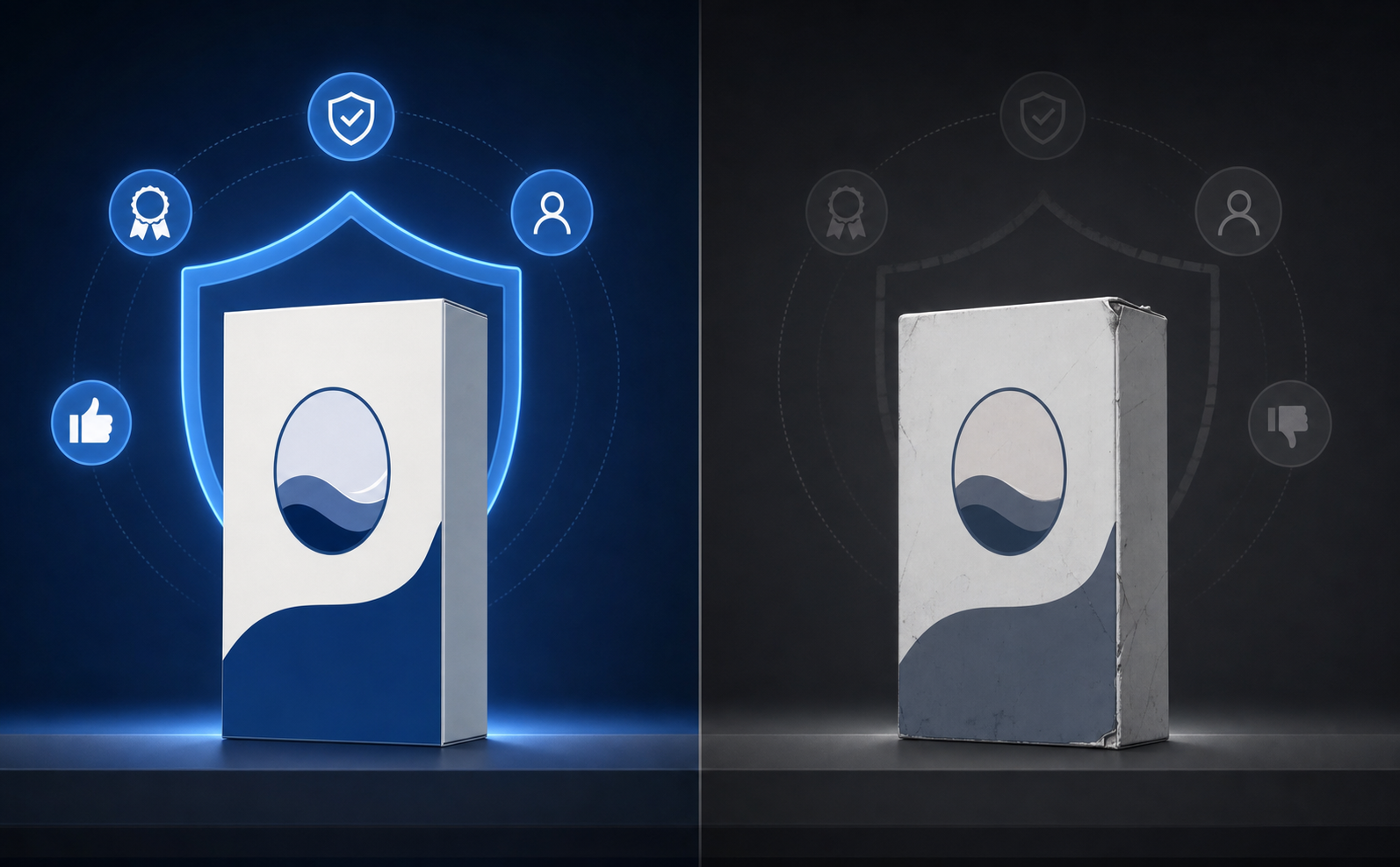
For brands, the same openness that fuels growth becomes an enforcement problem. Unauthorized third-party sellers listing counterfeit or knockoff versions create four compounding harms:
- Direct revenue diversion to fakes that capture sales meant for you.
- Brand equity damage when buyers receive inferior goods and blame your brand.
- Trademark dilution as dupe listings exploit your recognition without authorization.
- Enforcement strain, since viral velocity outpaces traditional IP enforcement timelines.
TikTok's dupe culture sharpens the last two. Sellers openly market imitations while invoking your name and visual identity, testing the line between infringement and fair use. Similar tactics appear in Instagram fake account schemes across social commerce.
How to Report a Scam or Counterfeit Seller on TikTok Shop
The reporting path splits by who you are.
If you are a shopper
- Open the product page or order, tap the menu, and choose the report option.
- Capture screenshots of the listing, seller name, order confirmation, and chat messages before the listing disappears.
- Submit the report with that evidence attached.
- If the first response stalls, escalate through in-app customer service and reference your order number.
If you are a brand or IP holder
File formal infringement complaints through TikTok's Intellectual Property Protection Center, which routes verified rights holders to faster review. Brand protection software can automate this filing process at scale. TikTok enforces a three-strike rule, and repeat violations can trigger permanent account removal.
For fraud that occurs outside the app, also report the scam to the FTC.
How MarqVision Monitors and Enforces Against TikTok Shop Counterfeits
We work with TikTok Shop enforcement through TikTok's Real IP Owner Program, giving verified rights holders direct takedowns and priority review beyond standard public reporting. That access matters most against the dupe listings and clustered storefronts above, where speed decides whether a fake reaches the customer first.
Detection runs underneath the access. Our AI brand protection system scans millions of listings across 50-plus marketplaces and social commerce channels, and our Full-Stack Detection compares each listing against genuine product data at the SKU level, hitting 97% accuracy. That catches counterfeits copying your specs, imagery, and attributes while dodging trademark use entirely.
For teams managing exposure at scale, rotation-based monitoring reallocates coverage as counterfeit activity migrates, shifting resources toward high-growth channels like TikTok Shop where older enforcement tools have had thin presence.
Final Thoughts on TikTok Shop Safety and Counterfeit Risks
TikTok Shop works, and millions of legitimate transactions happen on it every day. The counterfeit risk is real too, and it runs through the same feed. For shoppers, the habits in this guide do most of the work. For brand teams watching unauthorized sellers capture sales and erode trust faster than traditional enforcement can respond, a conversation with MarqVision is a practical next step.
FAQ
Is TikTok Shop safe to buy from if a seller has mostly positive reviews?
Positive reviews are a useful signal but not a reliable authenticity guarantee on TikTok Shop. Counterfeit sellers routinely accumulate reviews quickly through coordinated posting in tight windows, which is itself a red flag to check for. Cross-check the price against the brand's official channels and look for user-uploaded photo or video reviews over generic text before committing to a purchase.
What makes counterfeit TikTok Shop listings harder to catch than fakes on traditional marketplaces?
TikTok's recommendation engine ranks content by engagement signals like watch time and shares, not by seller verification status, so a high-performing fake listing gets the same algorithmic reach as a genuine brand post and can reach millions of buyers before moderation acts. Traditional search-driven marketplaces surface listings based on structured queries that brand protection tools are built around; with TikTok's feed-first model, fakes appear in discovery surfaces that older enforcement tooling was never built to cover. That compressed timeline between a listing going live and its first completed transaction is where most revenue and trust damage occurs.
How should my brand team report counterfeit listings on TikTok Shop at scale, and when does standard IP reporting fall short?
File formal complaints through TikTok's Intellectual Property Protection Center, which routes verified rights holders to faster review than public reporting channels, and use TikTok's three-strike rule as pressure for pushing repeat offenders toward permanent account removal. Standard IP reporting falls short when counterfeit sellers cluster inventory across marginally different storefronts to evade detection, because filing individual complaints against each listing cannot keep pace with the velocity at which new variations appear. That gap is where SKU-level detection against genuine product data and priority access through programs like TikTok's Real IP Owner Program become the practical difference between reactive complaint filing and proactive channel control.
Should I treat a TikTok Shop price that's far below retail as a counterfeit signal or just aggressive discounting?
Treat a price well below your authorized channel pricing as a strong counterfeit signal, not a routine promotional gap. Legitimate factory-direct savings and TikTok-subsidized promotions have a floor; prices that fall well below that floor typically mean the product does not match what the listing claims. The deeper and more consistent the discount across multiple sellers listing the same item under marginally different names, the stronger the case that you are looking at distributed counterfeit inventory and not a single aggressive reseller.
What is TikTok Shop's Real IP Owner Program and does it replace standard brand registry enforcement?
TikTok's Real IP Owner Program is a verified rights holder pathway that gives brands faster takedown workflows and priority review beyond what standard public IP reporting provides, including the ability to review authorization documents sellers submit. It does not replace brand registry enforcement but acts as an accelerated tier above it, most valuable against the clustered storefronts and dupe listings where speed determines whether a fake reaches the customer before your takedown request is processed. Brands with high TikTok Shop exposure should treat Real IP Owner Program access as a prerequisite, not an optional add-on.
Stay up to date on the latest IP Protection content from MarqVision.



4 Enforcements a Week to 400: Scale Brand Safety with Marq AI

Don’t Just Find Counterfeits. Dismantle the Entire Network.

.png)
Discover the latest trends and challenges in IP protection

Take Control of Your Trademarks with MARQ Folio
Renew and Manage Your Trademarks Easily With MARQ Folio

We’re waiting to hear from you

See the best brand protection solution in action

Don’t let piracy steal your growth

Talk to us about your brand protection problems