.jpeg)
You document contracts, you track IP filings, and you're expected to keep a defensible record when executive protection becomes a legal question. The threat environment changed: attacks on leaders doubled in 2025, and the reconnaissance phase now plays out online: attackers piece together a principal's daily routine, family details, and home address from social media posts and public records long before they ever show up in person. In 2026, executive protection is intelligence-led risk management that covers both the physical and digital worlds. For your team, that makes leadership safety a fiduciary duty, and the liability lands on the company when credible threats go unanswered.
TLDR:
- Executive targeting doubled in 2025, with threats up 225% since 2023 and CEOs accounting for 64% of incidents.
- Your duty of care covers leaders everywhere they go: at the office, while traveling, during public appearances, and on the commute.
- Most physical attacks begin with online reconnaissance pulling from public records and social media.
- Document threat assessments and treat protection as board-level governance, not a discretionary perk.
- MarqVision scans 1.3 billion domains daily and removes fraudulent domains at a 5.3-hour median.
What Is Executive Protection?
Executive protection, often shortened to EP, is the discipline of keeping high-profile people safe from physical, digital, and reputational harm. Think CEOs, founders, board members, and their families. The work is intelligence-led, so decisions follow evidence about real risk instead of guesswork.
A decade ago, EP meant a bodyguard standing near the principal. Today it is a broader risk management function that watches both the physical world and the online one, where a leaked home address or a viral threat can spread faster than anyone can drive across town.
Most effective programs in 2026 rest on three pillars:
- Threat assessment: sorting credible threats from noise so resources go where danger is real.
- Advance work: securing venues, routes, and logistics before the principal arrives.
- Close protection: the officers, visible or low-profile, who accompany the principal day to day.
The Legal and Fiduciary Case for Executive Protection
The case for executive protection starts with duty of care. Under the Occupational Safety and Health Act's General Duty Clause, employers must keep the workplace free from recognized hazards, including workplace violence aimed at senior leaders. When a credible threat exists and the company does nothing, liability follows.
Duty-of-care obligations stretch past the office, covering travel abroad, public appearances, and the commute home. Fiduciary responsibility adds another layer, requiring documented safeguards for people whose absence would damage the business.
Two practical takeaways for your team:
- Document threat assessments and protective decisions, because a defensible record matters if harm occurs.
- Treat protection coverage as a compliance and risk management requirement, not a discretionary perk.
Approached this way, executive protection becomes mandatory instead of optional, much like stopping websites impersonating your business protects company assets.
The Evolving Executive Threat Environment in 2026
Physical danger and digital exposure now feed each other. A leaked location surfaces online, a coordinated campaign amplifies it, and what began as a hostile post can reach the principal's doorstep within hours.
The numbers tell the story. Executive targeting doubled in 2025, the highest on record. CEOs draw most of it at 64% of incidents, but threats against other senior leaders have climbed 225% since 2023.
Today's threat list runs wide:
- Physical violence and stalking
- Doxing of home locations and family details
- Deepfakes impersonating executives
- Coordinated online harassment campaigns
The killing of UnitedHealthcare CEO Brian Thompson in New York City in December 2024 reset corporate security planning. For many companies, it turned executive security from a line item into a critical risk management priority.
Threat Assessment and Protective Intelligence
Protective intelligence is the engine that tells your team where to look. The goal is to spot warning signs while they still live online, before a fixation turns into a visit. Effective programs blend structured threat assessment with digital monitoring that watches how risk forms across open and hidden channels.

A working intelligence function for legal and brand protection teams usually pulls from several streams:
- Behavioral threat assessment that tracks escalation, fixation, and grievance language toward a principal.
- Open-source intelligence gathered from social media, news, and public records.
- Dark web and closed-forum monitoring, where doxing kits and target lists trade quietly.
- Digital footprint analysis mapping what a hostile actor can already find about an executive and their family.
Graded and triaged, these signals let you separate idle venting from a credible plan. Many teams score threats against a structured rubric, weighing whether the actor has named the principal, referenced a specific location or event, shown a fixation pattern across multiple posts, or expressed intent and capability to act. A vague insult scores low; a message naming a child's school alongside a date scores high and routes to immediate review.
The output is a living threat profile per principal, updated as new signals surface. Each credible case gets an owner, a documented decision, and a review cadence, so a low-grade fixation that escalates gets caught on the next pass instead of resurfacing as a surprise. That paper trail also feeds the defensible record your legal team needs, tying each protective action back to the evidence that prompted it.
Digital Footprint Management and Online Exposure Reduction
Most physical attacks begin with online reconnaissance. Before anyone shows up at a gate, they assemble a picture from scattered public sources.
The more an executive shares, the easier that picture becomes.

Security teams call this Pattern of Life exposure. Posts about a child's school, a recurring gym, a vacation home, or a flight tagged in real time hand a threat actor the rhythm of a principal's week. Public records fill in the map fast:
- Property records revealing a residence
- Utility filings tied to a name
- Campaign donations listing a residence
- Family members' social accounts that leak details the executive never posted
When that information gets weaponized, you get doxxing. It's the deliberate publication of private details to threaten, blackmail, or intimidate. The tactic works much like how brand protection phishing attacks target company assets. For your team, reducing executive digital exposure starves the reconnaissance that physical targeting depends on.
Building a Corporate Executive Protection Program
A working program starts with governance: someone owns it, and executive leadership knows who. From there, the build rests on four components that legal, HR, and communications all touch: protectee tiers, a single threat intake channel, escalation protocols, plus travel and residential measures.
- Protectee tiers that rank coverage by role and exposure, such as Tier 1 (CEO, founder, and immediate family with 24/7 close protection), Tier 2 (board members and C-suite with event and travel coverage), and Tier 3 (VPs and high-visibility spokespeople with monitoring-only coverage).
- A single threat intake channel, such as a monitored security@ inbox, a 24/7 hotline, or an integration with your SOC ticketing system, so reports land somewhere, not nowhere.
- Escalation protocols defining who acts when a signal turns credible, for example routing a confirmed home-location leak to the protective intelligence lead within 1 hour and to legal and the CISO within 4 hours.
- Travel security plus residential measures matched to each tier, such as advance route planning with secure ground transport for Tier 1 trips, residential alarm and camera audits, then pre-travel risk briefings for high-risk destinations.
Done right, a corporate executive protection plan clears distractions so leaders stay focused on the business.
Executive Protection Market Growth and Investment Trends
Investment trends reveal corporate prioritization. The executive protection market sat at $427.8 million in 2024 and is projected to reach $853.7 million by 2032, a compound annual growth rate of 10.4%, with personal protection services holding 45% of that share.
34% of S&P 500 companies report security in their 2025 proxies, a 21% jump year over year. Among large public companies, 73% now run dedicated protection for senior leaders. For benchmarking, coverage at the top is becoming the norm, not the exception.
The Intersection of Executive Protection and Brand Reputation Risk
An attack on a leader rarely stays contained to one person. When an executive is harmed, threatened, or impersonated, the company's name rides along, since the principal is the public face customers and media attach to the brand. A single incident can trigger reputational damage and customer trust erosion within one news cycle.
That is why executive protection supports business continuity and personal safety, particularly as social media impersonation threatens leadership credibility. For brand protection teams, leadership targeting is a reputation event. Guarding the people at the top guards the brand integrity built around them, because your brand spend shouldn't fund your imposters.
How MarqVision Protects Executives Through Digital Brand Protection
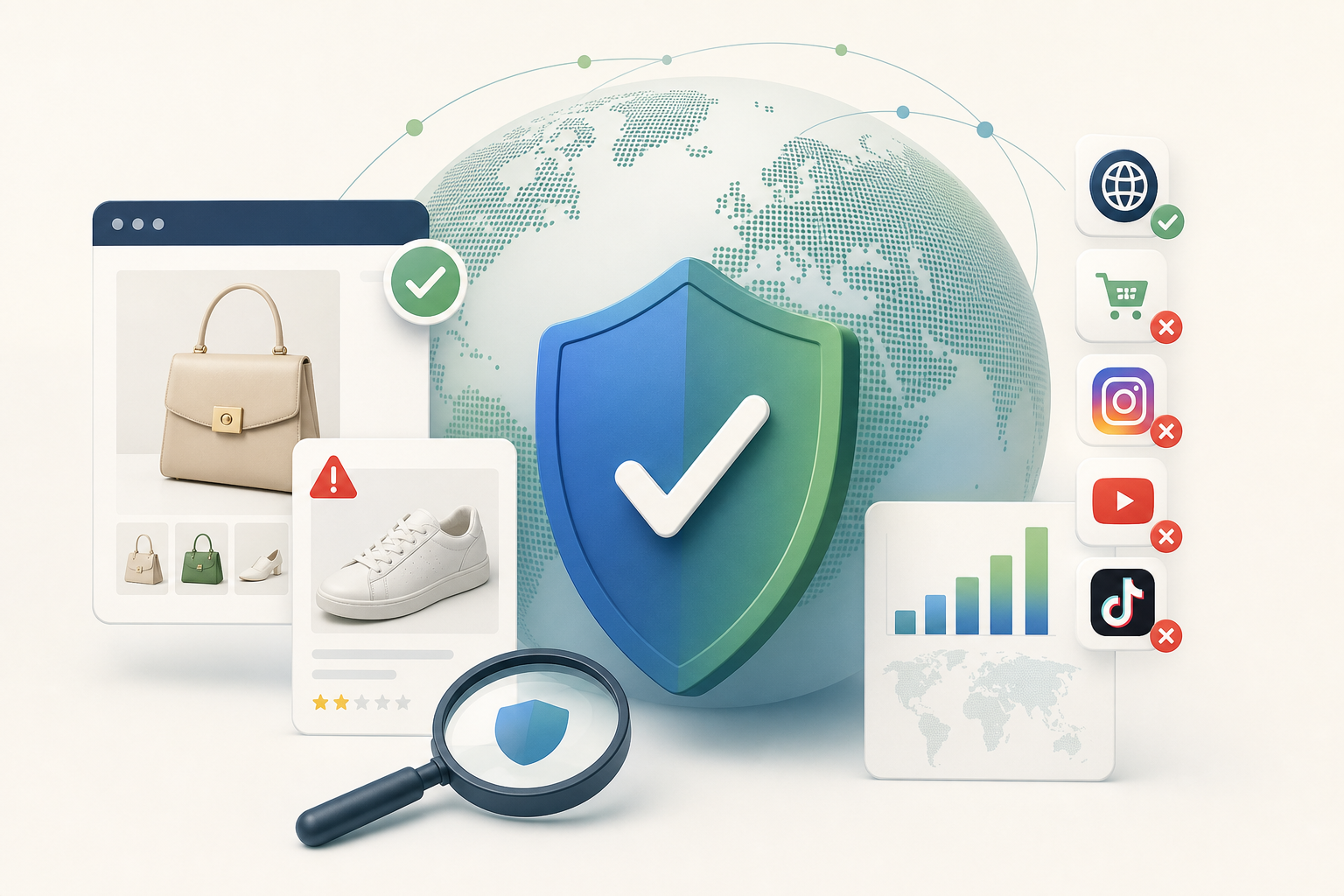
The digital layer of executive protection is where we fit. Our Digital Risk Protection module scans more than 1.3 billion domains daily with real-time lookalike domain detection, flagging brand impersonation, phishing sites, and fake accounts targeting leadership across social media, paid advertising, and the open web.
When a fraudulent domain or impersonation account surfaces, speed decides the outcome. We remove fake domains at a median of 5.3 hours, well ahead of the industry baseline measured in days. As a Meta Trusted Reporting partner, we pull fraudulent ads down at a 99% takedown rate with Instagram brand protection capabilities, and our Cloudflare integration cuts abusive domain removal by 20x.
For your team, that means reconnaissance and impersonation threats get caught and cleared before they harden into physical danger, supporting the duty of care your leadership is owed.
Final Thoughts on Executive Security in the Digital Age
Protecting your executives means controlling the information available about them online, since that's where threat actors start building their target profile. The digital layer of executive protection isn't optional anymore, it's part of the duty of care your organization requires. Request a demo to see how we remove fraudulent domains and impersonation accounts before they become physical threats.
FAQ
What's the main difference between executive protection and corporate security?
Executive protection (EP) is risk management for high-profile individuals focused on physical, digital, and reputational threats, while corporate security guards facilities and general workforce safety. EP combines threat intelligence, advance work, and close protection that follows the principal wherever they go, including travel, home, and public appearances.
Can executive protection reduce legal liability for our company?
Yes. Under OSHA's General Duty Clause, you must protect leaders from recognized workplace violence hazards. Failing to act on credible threats creates liability exposure. Documented threat assessments and protective decisions build a defensible record that shows your duty of care obligations were met if harm occurs.
Executive protection vs close protection services: which does our leadership need?
Close protection refers to officers who accompany the principal, while executive protection covers the full program including threat intelligence, digital monitoring, and advance logistics. Most effective programs in 2026 layer both: intelligence teams catch threats early, and protection officers respond when physical presence is required.
How quickly can doxing turn into a physical threat?
Within hours. A leaked residence surfaces online, coordinated campaigns amplify it across platforms, and threat actors assemble reconnaissance from property records, social media, and family accounts faster than traditional security can respond. That's why digital monitoring with median response times under six hours has become standard for leadership protection.
What should legal teams document for executive protection compliance?
Document every threat assessment, protective decision, and coverage tier assignment tied to each principal. Your organization needs defensible records showing you identified risks, allocated resources appropriately, and treated protection as a compliance requirement instead of a discretionary perk. This record matters if harm occurs and liability questions follow.
Stay up to date on the latest IP Protection content from MarqVision.




4 Enforcements a Week to 400: Scale Brand Safety with Marq AI

Don’t Just Find Counterfeits. Dismantle the Entire Network.

.png)
Discover the latest trends and challenges in IP protection

Take Control of Your Trademarks with MARQ Folio
Renew and Manage Your Trademarks Easily With MARQ Folio

We’re waiting to hear from you

See the best brand protection solution in action

Don’t let piracy steal your growth

Talk to us about your brand protection problems