
Your digital attack surface is widening every quarter, and brand impersonation is rising with it. Have you found counterfeit versions of your products flooding the market? Online accounts pretending to be your brand and misleading your customers? Or your IP being used in ways you never authorized?
You're in the right place. Effective brand protection is never one-size-fits-all. It takes an honest assessment of your risk exposure, a clear view of the resources available to you, and the right mix of responses for your business. The question is no longer whether to protect your brand, but how soon you start and which strategy you put in place.
In this guide, we'll cover:
- What brand protection is and why it’s important
- The risks your brand and IP may face
- What a modern brand protection strategy looks
- What a true brand protection solution looks like
TL;DR
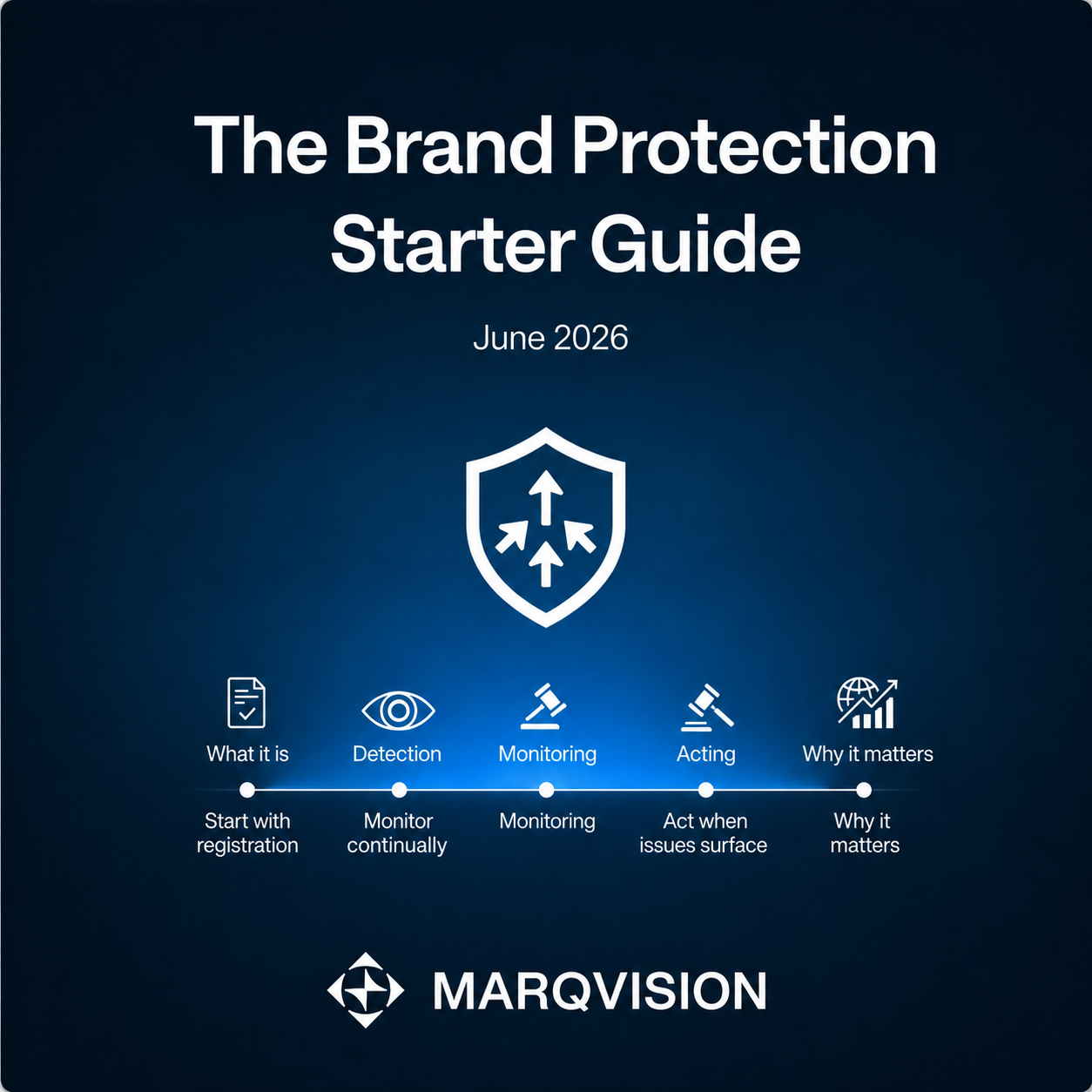
- What it is: The ongoing practice of keeping your intellectual property and brand identity safe from counterfeiting, impersonation, and unauthorized use, mostly across digital channels.
- Start with registration: Register your trademarks, copyrights, and patents to gain the legal standing you need to act.
- Monitor continuously: Track marketplaces, social media, domains, and search results for infringements.
- Act when issues surface: Respond through platform takedowns, legal action, and offline enforcement, while keeping employees and customers informed.
- Why it matters: Counterfeiting alone is a roughly $2 trillion global problem, so a proactive strategy backed by AI-driven detection protects your revenue, reputation, and customer trust.
What is Brand Protection?
Brand protection is the practice of ensuring your company's intellectual property (IP) and brand identity are safe from any kind of unauthorized use.
More specifically, the definition of brand protection encompasses a series of actions designed to secure your brand’s distinctive elements—logos, product names, packaging, and more—against infringement, counterfeiting, and misrepresentation, primarily in digital spaces.
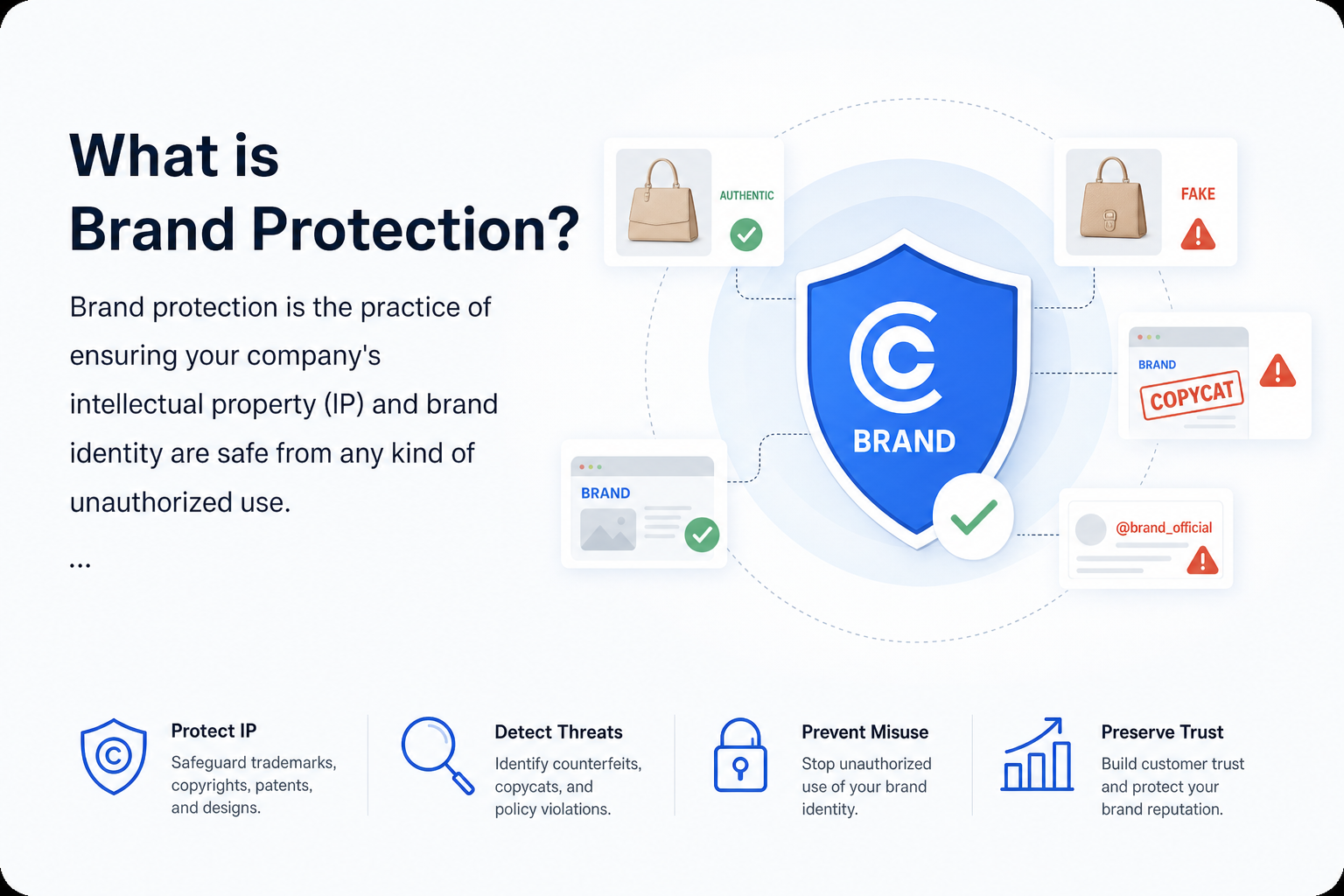
Key objectives include securing revenue from being appropriated by counterfeiters and impersonators, upholding the company’s reputation, and making sure that customers receive the genuine experience they expect from the brand.
In an age where information spreads instantly and imitators have a huge financial incentive to rip off your company's assets, protecting your brand has never been more critical. Effective brand protection strategies preserve your competitive edge while also building trust and loyalty with your customers.
Why Is Brand Protection Important?
Brand protection is more than a legal necessity. It is a strategic business imperative that reflects the importance of brand name protection in a crowded marketplace. As competitors vie for consumer attention, safeguarding your brand's identity helps customers confidently recognize and choose your offerings over counterfeit alternatives.
Here's why brand protection matters:
- Protect Revenue: Counterfeiters and unauthorized sellers can divert sales, directly impacting your bottom line. Brand protection helps safeguard your revenue streams by preventing such losses.
- Support Business Growth: A protected brand provides a solid foundation for expansion into new markets and product lines. Investors and partners are more likely to engage with businesses that have secured their IP.
- Maintain Brand Value: Protecting your IP prevents dilution of your brand and keeps it unique and valuable. A strong brand sets you apart from competitors and adds real value to your business.
- Build Customer Trust: Making sure customers receive genuine products enhances satisfaction and loyalty. Counterfeit or substandard products can harm your reputation and erode trust.
- Keep Hold of Your Intellectual Property: Infringements can weaken your legal rights over time. If you don't enforce your IP rights, it may become more challenging to assert them in the future, potentially leading to loss of exclusivity.
- Avoid Legal Issues: Proactively protecting your brand reduces the risk of costly legal disputes over IP infringements. It also strengthens your position if litigation becomes necessary.
- Customer Service Challenges: Handling complaints about counterfeit products increases the workload of your customer service team. Your team will have to field complaints about products you didn't produce, diverting attention from work that might actually grow your business or improve customer relations.
Integrating brand protection into your business strategy safeguards your assets and supports sustainable business growth far into the future. Producing and using a brand protection guide for your own company, and then continually refining your approach, you create a resilient framework where your brand can thrive, attract loyal customers and build long-term success.
A Quick Overview of Intellectual Property
Before looking at how to protect your business’s IP, it helps to understand what we’re talking about here. Let’s have a quick look at the very basics of the IP your business may have:
Trademarks protect the name of your business, as well as its products and services. Logos, slogans, phrases, even colors, sounds, and other elements can all potentially be protected by trademark.
They exist to distinguish your goods or services and inform consumers of who is behind the products they see. Marks are central to building a brand identity and making sure that customers can identify your products or services in the market. In short, if there’s an element that helps to identify something as yours, a trademark is there to help.
Copyright is designed to protect original creative works from being stolen or appropriated without the creator’s permission. Copyright protection helps preserve the uniqueness of your creative content, preventing others from copying or distributing it without permission.
Most commonly, copyright benefits creatives and ensures their work is legally theirs. Books, music, artwork, photography, architectural designs, computer software, and many more creations can be protected by copyright.
Patents are aimed at protecting inventions, whether the creations of individuals or businesses. Patents fall into two main types: utility patents, which protect how an invention works and account for roughly 90% of patents issued by the U.S. Patent and Trademark Office, and design patents, which protect the new ornamental appearance of a product.
Beyond trademarks, copyright, and patents, two other forms of IP often matter for brands:
- Trade secrets protect confidential business information that gives you a competitive edge—formulas, manufacturing processes, supplier lists, or proprietary algorithms. Unlike patents, they require no registration, but protection lasts only as long as the information stays secret, so non-disclosure agreements and access controls are key.
- Trade dress protects the distinctive visual appearance of a product or its packaging—shape, color scheme, and overall look—when those elements signal the source to consumers. Think of a recognizable bottle shape or a signature retail layout.
Each type of IP carries its own registration requirements, duration, and enforcement options, and most established brands rely on a combination of all of them.
Map your assets against these categories so nothing valuable is left unprotected, and consult an IP attorney to confirm the right coverage for your business.
A Step-by-step Guide to Brand Protection
Protecting your brand involves a proactive and continuous process. It requires vigilance, strategic planning, and the right tools to be effective. Here's how you can implement it effectively:
Step 1: Register Your Intellectual Property
You can't protect what you haven't legally secured. Registering your IP is the foundational step in brand protection.
- Lock In Legal Ownership: Registration provides official recognition of your rights, making it easier to enforce them against infringers.
- Global Considerations: If you operate internationally, consider using systems like the Madrid Protocol for trademarks, which allows you to register in multiple countries with a single application.
- Understand IP Laws: Be aware of differences such as first-to-file versus first-to-use jurisdictions.
- Get Full Coverage: Make sure all aspects of your brand—names, logos, slogans, and other distinctive elements—are appropriately registered in relevant categories and jurisdictions.
By securing your IP, you lay the groundwork for effective enforcement and protection against counterfeiters, impersonators, and others infringing your IP. Keep in mind that IP is not a "set and forget" strategy. You need to keep maintaining it, checking for potential clashes under review, and identifying new opportunities to grow your company through IP.
Trademark registration should sit at the foundation of your strategy because it is what gives enforcement teeth. A registered mark gives you the legal standing to demand takedowns, file complaints with marketplaces, and pursue infringers in court. Without it, most platforms and courts will not act on your behalf.
Treat your registrations as a portfolio instead of a checklist.
Map your marks against where your business is headed, register ahead of product expansion, and file defensively in categories a copycat might exploit so you are not litigating from a weak position later. A useful lens here is the "Three M's" framework: Market (where you sell and plan to sell), Mark (the names, logos, and slogans worth protecting), and Merchandise (the product categories that carry the most risk and revenue). Run trademark decisions through those three filters and your coverage tracks your business instead of trailing it.
If you sell across borders, registration gets more complex fast. Trademark rights are territorial, so a U.S. registration does not protect you in China, the EU, or Japan. Focus first on the markets where you sell, manufacture, or face the most counterfeiting, and use mechanisms like the Madrid Protocol to file across multiple jurisdictions through a single application.
Step 2: Monitor Online Spaces
Continuous vigilance is key in the digital age, where infringements can occur rapidly.
- E-commerce Platforms: Regularly check online marketplaces like Amazon, eBay, and Alibaba for counterfeit or unauthorized listings of your products.
- Social Media: Monitor platforms for fake accounts, misuse of your brand, or misleading promotions that could harm your reputation.
- Web Domains: Keep an eye on domain registrations to identify domain abuse such as cybersquatting or typosquatting that could confuse customers or divert traffic.
- Search Engines: Use tools to track how your brand appears in search results, including paid ads that may infringe on your trademarks.
- Automated Monitoring Tools: Use brand protection tools and technology that scan the internet continuously, alerting you to potential infringements in real-time.
Monitoring allows you to detect issues early and respond promptly to minimize damage.
The technology behind monitoring is what makes this scale possible. AI and machine learning models, including image recognition trained to spot your logos and product photography, scan millions of listings and flag the ones most likely to be infringing. Instead of analysts manually combing through results, image recognition surfaces the matches that matter and accelerates enforcement triage so your team acts on the highest-risk cases first.
Test buy programs work alongside that detection. When a listing looks suspicious but cannot be confirmed from images and text alone, an undercover purchase lets you inspect the goods directly and determine whether they are genuine. Test buys are a cost-effective alternative to full investigations, and the evidence they produce strengthens takedown requests and legal cases. Together, automated detection and targeted test buys help you spot and confirm fraud across the digital ecosystem.
Step 3: Take Action Against Infringements
When unauthorized use is detected, decisive action is necessary. Assertively enforcing your IP rights deters infringers and protects your brand's integrity. Begin by using the mechanisms available to you:
- Platform Collaboration: Most online platforms have procedures for reporting counterfeit or infringing content (for example, please refer to past guides such as TikTok Shop, Temu, Taobao, Amazon, and Amazon APEX for reference). This is a critical step, as some platforms are more cooperative than others. Building relationships with key contacts can speed up resolutions. Use these reporting mechanisms to request the removal of unauthorized listings, fake accounts, or infringing content. Be aware that responsiveness may vary, so persistence is key.
- Legal Action: If platform efforts fail or infringement is severe, consider legal avenues. Cease and desist letters, injunctions, or lawsuits may deter violators and potentially win compensation.
- Offline Actions: Counterfeiting isn’t limited to the internet. Working with law enforcement, you can build legal cases against counterfeiters operating in physical locations. This may involve coordinating raids on warehouses and manufacturing facilities, effectively dismantling counterfeit operations at their source.
- Record Keeping: Document all infringements and responses. This data supports legal cases, reveals trends, and informs strategic improvements in your brand protection efforts.
Step 4: Educate and Empower Stakeholders
Your employees and customers both play key roles in upholding brand integrity, so it’s important to include them in your brand protection strategy.
- Internal StakeholdersTrain your team to recognize brand vulnerabilities and follow your brand guidelines. Keep them current on policies for logo usage, trademark compliance, and authorized product distribution. When every employee understands their role, brand stewardship becomes part of the culture.
- Your CustomersCustomers can be powerful allies in defending your brand. Help them spot genuine items and report problems by sharing:
- Packaging elements that signal authenticity
- Verification methods for confirming a real product
- Authorized sales channels where they can buy safely
- How to report suspicious products or sellers
Risks Your Brand May Face
Understanding potential threats is key to defending your brand effectively.
The scale here is hard to overstate: counterfeiting alone is a roughly $2 trillion global problem, and impersonation incidents have climbed sharply year over year as fake websites and phishing pages can now be spun up in minutes. A single phishing breach costs companies millions on average, and few brands of any size are untouched by some form of digital abuse. In 2025, the FBI's Internet Crime Complaint Center logged 859,532 cybercrime complaints with losses exceeding $16 billion, and US companies lost 9.8% of revenue to impersonation-driven fraud, a 46% increase year-on-year.

The risks below are not edge cases, and they deserve urgent attention. Here are some of the most common ones:
Counterfeiting
Unauthorized replication and sale of your products can lead to serious revenue loss and damage your brand's reputation.
Counterfeit goods are often of inferior quality, which can result in customer dissatisfaction and harm your brand's image.
Marketplaces
Online platforms are convenient venues for counterfeiters and unauthorized sellers. The vast number of listings and sellers makes it challenging to monitor and control unauthorized use of your brand. Infringing products on marketplaces can divert sales and mislead customers.
Types of Brand Impersonation Attacks
Brand impersonation generally falls into two patterns, and each calls for a different defense.
Known Brand Impersonation is where cybercriminals impersonate a well-known, trusted brand to borrow its reputation and trick consumers. For example, an attacker might register a lookalike domain and clone a major retailer's checkout page to harvest shoppers' payment details during a holiday sale.
Own Brand Impersonation is where attackers impersonate your brand directly to target your own employees or customers.
A common example is a fake email or portal that mimics your internal systems to phish staff credentials, or a counterfeit support account that contacts your customers to steal their login or payment information.
Social Media Impersonation
Fake social media accounts pretending to be your brand can mislead customers, spread false information, and damage trust. These impersonators may engage in scams or inappropriate communication that reflects poorly on your brand.
Impersonating Websites
Lookalike websites designed to mimic your official site can deceive customers or steal their information. These sites can be used for phishing attacks or selling counterfeit products, eroding customer confidence and harming your reputation.
Domain Abuse
Unauthorized use or registration of domain names similar to yours can confuse customers and divert traffic. This includes practices like cybersquatting and typosquatting, where individuals register domain names with bad-faith intent to profit from your trademark. Domain abuse can lead to loss of web traffic and potentially expose customers to fraud.
Phishing Scams
Fraudulent communications that appear to come from your brand aim to trick customers into revealing sensitive information. Phishing scams can lead to financial loss for customers and damage your brand's credibility.
Copyright Infringement
Unauthorized use of your original content—such as images, text, or videos—affects your brand's uniqueness and may mislead customers. It can also diminish the perceived value of your intellectual property.
By recognizing these risks, you can take targeted actions to mitigate them and protect your brand's integrity.
A True Brand Protection Solution
Counterfeiting is a massive global problem that grows more complex every day. The OECD estimates counterfeit goods accounted for roughly $467 billion in global trade in 2021, and the figure keeps climbing. With counterfeiters rapidly adapting their tactics, appearing in new channels, and hiding behind private communications, traditional solutions struggle to keep pace.
It’s become clear that brand protection requires more than just the standard toolkit.
At MarqVision, we are committed to our mission: "To protect and build a future shaped by original ideas, inventions, and creativity." We seek to arm brands with advanced AI-native technology that continuously adapts to the needs of businesses against the challenges their brand and IP face.
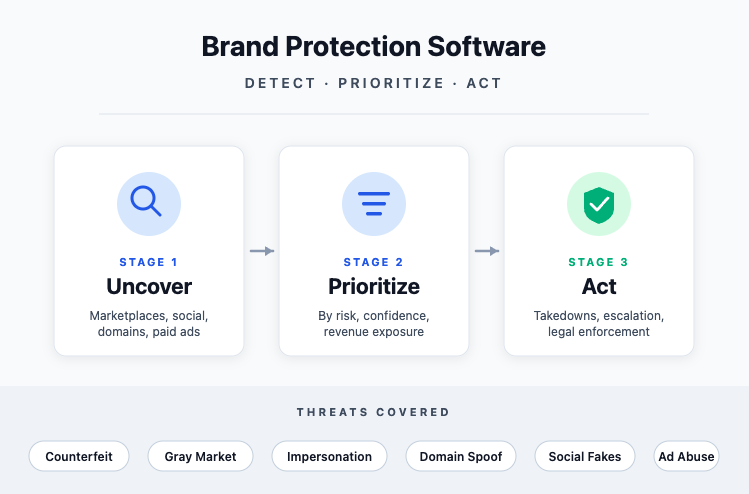
Modern brand protection draws on several complementary technologies. The table below shows how they fit together.
Why MarqVision Is Different
We built Marq AI from the ground up to respond to the modern challenges brands are facing, going well beyond surface-level issues. Our technology is engineered to find and tackle the most well-hidden infringements, speed up enforcement actions with generative AI, and give customers truly actionable insights in real time.
- Advanced AI Monitoring: Our proprietary Marq AI technology scans online marketplaces, social media, and websites in real-time to detect infringements with leading accuracy.
- Automated Enforcement: We simplify the process of taking down unauthorized listings and content by using generative AI to produce replicable documents, saving a huge amount of time for legal and brand protection teams.
- Global Coverage: With monitoring capabilities across major platforms worldwide, we keep your brand protected in all markets where you operate—especially in Asia, where the vast majority of IP infringements come from.
- Intelligent Dashboard: Access real-time reporting and analytics to stay informed about protection efforts, with AI-provided insights that allow customers to focus primarily on the biggest and most threatening infringers.
- Expert Support: Our team of IP specialists collaborates with you to develop tailored strategies and provide guidance on complex issues. We understand the nuances of brand protection better than anyone, and we are committed to supporting you through your unique challenges.
By partnering with MarqVision, you can focus on handling real business development and growing your business worldwide, while we handle the complexities of brand protection.
Frequently Asked Questions
What is the difference between brand protection and trademark registration?
Trademark registration is the legal step of securing rights to your brand's distinctive elements, such as names, logos, and slogans. Brand protection is the ongoing practice of monitoring for and acting against unauthorized use of those rights across marketplaces, social media, websites, and domains. Registration gives you the legal standing; brand protection puts it to work.
How much does counterfeiting cost businesses globally?
Counterfeiting is a roughly $2 trillion global problem, and the impact reaches beyond lost sales to include reputational damage, eroded customer trust, and added strain on legal and customer service teams.
Do I need to register my trademark in every country where I sell?
Trademark rights are territorial, so a registration in one country does not protect you elsewhere. Focus first on the markets where you sell, manufacture, or face the most counterfeiting, and use mechanisms like the Madrid Protocol to file across multiple jurisdictions through a single application.
What is a test buy and when should I use one?
A test buy is an undercover purchase of a suspicious product so you can inspect the goods and confirm whether they are genuine. Use one when a listing looks suspicious but cannot be verified from images and text alone. The evidence a test buy produces also strengthens takedown requests and legal cases.
Stay up to date on the latest IP Protection content from MarqVision.




4 Enforcements a Week to 400: Scale Brand Safety with Marq AI

Don’t Just Find Counterfeits. Dismantle the Entire Network.

.png)
Discover the latest trends and challenges in IP protection

Take Control of Your Trademarks with MARQ Folio
Renew and Manage Your Trademarks Easily With MARQ Folio

We’re waiting to hear from you

See the best brand protection solution in action

Don’t let piracy steal your growth

Talk to us about your brand protection problems


.png)