Marq AI Brand Intelligence Agent: the signals growing brands miss
Read your brand's signals first with the Marq AI Brand Intelligence Agent, and see the next challenge coming, as Stanley, Binggrae and Olive Young had to.
 Jinie Park4 min read
On this page7
- The signals growing brands easily miss: why you need the Marq AI Brand Intelligence Agent
- The new challenges that come with success
- Three signals that are easy to miss as you grow
- How to protect your brand and keep growing with the Marq AI Brand Intelligence Agent
- Questions you can now ask with the Marq AI Brand Intelligence Agent
- Know your brand better to grow it
- FAQ | What is the Marq AI Brand Intelligence Agent?
The signals growing brands easily miss: why you need the Marq AI Brand Intelligence Agent
The more a brand grows, the more complex it is to run. Sellers multiply, SKUs pile up and sales channels keep expanding. The hardest part isn’t a lack of data. It’s deciding what to act on first in a mountain of it. That’s where the Marq AI Brand Intelligence Agent comes in.
Sometimes the difficulty shows up in unexpected ways. When Samyang Foods replaced a character it had used for years, it wasn’t because of a redesign. It was because the company didn’t fully own the copyright. As the brand grew, parts of it had slipped out of its control without anyone noticing.
It’s the story of one character, but it will sound familiar. The stronger a brand gets, the more often this happens, because the signals a team misses grow faster than the signals the brand creates.
As a brand grows, channels multiply, sellers increase and the market reacts faster. The data brand teams have to check and judge grows with it, and running the brand gets more and more complex.
The new challenges that come with success

What comes after success is harder. Three well-known brands show why.
Stanley didn’t change its product. It grew sales tenfold in four years with one tumbler, thanks to a story its community created. But the moment that story caught fire, a new challenge appeared. Stanley started selling on hundreds of unauthorized channels, at prices that differed from the official one. If reading the story quickly drove the growth, the next challenge was knowing where and how the brand was being bought while that story spread.
Binggrae built brand IP in 2020 out of a single fictional universe, “Binggraeus,” and is expanding it into musicals, merchandise and collaborations. As the universe grows, other things follow: unlicensed merchandise, impersonator accounts and counterfeit content that borrows the universe. The stronger the IP a brand builds, the more attempts there are to exploit it.
Olive Young became a Harvard MBA case study because it built the story of a “K-beauty incubator” first. Now it’s expanding into global channels as it prepares its first store in LA. How its brand story lands in a new market, on which channels its prices slip, which sellers sell products under the Olive Young name: all of this has to be tracked at global scale.
The three brands have one thing in common. Success created complexity, and the ability to read that complexity quickly became the next challenge. Without growth, protection means little. Without protection, growth doesn’t last.
Three signals that are easy to miss as you grow

It’s not that there’s no data. If anything, there’s too much.
The more channels you add, the more scattered your price signals become. Official store, marketplaces, social media, overseas platforms: the same product sells at different prices on each. To see where the problem is, you’d have to watch every channel at once, and no person can.
The more sellers there are, the harder it is to see who is damaging the brand. Ten violating sellers can be managed. A hundred? A thousand? It’s not just the count that grows. The patterns get more complex too. Deciding which seller poses the biggest risk can take a whole day.
The faster the market reacts, the more likely you are to get priorities wrong. What looks urgent right now isn’t always what affects the brand most. Handle the urgent things first and you miss what really matters.
Brands don’t fail to respond for lack of data. There are so many signals that what matters gets lost.
How to protect your brand and keep growing with the Marq AI Brand Intelligence Agent

Traditional brand protection was reactive. When a violation occurred, you found it and took action. That was enough while the brand was small. As the brand grows, the approach hits its limits, because enforcement moves more slowly than violations appear.
The AI era calls for something different: knowing first where and how your brand’s signals are moving in the market. Reading the patterns before revenue leaks away, and setting priorities before risks grow. The Marq AI Brand Intelligence Agent fills that gap.
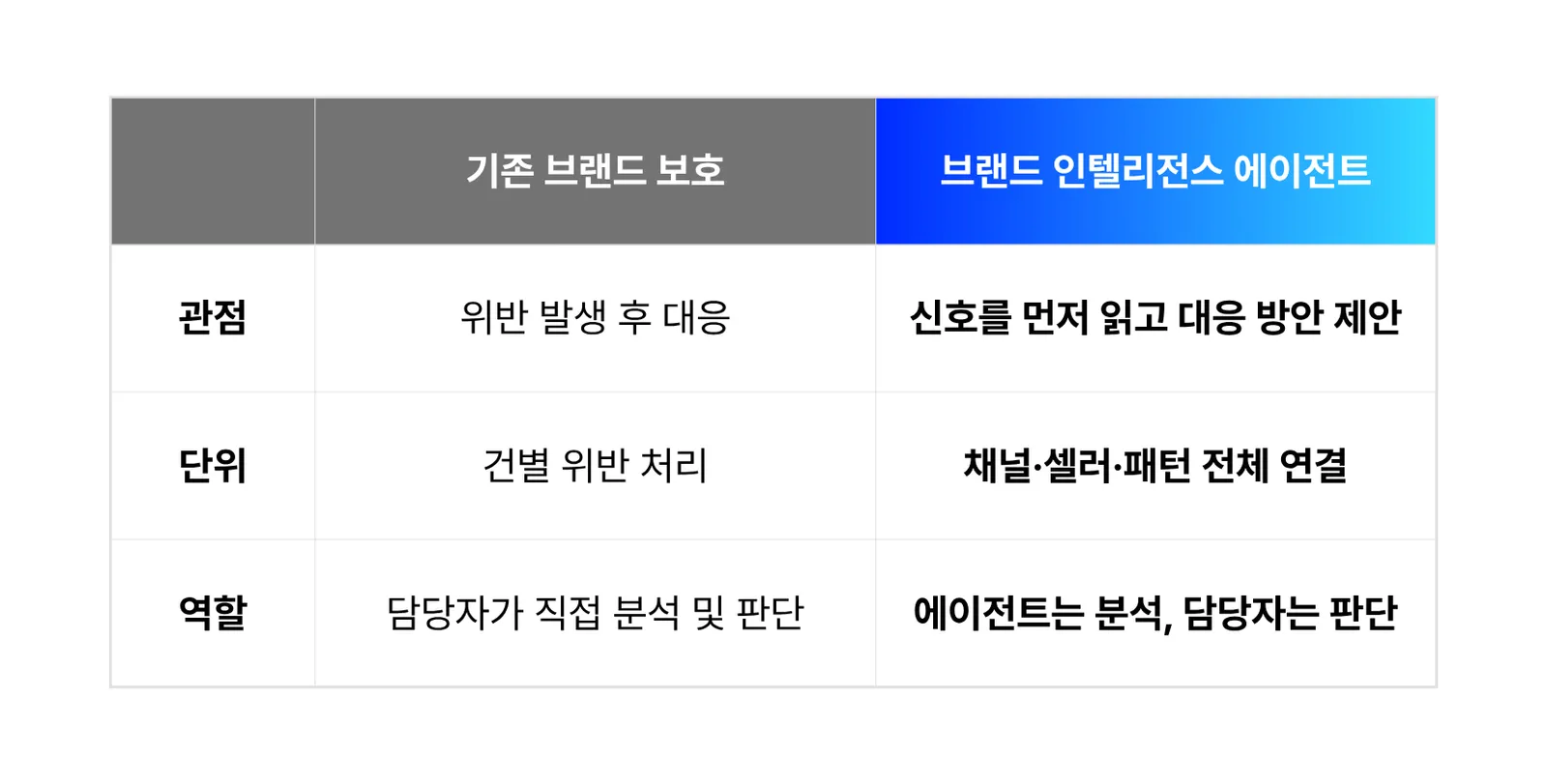
It picks up patterns by seller and channel to catch early warning signs. The agent does the analysis and suggests priorities, so your team can focus on deciding and acting.
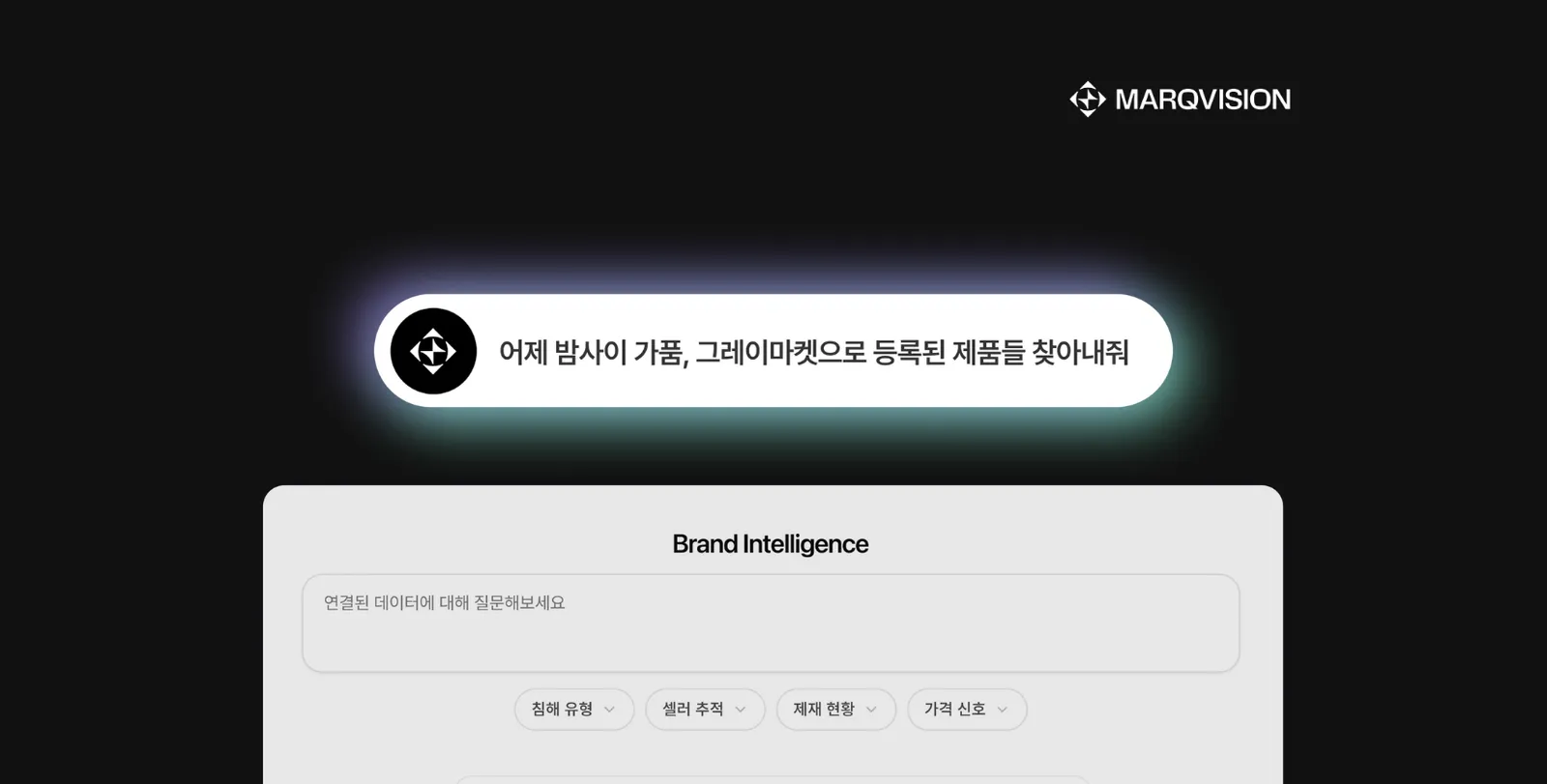
Curious what the agent says when you ask it something? Watch the video below.
Questions you can now ask with the Marq AI Brand Intelligence Agent
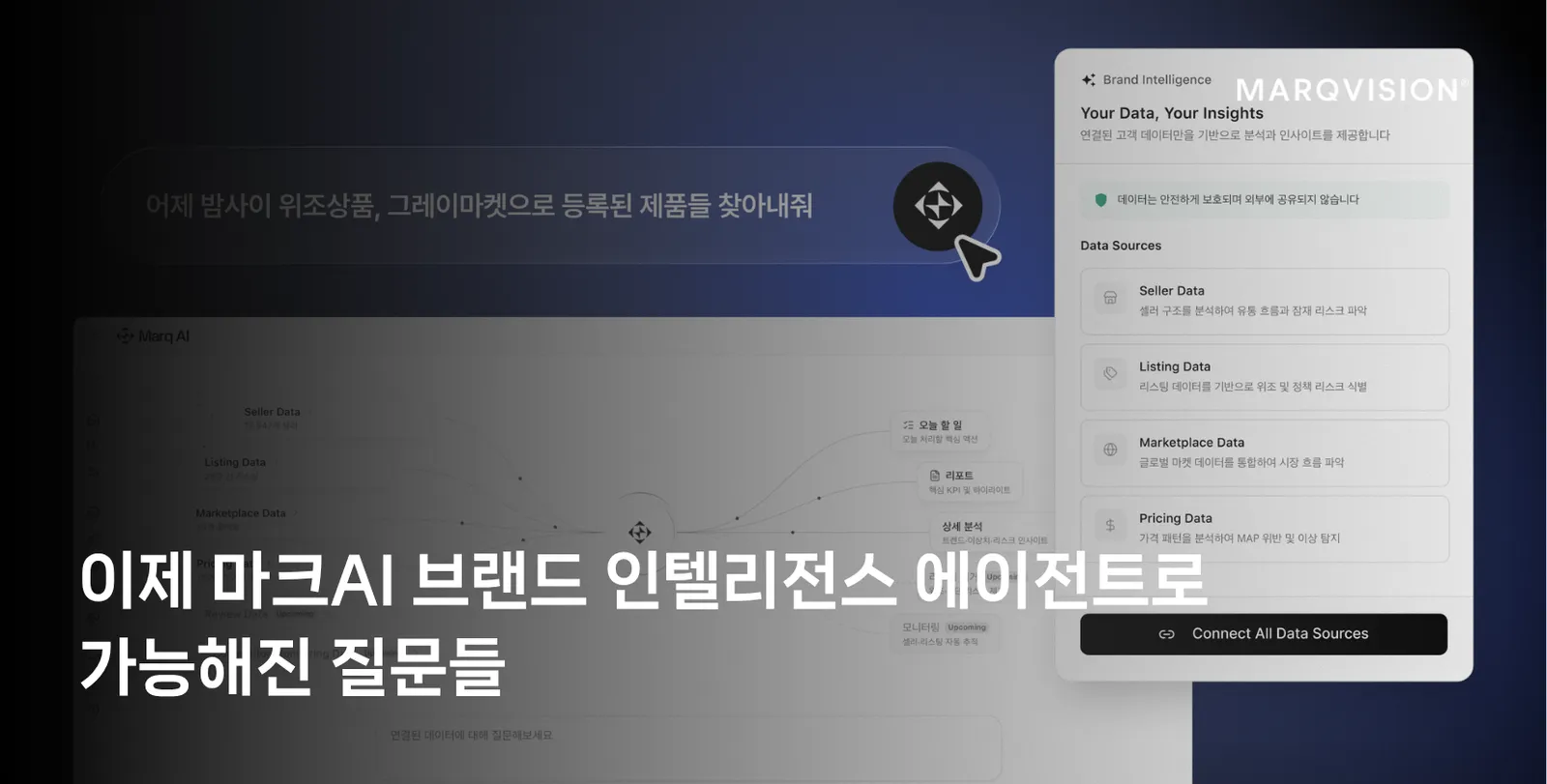
The video above and last week’s launch post showed “the issues to handle today.” Brand intelligence really earns its keep when it answers questions about bigger trends.
“Over the past month, on which channel has infringement grown fastest?”
Marketplaces, social media, websites, domains, ads: infringement spreads at different speeds and in different patterns on each channel. Know where signals are growing fastest and you can set the right order of response.
“How have prices on unauthorized channels changed since this season’s campaign?”
Looking only at official-channel sales after a campaign shows you half the picture. See how prices reacted on unauthorized channels too, and you can plan the next campaign properly.
“How are the sellers we took action against a month ago coming back now?”
Enforcement isn’t the end. To stop repeat violations, read the patterns of sellers who come back on new accounts, change the times they post, or tweak how they list.
These questions have something in common. Answering them means connecting price, seller and channel data, reading the patterns and interpreting them in context. Until now, that process took far too long. Now the Marq AI Brand Intelligence Agent takes it on.
Know your brand better to grow it

Buldak is now redefining its brand with a new mascot. This time is different. Copyright, IP, how its brand signals move across channels: Buldak is committed to missing nothing this time. It’s moving forward by reading its brand’s signals first.
Like Stanley growing tenfold on one story, and Binggrae expanding its IP through a fictional universe, the brands that lead have one thing in common. They knew first how their brand was moving in the market.
Missing the signals is the biggest risk. The stronger the brand, the more intelligence has to come first.
Ask questions of your own brand data and get answers.
Book a 30-minute tailored demo →
To learn more about how the Marq AI Brand Intelligence Agent works, start with the launch post.
Further reading
- How the Marq AI Brand Intelligence Agent changes e-commerce decision-making
- How your whole team can use the Marq AI Brand Intelligence Agent
FAQ | What is the Marq AI Brand Intelligence Agent?
Q. How is brand intelligence different from brand protection?
Brand protection detects violations and takes action after they occur. Brand intelligence reads market signals first and identifies, in advance, where risks are growing. The Marq AI Brand Intelligence Agent adds an intelligence layer on top of existing brand protection data, so you can decide before you respond.
Q. Which brands need the Marq AI Brand Intelligence Agent?
Brands with three or more sales channels, more than 100 resellers, or a push into global markets will see the benefit right away. It’s especially useful in categories where unauthorized distribution, counterfeits and impersonation spread quickly, such as beauty, fashion, F&B and health supplements.
Q. What can I ask the Marq AI Brand Intelligence Agent?
You can ask, in plain language, the questions you need to run your brand: seller pattern analysis, price violation trends by channel, the issues to tackle first, how unauthorized channels reacted before and after a campaign, and which channels are weak compared with competitors. See specific use cases in the launch post.
Q. What will I see in a demo?
Ask the agent questions and get answers based on your brand’s real data. In 30 minutes, you’ll see risky-seller analysis, channel risk assessment and prioritization for your own brand.