Counterfeits grow every holiday shopping season. What are brands missing?
Counterfeits and unauthorized sales spike every holiday season. Why brands lose control across Korean e-commerce, social and cross-border shopping, and what to do.
 Jinie Park4 min read

On this page5
The holiday shopping season is every brand’s biggest sales opportunity, and the time when counterfeit and unauthorized distribution risks peak. Big sales events, live shopping and social recommendations all take off at once, and traffic surges. At the same time, it gets harder to tell where products come from and whether they’re genuine.
Counterfeits appear side by side with genuine products, and brands feel the impact on trust and revenue sooner than they expect. Counterfeit seizures and consumer complaints cluster at certain points of the holiday season, year after year. (Source: Yonhap News)
Why counterfeit harm peaks during the holiday season

Holiday counterfeit risk isn’t just about higher sales volume. Consumer behavior and the platform environment change at the same time, creating structural weak points.
During this period, discounts and recommendation algorithms push shoppers to decide quickly, and it becomes hard to tell whether a price gap is a normal discount or a sign of a counterfeit. Meanwhile, open marketplaces and social commerce channels see huge numbers of new sellers and listings in a short time, which strains platforms’ verification and enforcement processes.
As a result, counterfeits are seen and sold in a relatively short window, and by the time brands notice, they’ve often already affected the customer experience. The holiday season is when these risks spread fastest.
Holiday counterfeit patterns in the Korean market
Around the holiday season, a few common counterfeit and unauthorized distribution patterns show up again and again in Korea. First, as reselling through open marketplaces and cross-border shopping surges, the same product is sold at many different prices at once. Genuine and unauthorized products appear together in the same search results and recommendation slots, and shoppers struggle to tell the difference.
“Dupe” content also spreads quickly, centered on social media and live shopping. K-beauty and fashion in particular see more cases where products with similar looks and packaging are presented as genuine, shaking price, quality and brand trust all at once. Statistics from the Korea Customs Service, the Korean Intellectual Property Office and the Korea Intellectual Property Protection Agency also show counterfeit seizures and complaints concentrated at the end and start of the year. (Source: Cosinkorea)
This shows the holiday season isn’t a one-off event but a structural risk pattern that repeats every year.
Why holiday counterfeit risk concentrates in certain categories
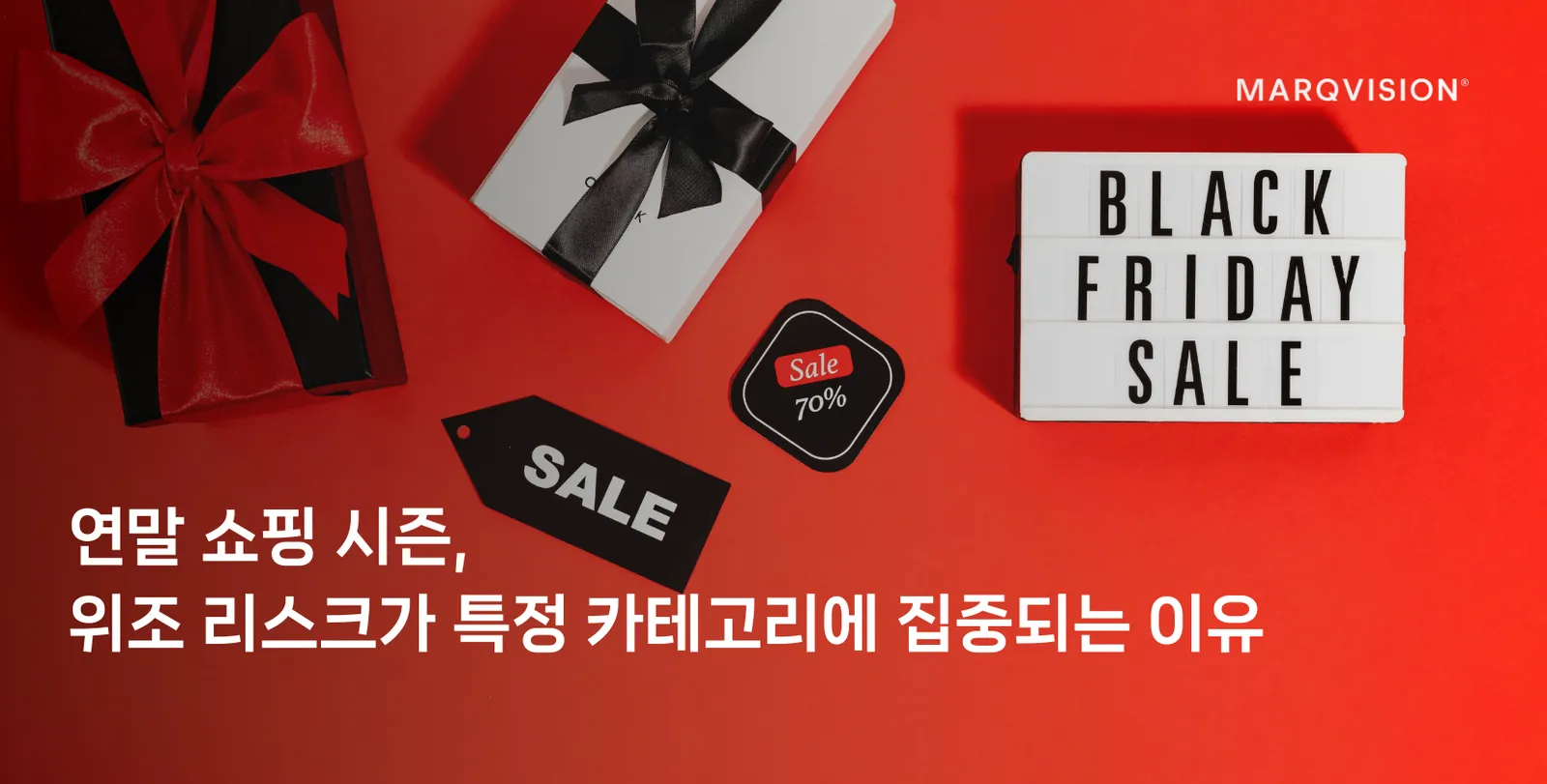
Holiday counterfeit risk isn’t spread evenly across products. It clearly concentrates in categories with high gift demand and strong visual appeal.
Fashion and luxury still account for the largest share. Bags, clothing and accessories with recognizable logos and high gift demand see counterfeits flow in quickly alongside price discounts. Beauty also sees more counterfeit exposure, centered on holiday sets and limited-edition packaging, and given the nature of cosmetics, this can easily become a safety and trust issue.
More recently, with home parties and lifestyle trends, counterfeit risk has also grown in household and home products. This shows counterfeits aren’t confined to particular categories but move quickly to wherever consumer attention goes.
Holiday counterfeit risk isn’t a pricing problem. It’s a brand integrity problem
Holiday counterfeits aren’t just about low prices or a few rogue sellers. When counterfeits and unauthorized distribution spread, a brand’s pricing strategy wavers and trust among official distribution partners weakens. The bigger problem is customer experience. Shipping delays, inconsistent quality and after-sales issues turn into distrust of the brand, not the seller. In a period like the holidays, when many new customers arrive, these first experiences can have a lasting effect on the brand’s overall image.
By brand integrity, we mean a brand’s ability to consistently maintain and manage its intended strategy across pricing, distribution and visibility. In the end, the counterfeit problem comes down to a structural question: how well can a brand control and manage its market?
How brands should prepare for the holiday season

Short-term enforcement and after-the-fact response have limits when it comes to holiday counterfeit risk. Brands should treat the holiday season as a high-risk period and build a system that connects prevention, early detection, analysis and risk minimization.
During the holidays in particular, small warning signs such as price changes, new sellers and content changes spread fast, so a monitoring system that catches them is essential. From there, you need to analyze which sellers and products are driving the risk and turn that into actionable insights your legal, e-commerce and marketing teams can use together.
The goal for the holiday season isn’t to eliminate every problem immediately. It’s to keep control over your brand’s pricing, distribution and visibility. As the counterfeit industry becomes more tech-driven and global, brand protection has to evolve into a fast, precise, data-driven approach too. To check your brand’s weak points ahead of the holiday season, see what MarqVision’s structural insights show. A demo walks you through an initial risk assessment and a monitoring flow tailored to your brand.
(Original article: MarqVision Blog - Inside the Holiday Counterfeit Surge)