Why global brands are losing control of their online channels to impersonation and phishing
Impersonation and phishing are no longer just legal's problem. What e-commerce leaders at ShopTalk 2026 said about losing control of their channels.
 Mark Lee4 min read
On this page6
- Why brand impersonation and phishing are more dangerous than marketplace counterfeits
- Three structural reasons brands lose control of their channels
- How impersonation and phishing hit business metrics directly
- How to take back control of your channels
- The one thing brands want
- FAQ | How to respond to brand impersonation and phishing
At ShopTalk 2026 in Las Vegas this spring, I spoke with dozens of global e-commerce, marketing and brand leaders. Their industries, sizes and countries differed, but what they told me was strikingly similar.
“We planned and launched a campaign with real care, and the place customers clicked in search wasn’t our official store.”
“When you typed our brand name into Google, the first result was a phishing site.”
This isn’t one brand’s bad luck. The more conversations I had, the clearer the common thread: brands can no longer control how customers reach them online, and it’s getting worse, faster.
Why does this keep happening? Not just because security is lax. The reasons are structural.
Why brand impersonation and phishing are more dangerous than marketplace counterfeits

When people think of online threats to brands, most think first of counterfeits on marketplaces. But talking with practitioners at ShopTalk, I heard something different. What worried them most, and most urgently, was elsewhere:
domain impersonation, phishing ads and fake brand accounts on social media.
The reason is simple. The damage comes straight back to the brand, in real time. Customers whose payment details are stolen on a fake site don’t blame the phishing criminals. They blame the brand. Their complaints spread on social media and make the news. Brand trust is far slower to rebuild than phishing sites are to put up.
Three structural reasons brands lose control of their channels
First, impersonation and phishing don’t happen on a single channel.
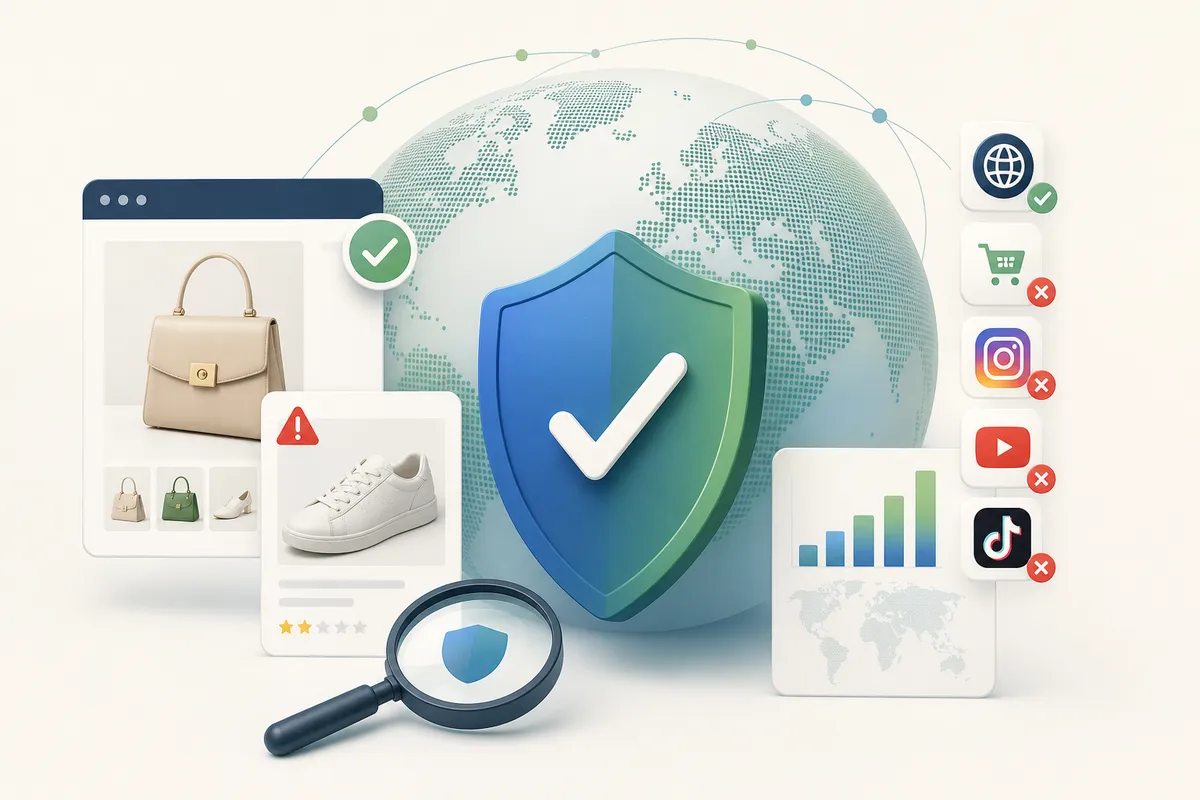
Naver and Google search, Instagram and YouTube ads, phishing sites that clone the official store, social accounts impersonating employees: they work at every touchpoint between customer and brand, all at once. A separate team for each channel, each working on its own, only goes so far. The more fragmented the channels, the more gaps impersonators find.
Second, response is structurally slow.
Today, most brands take an average of 2 to 8 days to get impersonation and phishing taken down. By the time a fake comes down, the traffic is gone, conversion has dropped and customer complaints have already landed on the brand. As an e-commerce leader at one D2C brand put it: “Impersonator sites spread so much faster than my team can respond. Having no choice but to watch makes me feel helpless.”
Third, you can’t enforce without evidence.
Every takedown request comes with the evidence and procedures a platform requires, and a wrong report can invite retaliation. One brand manager had reported an impersonator account and then given up on enforcement altogether, for fear of putting the brand’s official channels at risk. Without both speed and accuracy, response to impersonation and phishing will never get beyond damage control.
How impersonation and phishing hit business metrics directly
For e-commerce and marketing teams, the problem shows up clearly in the numbers.
When phishing ads bid on brand keywords, CPCs rise. When impersonator sites intercept search traffic, conversion falls. The brand’s ad spend becomes phishing revenue. Those numbers show up in next week’s performance report, and the team has to explain them.
For the people directly responsible for conversion, ROAS and customer trust, brand impersonation and phishing are no longer legal’s job. They have become a question of marketing performance and e-commerce channel strategy.
How to take back control of your channels
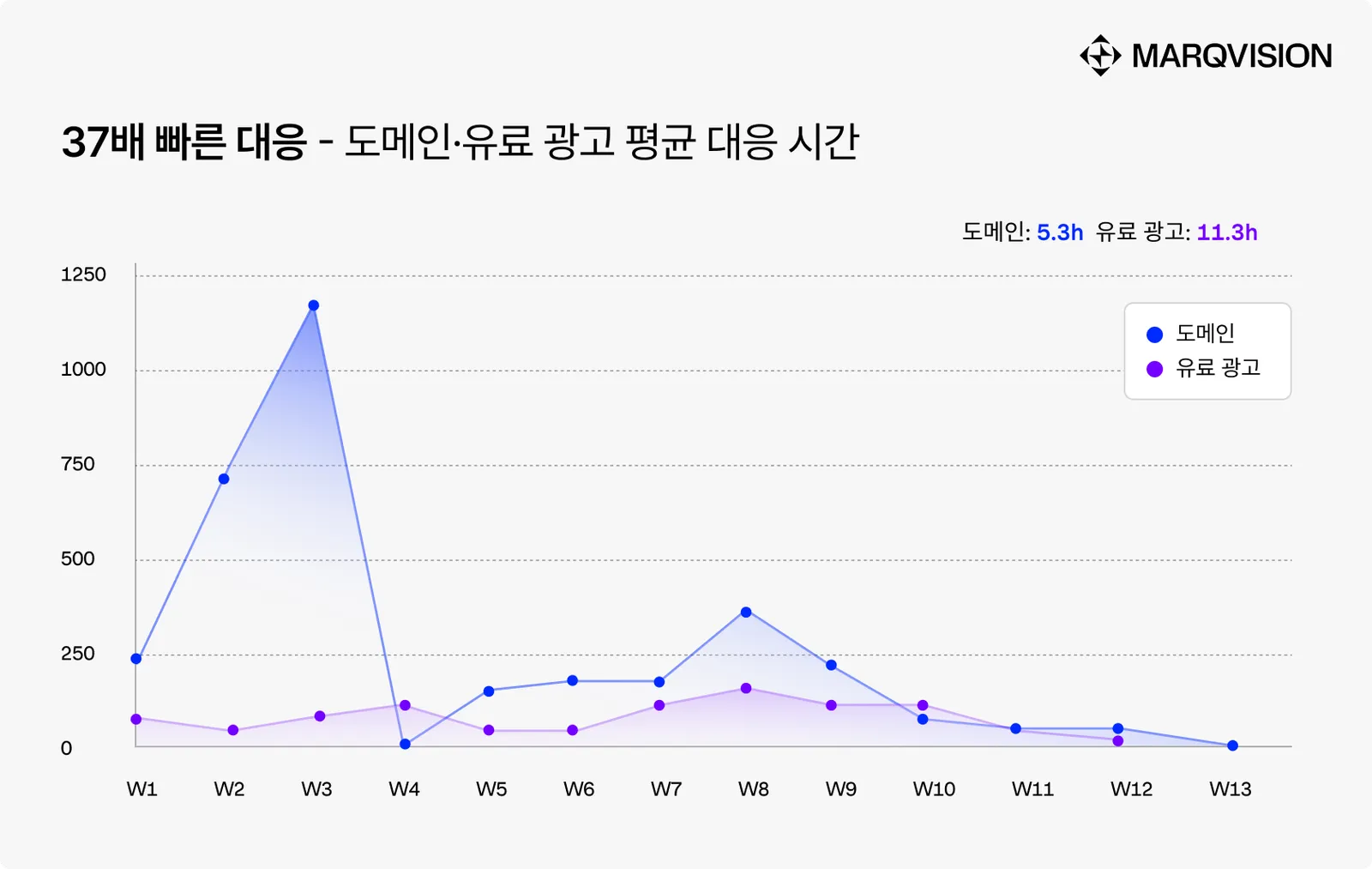
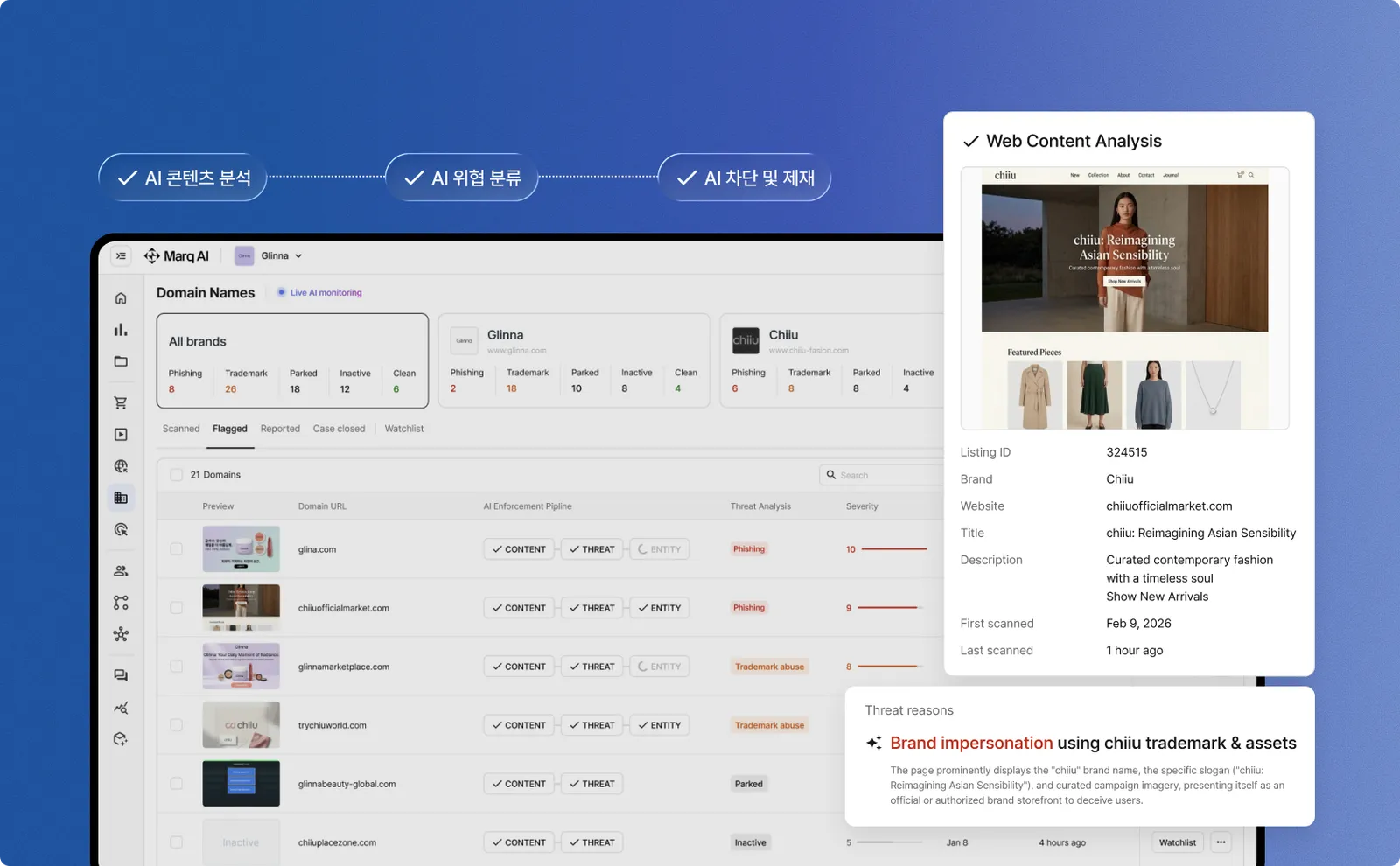
MarqVision approaches this not as a set of reporting tools for each platform, but by connecting every channel where a brand meets its customers into one infrastructure.
For the past six months, we’ve focused on improving speed and accuracy together:
- Impersonator domains and phishing sites: average response time under 5 hours
- Phishing ads on brand keywords: average response time of about 12 hours or less
- Decision accuracy: 99.8% across more than 50,000 cases during the beta
The one thing brands want
Talking with global brand leaders at ShopTalk 2026, one thing became clear. They don’t want a report queue or a weekly summary. They want to see in real time which threats are appearing on which channels, and to act the moment they confirm one.
An environment where e-commerce, marketing and legal teams move together on the same data: MarqVision aims to be the AI infrastructure company that makes that possible.
If reading this made you wonder how exposed your brand is, see for yourself in a demo.
FAQ | How to respond to brand impersonation and phishing
Q. How is an impersonator site different from a phishing site?
An impersonator site imitates an official website’s design, domain and content to deceive consumers. A phishing site goes a step further, aiming to steal payment or personal information. Both lead directly to harm for customers and damage to brand trust.
Q. How can we be the first to know about impersonation or phishing?
Most brands only find out after customer complaints come in. To detect threats early, you need an automated system that continuously monitors your brand name, domains and ad keywords on major platforms.
Q. How long do platforms take to respond to impersonation and phishing takedown requests?
It depends on the platform and the case, but most take days to weeks. Through direct partnerships with global platforms, MarqVision cuts this to an average of 5 to 12 hours.
Q. Are fast-growing brands at greater risk of impersonation and phishing?
Yes. Brands in a growth phase, whose awareness is rising quickly, are actually more vulnerable. Impersonators often move in before defenses are in place.