Comparing seller monitoring tools: what sets Marq AI apart
Online brand protection now hinges on acting at the seller level. Compare Marq AI with other tools and find an effective strategy against the gray market.
 Irene Lee4 min read

On this page5
Online marketplaces are everywhere, and seller monitoring matters more than ever
Today anyone can buy and sell products online. That openness brings a new challenge: protecting branded products and consumers from unauthorized sellers. As online resellers and black-market resellers spread, more and more companies and official distributors are being hurt.
A strong, reliable solution against gray-market (unauthorized) sales is now essential. Gray-market sales and counterfeits aren’t just a “product” problem. If you can’t see who’s selling and how they’re damaging your brand, you can’t respond in any meaningful way.
Yet many brands still rely on collecting product URLs or sorting data by hand. The result is an inefficient cycle of deleting individual listings instead of going after the sellers who pose the most risk.
What brands need now is a monitoring strategy built around the seller. Seller monitoring tracks and analyzes seller activity to protect brand value and strengthen your competitive position. By analyzing metrics such as sales volume, revenue, customer reviews, price changes, keyword rankings, competitor moves and gray-market detections, you can respond more strategically.
How should you choose a seller monitoring solution?

There are many brand protection solutions on the market, but very few can assess risk at the seller level. Preparing for gray-market sales and counterfeits from the moment you go online isn’t optional.
Products of unclear origin or stored in poor conditions can directly threaten consumer health, and that can damage brand trust. Building the right seller monitoring strategy early is how you reduce lost revenue and protect brand value. Here are the key criteria for choosing a gray-market solution:
- Seller-based data collection: It should track the seller (the person), not just the product.
- Multi-platform coverage: You should be able to manage Coupang, Gmarket and Naver, as well as Amazon and eBay, in one view.
- Immediate action: It should let you go beyond viewing data and send warning letters and file reports, all in one platform.
- Real-time alerts and visualization: It should connect price-change detection, alerts and response in a single flow.
Why MarqVision’s seller monitoring is so effective
1. Listings grouped by seller
Data is collected by seller, not by product. By linking sellers who operate across multiple platforms, you can track an entire selling network.
2. Risk analysis to prioritize enforcement
Based on selling price, history of repeat violations, product quantities and more, you can identify the sellers to act on first. The question “Where should we put our resources first?” gets a clear answer.
3. Real-time alerts and dashboard
When a high-risk seller posts a new listing, or a listing appears at the same price as an official seller, real-time alerts let you act immediately. The dashboard also shows each seller’s sales trends and violation types visually, which makes cross-team collaboration easier.
4. Immediate action in one platform
Check seller details in the dashboard and send a warning letter or report right away. You can keep using your existing in-house report templates and see your full sending history at a glance.
Seller monitoring solutions compared
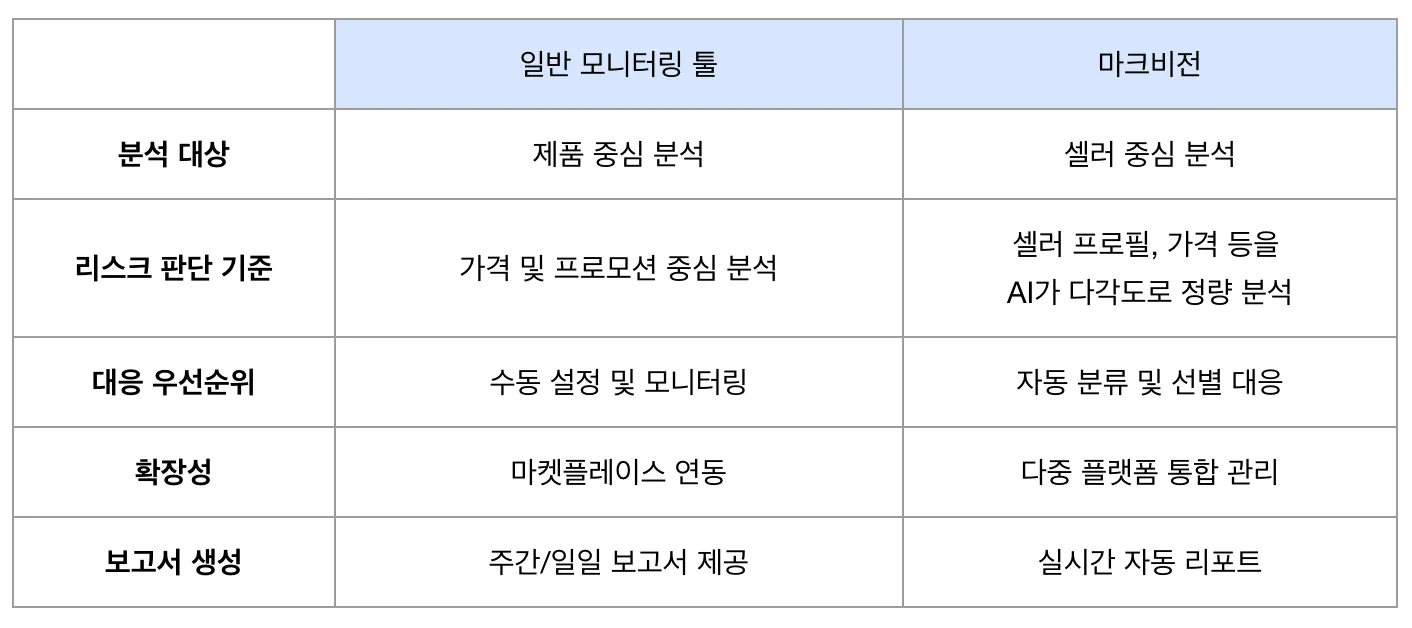
Without seller monitoring, gray-market enforcement can’t last
As global e-commerce changes quickly, the ways brands are threatened are getting more sophisticated. Brands need seller-centered risk analysis and proactive response, not just detection.
MarqVision’s seller monitoring goes beyond deleting single listings: it identifies repeat-violating sellers first and acts on them. It’s time for brand protection to evolve toward priority-based response.