You adopted AI, so where are the results? What the data says e-commerce growth needs
At a Snowflake and MarqVision Lunch & Learn: the data context that makes enterprise AI pay off, and how Marq AI helps grow e-commerce revenue.
 Jinie Park4 min read

On this page4
You adopted AI, so where are the results? What the data says e-commerce growth needs
On August 6, we hosted a Lunch & Learn at Snowflake’s Korea office in Yeoksam, Seoul, on “E-commerce success stories built with AI and data.”
People from food and beverage, beauty, fashion, consumer goods and other industries joined us, from companies including Hitejinro Beverage, Nestlé Korea, Nongshim Kellogg, adidas Korea, APR and Kenvue Korea. Together we looked at what it takes for AI and data to produce real business results.
What does AI need to give answers you can trust?
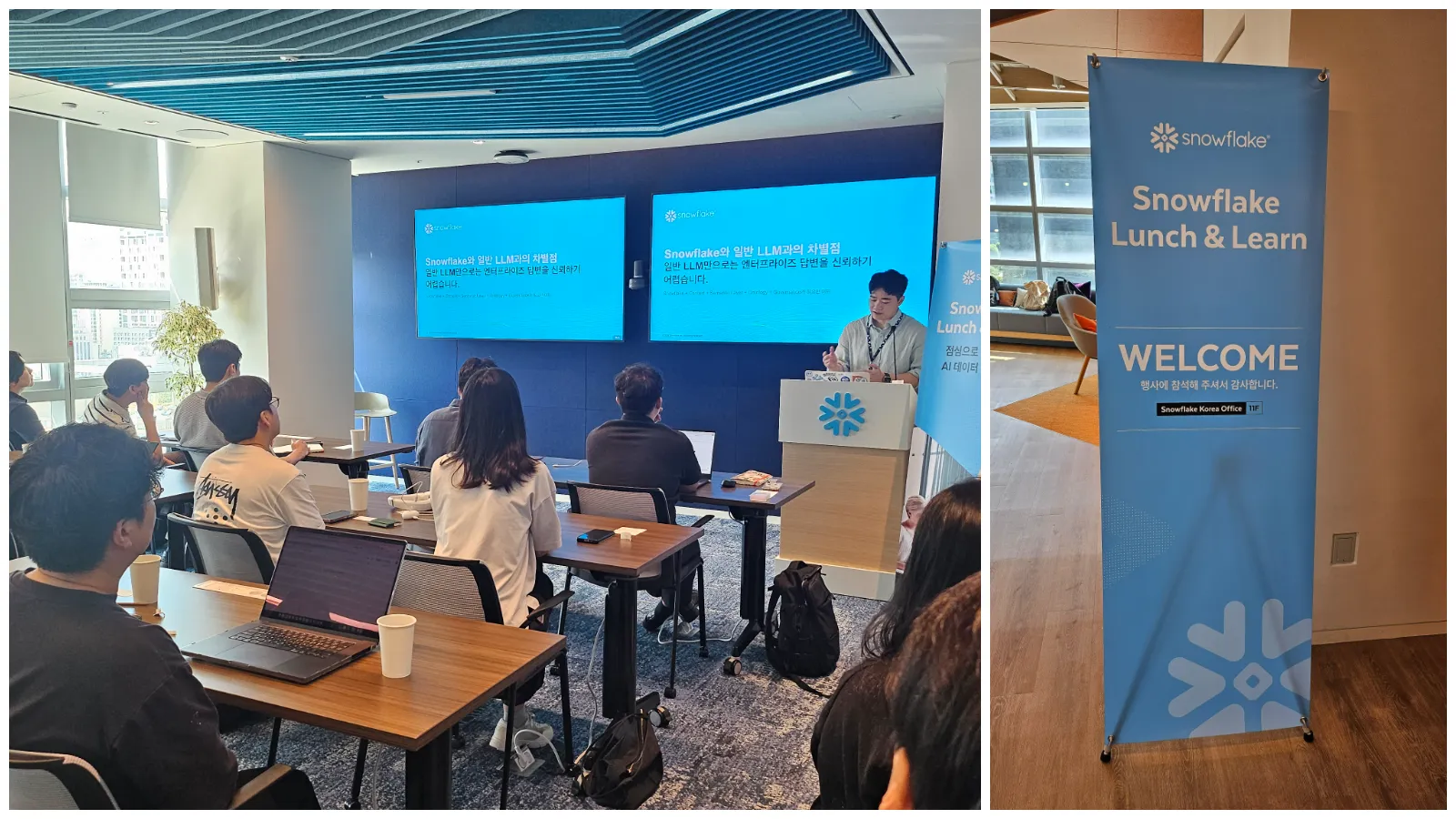
In the first session, Sangyeol Eom, account executive at Snowflake, named three places where AI stalls in production: context, governance and cost.
Connect tables or files to a general-purpose LLM and it struggles to apply each department’s metric definitions, exception rules and data permissions consistently. Tie shared metrics and business rules to the data, and AI gives more accurate, reproducible answers to the same question.
An internal analysis from Anthropic shared at the event backed this up. Answer accuracy was just 21% without certified data definitions, and rose to over 95% once common definitions were applied. In the Snowflake CoWork demo that followed, attendees saw AI go past analysis to the next action when company data, semantics and security policies work in one environment.
Turning scattered e-commerce data into revenue
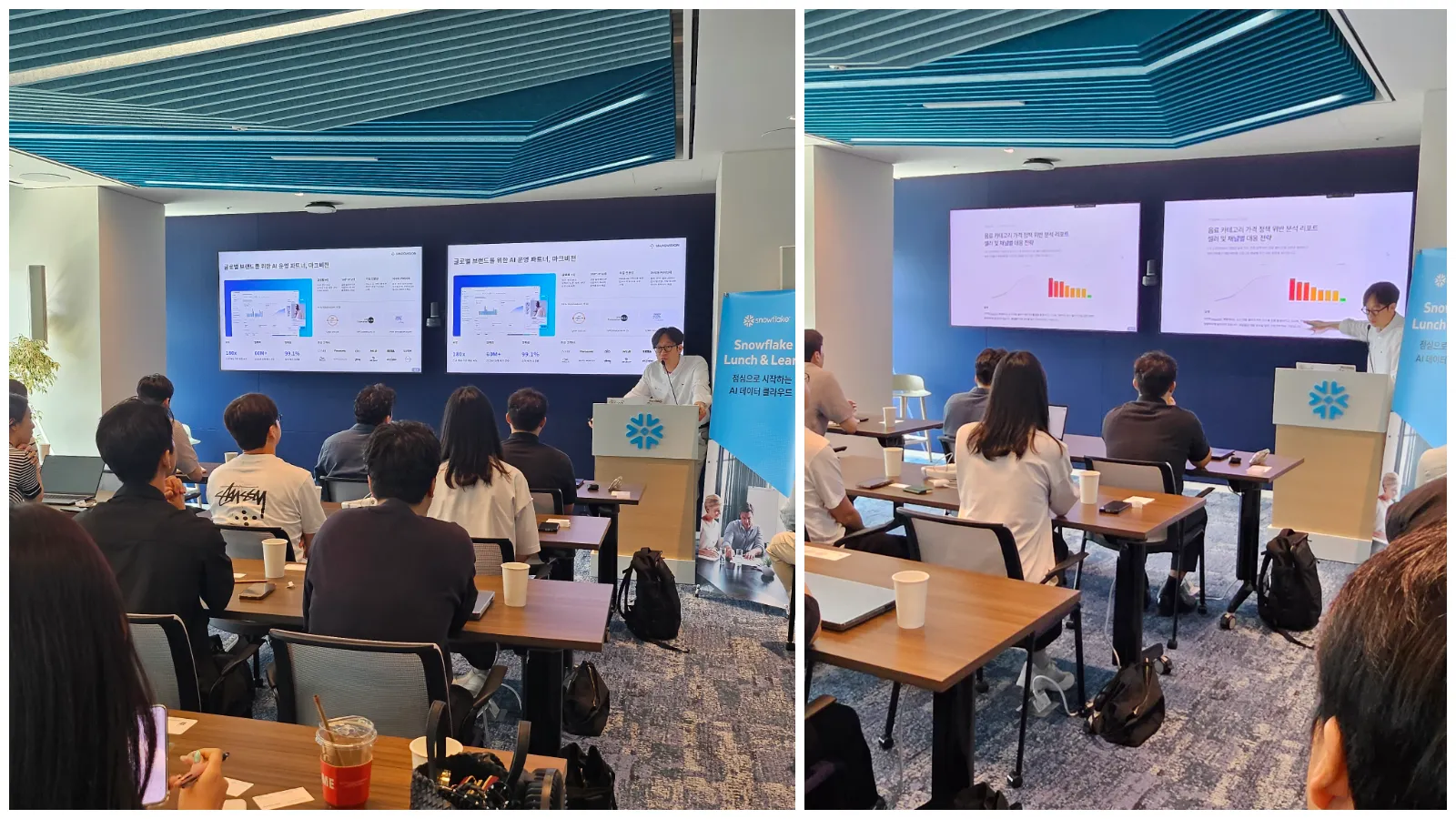
Junyoung Park, senior account executive at MarqVision, walked through what happens when brand, product, price and seller data is scattered across channels: gray-market distribution, price disruption and counterfeits.
Marq AI connects that data into a single brand ontology and uses price monitoring and seller intelligence to identify high-risk sellers and the networks around them. Brands can then set priorities by business outcomes, such as recovered prices, revenue and response time, not just detection counts.
Take Yonsei Dairy. In the year after adopting Marq AI, it raised its supply price to Coupang, increased PPM by 3–5%, and cut the time spent on response by 70% compared with its previous approach. Managing the gray market can be the starting point for stabilizing online distribution and recovering profit.
A better data structure matters more than a better AI

The takeaway from the event was clear.
What decides AI’s results isn’t a more expensive model. It’s a structure that connects a company’s data and definitions in a way AI can understand. After the sessions, attendees stayed for lunch and networking, comparing the data and e-commerce challenges they face at work.
Thank you to everyone who joined us. To see how Marq AI connects scattered e-commerce data to protect brand trust and revenue, read MarqVision’s customer stories.