
There is a strange world where the person who made something first has to prove it is theirs. From fake Roman silver coins to fakes made by AI, the history of forgery is also a history of proof. This is the start of Blue Ink, a journal about the real and the fake, and about brands.
Brought to you by the MarqVision editorial team.
“Don't most book designs look like this anyway?”
I heard this on the fifth floor of a building across from Seoul Station, in a dispute mediation room at the Korea Copyright Commission. The room was set up like a courtroom, with the applicant and the respondent facing each other and the mediation panel between them. A panel member had spent a long time looking through two books, one I had planned and one I suspected of copying it. He concluded that my book was hard to call especially original, and that the other was just as hard to call plagiarism. He added that the two sides should simply talk it over and settle.
His words stayed with me. It wasn’t that I felt wronged. I had started to think he might be right.
Have you ever imitated or copied something someone else made? Now the opposite question: has anyone ever copied something you made? The longer you have worked on something, the less the feeling of seeing it copied resembles simple anger. It is closer to feeling wronged, or more precisely, to helplessness. You are the one who has to find and prove the grounds for calling the work your own.
Let me start with two personal stories.
An invitation, almost identical
In May 2018, while preparing for our wedding, my wife and I made our own invitations. She was a designer and I was an editor, so we did everything ourselves, from the visuals to the writing. We printed a small batch and gave them only to close friends.
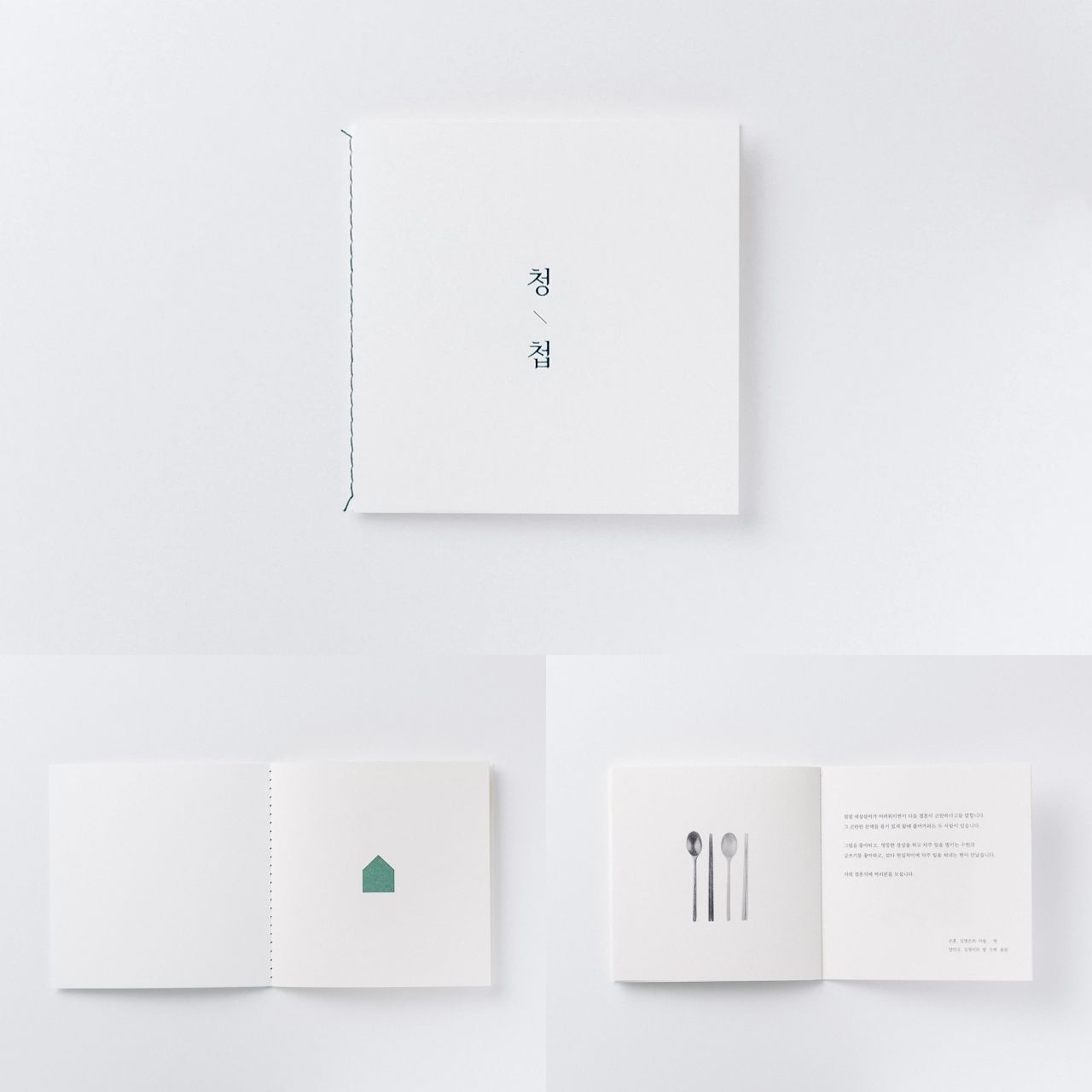
A friend who liked the invitation introduced us to someone. That person thought about hiring my wife to design one, then dropped the idea because of the cost. Some time later, we happened to learn that this person’s invitation was nearly identical to ours, down to the layout, the images, and even the way the text was worded.
It was a real shock to my wife. The matter ended with an apology and a small payment, but nothing felt settled. There was nothing that could be given back in the first place. “This must be one of the most important invitations of their life. Why would they just use something someone else made?” she asked me that day. I had no answer.
A book, similar in concept
The scene in the mediation room was my second experience.
While working at a magazine publisher, I planned a new book series. The concept was one job per volume, with interviews of five or six people who do that work and an essay or two. The first book did well enough to be reprinted. Around the time the second came out, an acquaintance told me about another book with a similar trim size, cover, and table of contents design, and even a similar concept.
We reported the infringement to the Commission, and a mediation was set up. Sitting across the table and looking the other side in the face was not pleasant. My face burned, even though I had done nothing wrong.
The mediation ended without blaming either side. Both parties agreed not to take civil or criminal action against each other over the cover. The other side said they had never looked at our book, and I had no way to prove otherwise. I was even told that book covers, belly bands, and inside layouts all tend to look alike. For the company, it was time and money spent. We had even paid the filing fee.
These two episodes are only personal experiences. But this kind of thing happens every day in the business world too, only on a different scale.
A long history of forgery
To answer that, it helps to look back. Forgery, imitation, and impersonation are as old as human history. People have faked money, faked art, and even taken other people’s identities. Later pieces will return to these subjects. For now, a few short examples.
Money. In the late Roman Republic, coins with a copper or bronze core under a thin layer of silver were already in circulation. Coin experts later named them fourrées. Many are thought to have been fakes made to pass off cheap metal as silver. Silver was worth far more than copper, so forgery paid. When the praetor Marcus Marius Gratidianus announced measures to end the currency chaos, he became hugely popular with Roman citizens. According to Seneca and Pliny, statues of him went up in streets and neighborhoods across the city.
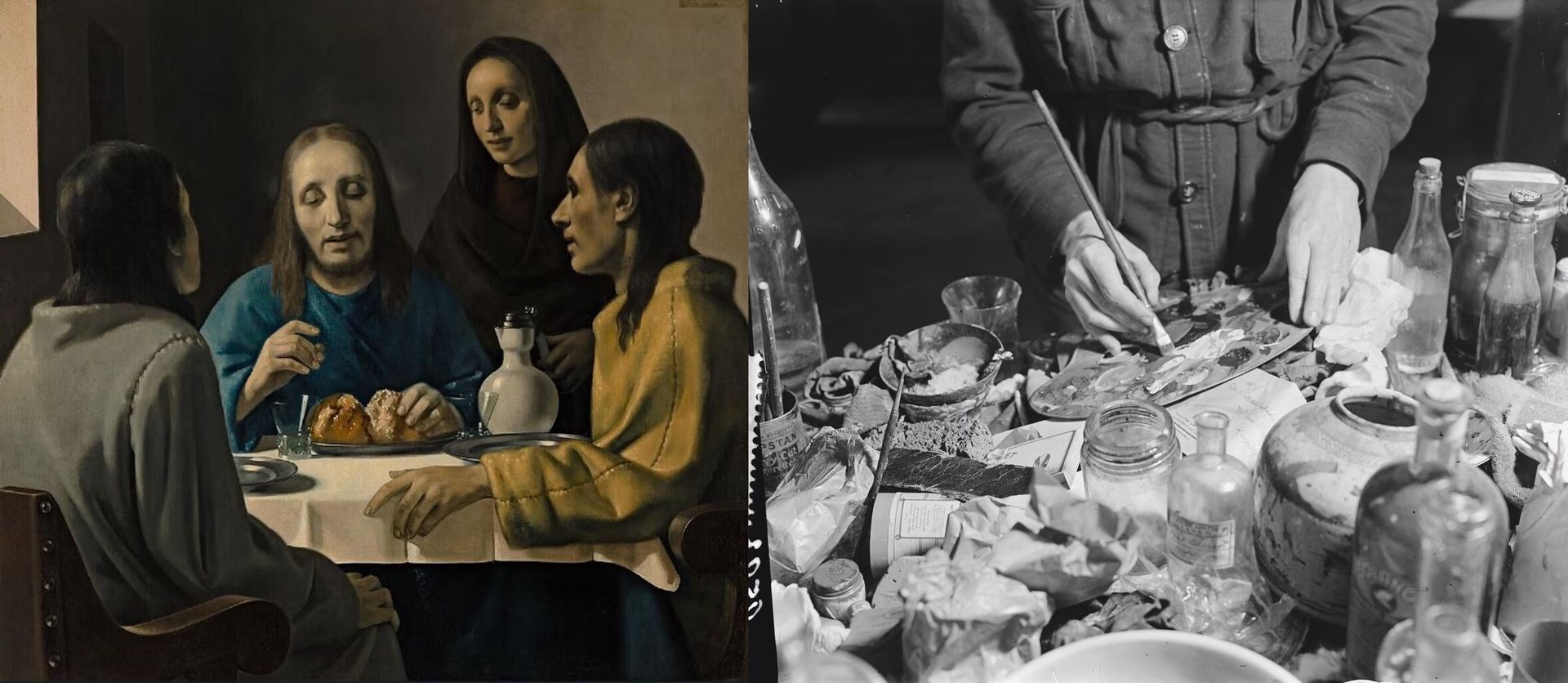
Art. In May 1945, the Dutch painter Han van Meegeren was arrested, accused of selling a Vermeer of national importance to the senior Nazi Hermann Göring. Collaborating with Germany during the war was a serious crime that could carry the death penalty. Van Meegeren confessed that the “Vermeer” was actually a forgery he had painted himself.
“Fools!” he roared at his jailers. “You think I sold a priceless Vermeer to Göring? There was no Vermeer—I painted it myself.”
Serena Davies, “The forger who fooled the world,” Telegraph, 2006
When no one believed him, he painted a new picture the same way while in custody, under supervision. Experts later found a binder made from a 20th-century synthetic resin, traces of paint that did not match the period, and cracks made on purpose. Cobalt blue was one of the clues that gave the fakes away. By proving he was a forger, he escaped execution. Instead, in 1947, he was tried for forgery and fraud and sentenced to one year in prison.
Identity. During the Korean War, a ship’s doctor named Joseph C. Cyr served aboard the Canadian destroyer HMCS Cayuga. But he was not a doctor, and the name was not his. He was Ferdinand Waldo Demara, a lifelong impostor who had successfully posed as a civil engineer, a deputy sheriff, a lawyer, a child care expert, an editor, and a teacher.
When three badly wounded Korean guerrillas were brought aboard, he treated them with the help of medical textbooks and the ship’s Sick Berth Attendant. According to the CFB Esquimalt Naval and Military Museum, he is said to have removed a bullet from a man’s chest and amputated a foot, and all three survived. He was exposed when the real Joseph Cyr’s mother saw a newspaper story about him.
Forgery and its answer
Wherever forgery appeared, certification almost always followed. The effort to tell real from fake has evolved alongside forgery itself.
Take silverwork in medieval England. Silver is too soft to use alone and has to be mixed with other metals, and cheating on the mix was common. Edward I set a legal standard for silver purity, and the London goldsmiths’ guild stamped a leopard’s head only on pieces that met it. In 1327, Edward III gave the guild a royal charter, and in 1363, a maker’s mark showing who had made each piece became required.
These marks are called hallmarks, after Goldsmiths’ Hall in London, where precious metals were tested and stamped. The word now also means the defining feature of a person, an object, or a brand. “Brand,” which comes from marking livestock with an owner’s sign, and “trademark,” which shows where goods and services come from, have a different history and legal role. Still, all three use a single mark to show who made something, where it came from, and what can be trusted about it.
About 700 years ago, the stamp on a piece of silver was more than decoration. It guaranteed purity and origin. Today’s logo carries on part of that job. It is meant to look good, but it is also a kind of certificate that says whose product this is and what it promises.
The reasons we copy
People and companies forge, imitate, and impersonate for many reasons.
The simplest is money. Copying lets you skip the time and cost of making something. A Roman forger coating copper with silver and a modern knockoff with one graphic slightly changed are not so different.
But money alone does not explain it. In The Art of Forgery, Noah Charney, founder of the Association for Research into Crimes against Art, makes an interesting distinction. Art thieves, he writes, mostly care about money and rarely steal more than once, but forgers are far more complicated. He sorts their motives into genius, pride, revenge, fame, crime, opportunism, money, and power. The most striking are forgers who seek revenge on an art world that rejected them, set out to prove their talent, and then need the public to recognize it too. This also explains why Van Meegeren never sold his fakes cheaply. If he had, no one would have believed they were real. The story of the German forger couple Wolfgang and Helene Beltracchi was even made into a documentary in 2014.
What about the buyers? When people knowingly buy a fake, what they are really buying is a sign. In Deluxe, the American fashion and culture journalist Dana Thomas writes:
Today logos brand people: by wearing or carrying an item emblazoned with a logo, you declare that you are a member of a tribe that subscribes to that particular brand’s message and its ethics - essentially the dreams conjured up for you by the marketing department. Luxury-brand logos convey wealth, status, and chic, even if the bearer of the logo-ed product is a middle-market suburban housewife who bought it on credit.
“I think it’s completely impossible [to eliminate the logo] today,” Miuccia Prada told me. “The recognition of the brand is too important. The more you want to enlarge your business, the more you have to use your logo.”
— Dana Thomas, Deluxe, 2007
If the logo is a dream, the dream can be copied. A handbag holds things, and the logo on it holds a sense of belonging. For someone who needs to belong, whether it is real or fake may not matter much.
An uncomfortable truth
Here we face an uncomfortable truth. When fakes of the same thing keep appearing, it means that someone, at least, sees commercial or symbolic value in the original. Forgers usually go after what sells or what people want to own. In that sense, a copy is also an unwelcome compliment. Beneath a brand’s anger at finding a copy lies a bitter relief, because what we made is worth that much in the market.
But the relief does not last. When fakes become too common, the original loses value, too. Once no one can tell whether the logo they see on the street is real, whatever the buyer of the real thing hoped to gain disappears as well. This is the deep damage forgery does: it hurts not only a brand’s sales but its meaning.
The “original” is not so simple, either. In Deluxe, published in 2007, Thomas calls the making of a luxury handbag “a study in globalization”: hardware from Italy and China, zippers from Japan, linings from Korea, and embroidery from Italy, India, or northern China. One manufacturer told her that a supplier claims his silk is British when in fact he buys it in China, stores it in the United Kingdom, and then sells it at European prices. Before we can even ask where the line between real and fake lies, the origin of the real thing is already blurry.
An original needs something a copy can never take, something beyond where it was made, what it is made of, or its logo. This series sets out to explore what that something is.
What the law protects
Courts are still working out where the line falls, and their answers are less clear than you might expect.
On February 20, 2025, Germany’s Federal Court of Justice rejected Birkenstock’s appeals in three related cases. The company had sued three companies that made or sold similar sandals, arguing that its designs were works of art protected by copyright and seeking, among other things, to stop sales and destroy the products. Birkenstock had a reason to call its sandals art. Under German law, design rights end 25 years after filing, but art is protected until 70 years after the creator’s death. Design protection for some models had already run out.
The presiding judge, Thomas Koch, and his panel gave a short answer. The sandals belonged to design, not art. To be protected by copyright, a design must show enough creativity for its individuality to be recognized. The lower court, the Cologne Higher Regional Court, had found that Karl Birkenstock followed existing forms and stayed within the craft skills of a shoemaker.
At this point I thought back to the mediation table. When I dug out the other side’s written brief from that time, the logic was much the same. A cover design is just a way to present a book’s content, so it cannot exist apart from its practical job as a cover. They cited a Korean Supreme Court ruling that applied art is protected by copyright only if it can be reproduced for industrial use and separated from the object’s practical function.
A few years ago, my wife’s designs were copied again. This time it was her own lifestyle brand, and another company copied some of its product designs outright. She found out through a customer and consulted a lawyer. She learned that under Korea’s Design Protection Act, it does not matter whether the other side referred to her product, only whether their design infringes the scope of a registered design right. Unlike copyright, design law does not ask about intent. Trim materials left over from a company that had begun copying the design and then stopped also ended up in a different product. Intended or not, a design copied once leads to the next copy. Faced with the same question, one law asks you to prove individuality, another does not care about intent, and a mediator simply tells you to settle.
There is another reason the courts’ answers are not clear. In Deluxe, explaining why counterfeits were so hard to stop in Guangzhou at the time, Thomas points to the view that Western-style intellectual property laws took hold relatively late in China. China’s trademark law was passed in 1982, its patent law in 1984, and its copyright law in 1990.
Still, it would be hasty to conclude that China has “no history of intellectual property” or “a culture that doesn’t mind copying.” Societies have balanced the copying of knowledge against individual rights in different ways, and modern intellectual property laws did not appear everywhere at the same time or for the same reasons.
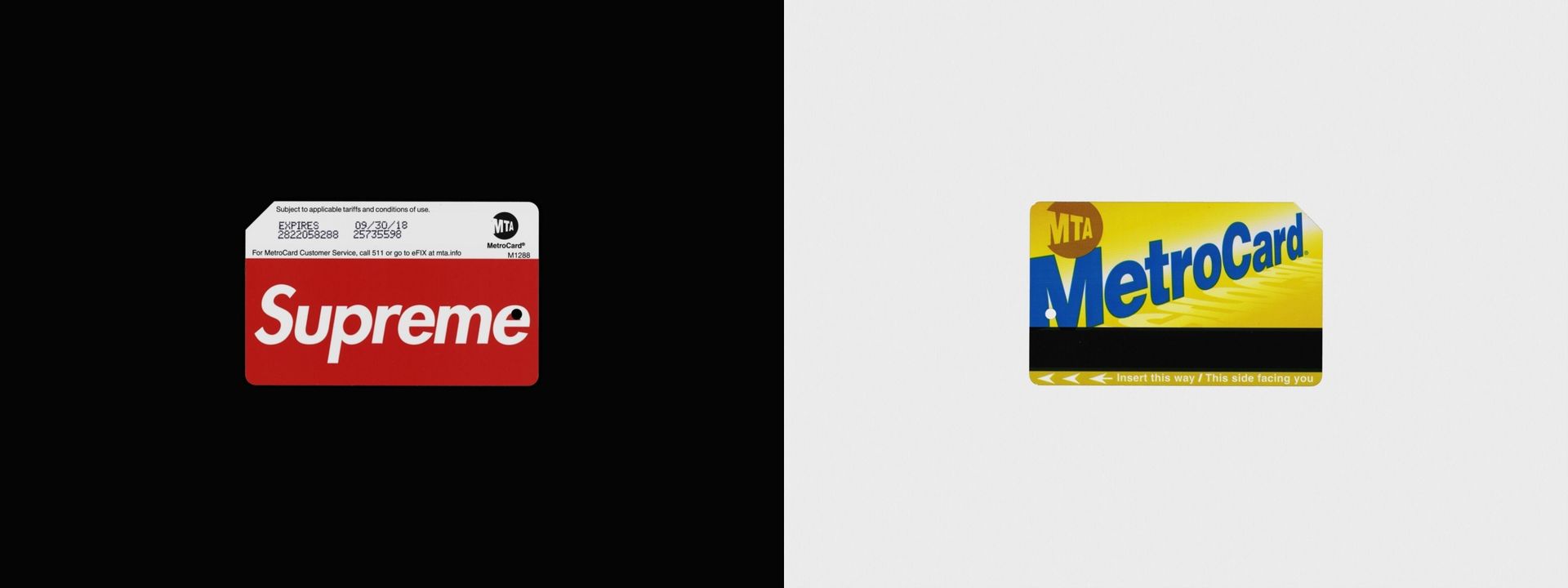
Sometimes the side protecting the original and the side that borrowed it are one and the same. Supreme’s box logo was created in 1994. White italic Futura on a red box, it closely resembles the style the conceptual artist Barbara Kruger had used since the 1980s. Founder James Jebbia reportedly gave the designer a book of Kruger’s work for reference, and Jebbia has said the logo was influenced by her.
Yet in May 2013, Supreme filed a $10 million lawsuit against Married to the Mob, a women’s streetwear brand, claiming that its “Supreme Bitch” T-shirt infringed Supreme’s logo. The design had come out in 2004, nine years before the lawsuit, and the brand’s founder, Leah McSweeney, said it was a jab at the misogynistic vibe of Supreme and the boys who wear it.
When Complex asked Kruger for comment, she replied with a blank email and a single Word document attached, named “fools.doc.” Looking at people who had borrowed her visual language and were now suing each other, she wrote: “I’m waiting for all of them to sue me for copyright infringement.”
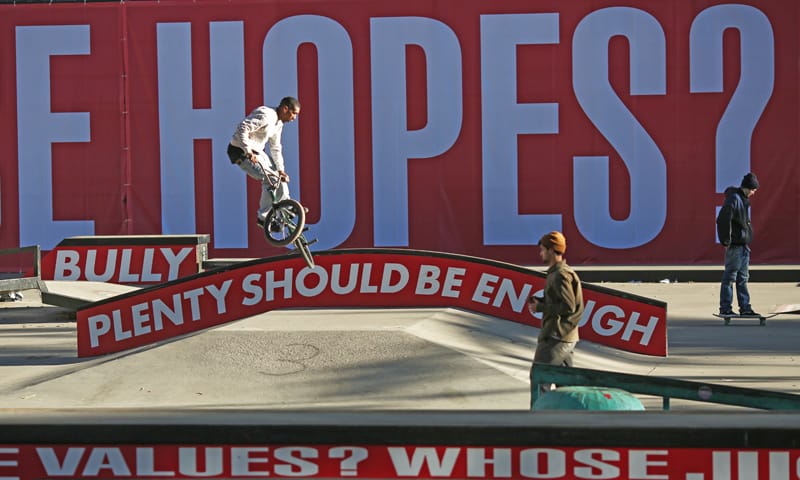
Kruger never sued. She later said that she owned neither the typeface nor a logo. Instead, in November 2017, as part of the Performa biennial, she covered a skate park on the Lower East Side with her slogans and staged a pop-up shop in SoHo called Untitled (The Drop). Visitors lined up to buy T-shirts, beanies, and skateboard decks, including a red deck that read “DON’T BE A JERK.” She took the drop, a sales format made famous by brands like Supreme, and turned it into a work of art.
A new challenge for brands
What is the original, and whose is it? The answer has changed with time and place. Brands now have to prove, on their own and over and over, that they are one of a kind. The fact that a brand made it is no longer enough. A brand has to be able to explain when it made something, how it is different, and why it belongs to that brand alone.
The places where that proof is needed have also grown. Where it was once just the courts and customs offices, it now includes search results, online marketplaces, social media feeds, and livestreams. Generative AI can now produce product pages and ad images in bulk. Find one and ask that it to be taken down, and similar images and listings come back through other sellers and other accounts.
Beginning Blue Ink
This series is called Blue Ink.
There is a practical reason for signing documents in blue ink. When black-and-white photocopies were the norm, a signature in black ink made originals and copies hard to tell apart, while blue ink made it easy. US Army regulations allow both black and blue ink, but some legal assistance offices recommend blue to make originals easier to tell from copies.
Blue does not guarantee authenticity on its own. But it has long been a practical way of marking something as different from a copy. In Van Meegeren’s forgeries, as we saw, cobalt blue was one of the scientific clues that exposed the fakes. Blue is sometimes the mark that separates original from copy, and sometimes the trace a fake cannot hide.
Blue Ink will follow two tracks.
- Origins: notable stories from the history of the genuine, the fake, and certification.
- Makers: brands fighting right now to protect their originality, one brand per piece.
One thing we want to make clear from the start. We do not plan to use this series to judge what is right or wrong.
Today, nearly everything is closely connected, and work is divided into specialties. In the 1960s, Andy Warhol made silkscreens with his assistants at the Factory. He said he had tried doing them by hand but found the screen easier. He did not have to touch the work himself, and any of his assistants, or anyone else, could print them as well as he could. Takashi Murakami, Damien Hirst, and Jeff Koons have long made their work with dozens of assistants, and luxury brands that talk up their workshops are no exception.
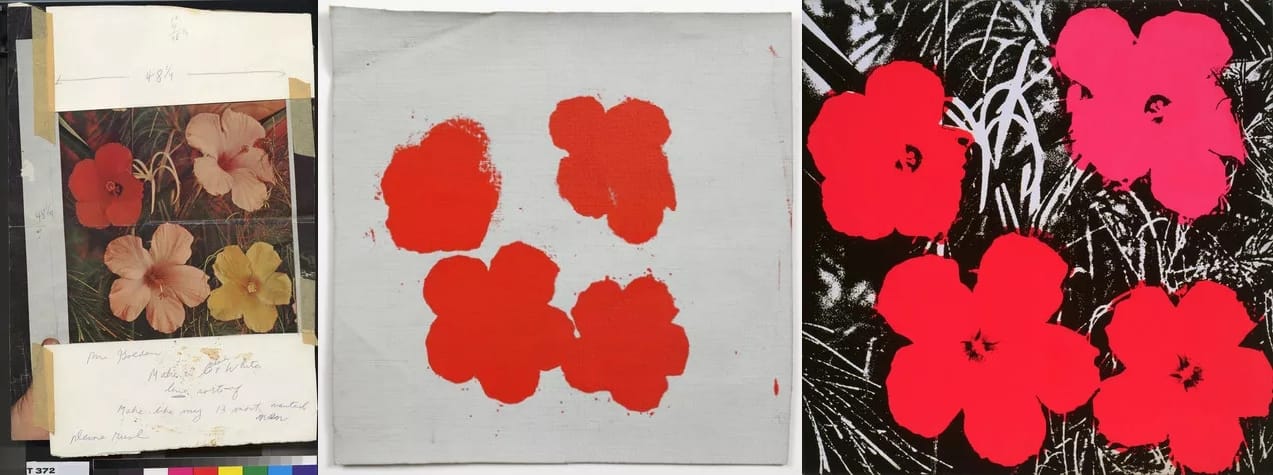
As the cliché goes, there is nothing new under the sun, and making anything without being influenced is close to impossible. As Birkenstock and Supreme show, the line between protecting originality and infringing on it is often blurry. Perhaps the panel member was right that day.
Still, anyone who has made something properly and with care, even once, knows that the shortcut of taking what belongs to others comes at a price. We begin Blue Ink hoping that more of us keep asking what makes something genuine.
Words by Son Hyun
English edition by Park Jaeyong
Sources and further reading
Noah Charney, The Art of Forgery, Phaidon Press, 2015
Dana Thomas, Deluxe: How Luxury Lost Its Luster, Penguin Press, 2007
Serena Davies, “The forger who fooled the world,” Telegraph, 2006
Foster Kamer, “Barbara Kruger Responds to Supreme’s Lawsuit: ‘A Ridiculous Clusterf**k of Totally Uncool Jokers,’” Complex, 2013
Johanna Fateman, “Battlegrounds,” Artforum
Thora Siemsen, “This is the Subtext,” Frieze, 2017
Performa Archive, “Barbara Kruger,” Performa 17 Commission
Victoria and Albert Museum, Explore the Collections, “Transportation Ticket,” CD.41-2018
The Andy Warhol Museum, “Underpainting and Photographic Silkscreen Printing”
Federal Court of Justice of Germany, judgment of February 20, 2025, I ZR 16/24 (Birkenstock)
US Army, AR 25-50, Preparing and Managing Correspondence
Disclaimer
This piece was written by an outside contributor and includes the author’s personal views. It does not represent the official position or views of MarqVision. The brands and cases mentioned are described based on publicly available information, and nothing here is meant to claim or judge wrongdoing by any company or individual. This piece reflects information available as of October 2026, and some details may have changed since.
1 A geometric sans serif typeface released in 1927 by the German book designer Paul Renner.
Subscribe to Blue Ink
Stories on brands worth paying attention to, and the originality behind them. New issues, straight to your inbox.